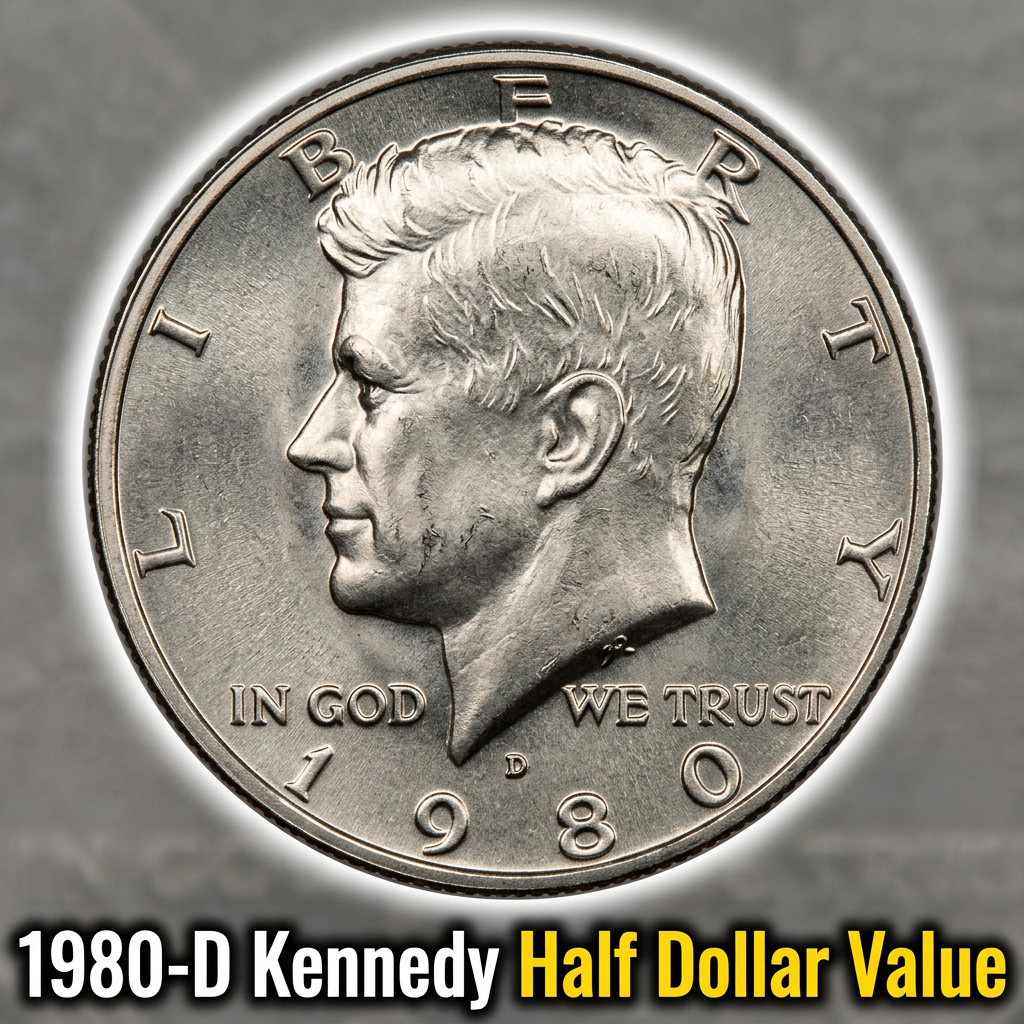
The 1980-D Kennedy Half Dollar is worth anywhere from 50 cents in circulated condition to around $15 or more in higher mint state grades. Most of these coins turn up in pocket change or old jars, but a few choice examples can surprise you — especially if they’ve been well preserved.
best coin identifier app can help you quickly identify and grade coins like this one right from your phone, saving you time before you head to a dealer.
A Quick Background on the 1980-D Kennedy Half Dollar
The Kennedy Half Dollar has been a staple of American coinage since 1964, struck in honor of President John F. Kennedy following his assassination. By 1980, the series had long since transitioned away from silver — these coins are made of a copper-nickel clad composition, which is why they have that distinctive reddish-brown edge when you look at them from the side.
The “D” mintmark on your coin means it was produced at the Denver Mint, one of the two facilities that struck half dollars that year (the other being Philadelphia, which used a “P” mintmark). Denver turned out a large number of these coins — over 33 million — which is one reason why they’re relatively common today. Still, common doesn’t always mean worthless, especially if your coin is in exceptional condition.
Kennedy Half Dollars from this era were not widely released into circulation. The U.S. Mint actually produced them primarily for collectors and mint sets, so many surviving examples are in surprisingly decent shape.
How Much Is the 1980-D Kennedy Half Dollar Worth?
For most people who find one of these coins, the honest answer is that it’s worth face value or just a little above. A coin pulled from circulation, showing heavy wear on Kennedy’s portrait and the eagle on the reverse, is typically worth 50 cents — its face value. However, uncirculated examples, especially those with sharp luster and no contact marks, start to fetch real premiums.
You can explore detailed 1980 half dollar value information by grade and mintmark to see exactly where your coin falls on the spectrum.
Here’s a general value guide based on condition:
| Grade | Description | Estimated Value |
|---|---|---|
| Good (G-4) | Heavy wear, flat features | $0.50 |
| Fine (F-12) | Moderate wear, some detail | $0.75–$1.00 |
| Extremely Fine (EF-40) | Light wear on high points | $1.00–$2.00 |
| Mint State (MS-63) | Uncirculated, average strikes | $3.00–$6.00 |
| Mint State (MS-65) | Gem uncirculated, strong luster | $10.00–$15.00 |
| MS-67 and above | Superb gem, rare in this grade | $50.00–$100+ |
1980-D Kennedy Half Dollar Grading Tips
Grading is everything when it comes to coin values. Even a small difference in grade can mean a big jump in price, especially once you get into mint state territory. To assess your 1980-D Kennedy Half Dollar, start by looking at Kennedy’s hair above the ear and along the cheekbone — these are the highest points on the obverse and the first places to show wear.
On the reverse, check the eagle’s breast feathers and the tips of its wings. If those areas show flat, dull patches, the coin has been in circulation. If you can see crisp feather detail and the surfaces have a bright, cartwheel luster when you tilt the coin under a light, you may have an uncirculated example.
For a more precise assessment, consider using CoinHix — a free app that lets you photograph your coin and get an instant grade estimate, which is a great starting point before having it professionally slabbed by PCGS or NGC.
Should You Get Your 1980-D Half Dollar Graded?
Professional grading through services like PCGS or NGC is worth considering if your coin looks like it could be MS-65 or higher. Grading fees typically start around $20–$30 per coin, so you’ll want to be confident the coin’s value justifies the cost.
For coins in lower grades or standard uncirculated condition, grading isn’t necessary. You can check current certified 1980 Kennedy Half Dollar MS price data to see recent sales and auction results for graded examples, which will give you a realistic benchmark before committing to a submission.
If you’re sitting on a larger collection of coins from this era, CoinHix makes it easy to catalog everything in one place and track real-time market values across hundreds of coin types.
Where to Sell Your 1980-D Kennedy Half Dollar
If you decide to sell, your options include online auction sites like eBay, coin dealers at local shops or shows, and dedicated coin marketplace platforms. For common-date circulated coins, bulk lots tend to get better returns than selling individually. For high-grade or certified pieces, a specialized auction house may fetch the best price.
Don’t overlook CoinHix as a research tool before listing anywhere — knowing your coin’s real market value puts you in a much stronger negotiating position.
FAQ
Q: Is the 1980-D Kennedy Half Dollar made of silver?
A: No. The 1980-D Kennedy Half Dollar is made entirely of copper-nickel clad. The U.S. Mint stopped using silver in half dollars for circulation after 1970. These coins contain no silver and their value is based on condition and collector demand, not metal content.
Q: How do I tell the difference between the 1980-D and 1980-P half dollar?
A: Look just below Kennedy’s neck on the obverse side of the coin. A small “D” mintmark indicates it was struck at the Denver Mint, while a “P” means Philadelphia. Both coins are common, though values can vary slightly by mintmark and grade.
Q: My 1980-D half dollar looks brand new — is it valuable?
A: It could be worth a few dollars to $15 or more depending on the exact grade. Coins that have never been in circulation are called “mint state,” and the higher the grade (MS-65 and above), the more they’re worth. Use a grading guide or a coin app to get a better sense of your coin’s condition before assuming it’s just face value.