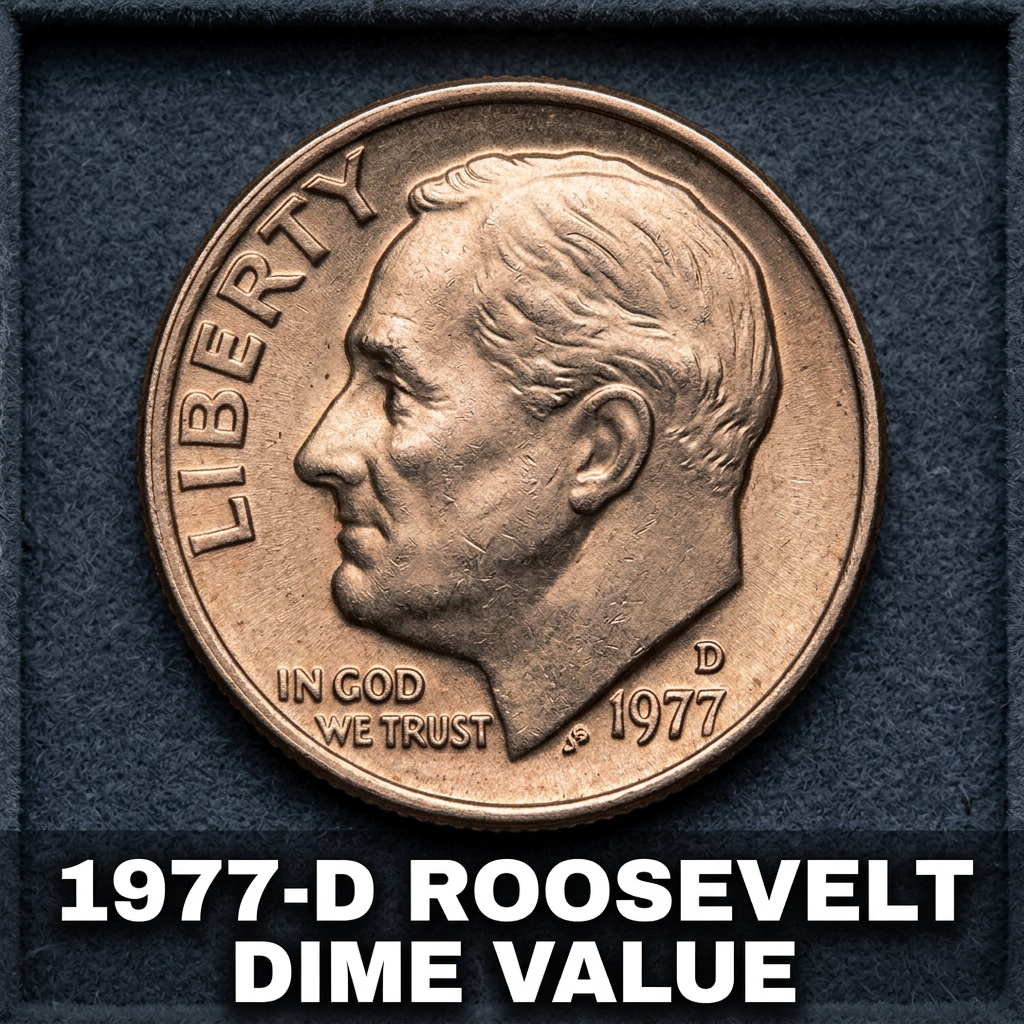
The 1977-D Roosevelt Dime is worth anywhere from 10 cents in heavily circulated condition to $10 or more in pristine mint state, with rare full-band examples potentially fetching $25 to $50 among serious collectors. If you recently found one of these coins in your pocket change or an old jar, you’re in the right place to find out exactly what you’re holding.
What Is the 1977-D Roosevelt Dime?
The 1977-D Roosevelt Dime was struck at the Denver Mint, which is where that little “D” mintmark beneath the torch on the reverse side comes from. In 1977, the Denver Mint produced over 796 million of these dimes, making it one of the more common issues from that era. Because so many were made, most circulated examples are worth only face value — about 10 cents — simply because they’re not scarce enough to drive collector demand. However, condition is everything in coin collecting, and that’s where things get interesting. If you’re just getting started and want to identify coins quickly, using the best coin identifier app can save you a lot of time and guesswork. Tools like CoinHix make it easy to look up your coin’s grade and estimated value in seconds, right from your smartphone.
1977-D Roosevelt Dime Value by Condition
Like most Roosevelt dimes from the 1970s, the value of a 1977-D climbs sharply once you move into uncirculated territory. Coins that stayed out of circulation or were carefully stored since the time they were minted can carry a real premium with collectors. Here’s a general breakdown of what you can expect:
| Grade / Condition | Estimated Value |
|---|---|
| Good (G-4) | $0.10 (face value) |
| Fine (F-12) | $0.10 – $0.25 |
| Extremely Fine (EF-40) | $0.25 – $0.75 |
| Mint State (MS-63) | $2 – $6 |
| Mint State (MS-65) | $8 – $15 |
| MS-65 Full Bands (FB) | $25 – $50+ |
For the most up-to-date auction data and certified coin prices, you can check out the 1977-D Roosevelt Dime mint state price data on CoinHix, which tracks real market sales across multiple grades.
What Are Full Bands and Why Do They Matter?
If you’ve spent any time researching Roosevelt dimes, you’ve probably seen the term “Full Bands” or “FB” come up. This designation refers to the horizontal bands that wrap around the torch on the reverse of the coin. On a well-struck, uncirculated example, those bands appear as sharp, fully separated lines. On a weakly struck coin — even one that was never used in commerce — those bands can look mushed together or incomplete. Coins that earn the Full Bands designation from a grading service like PCGS or NGC are significantly more valuable than their non-FB counterparts, sometimes by three to five times the price. The 1977-D is known to have some strike inconsistencies, so a sharp FB example is genuinely harder to find than you might expect from such a high-mintage coin. If you’re not sure whether your coin qualifies, CoinHix lets you compare your coin’s details against graded examples in their database.
How to Check If Your 1977-D Dime Is Worth More
Start by looking at the coin under good lighting or a basic magnifying glass. A circulated coin will show wear on Roosevelt’s cheekbone, hair, and the torch on the reverse. If the surfaces still look bright and the details are crisp, you might have an uncirculated example. Next, look for any errors or oddities — doubled die, off-center strikes, or unusual planchet issues can add value. While major errors on 1977-D dimes are not widely reported, it never hurts to look. Getting a detailed look at what your 1977 dime is actually worth based on current market values is a smart step before deciding whether to sell, hold, or get it professionally graded. CoinHix is another great resource for cross-referencing recent sale prices so you know you’re working with current data, not outdated price guides.
Should You Get Your 1977-D Roosevelt Dime Graded?
For most 1977-D dimes in circulated condition, professional grading doesn’t make financial sense — the cost of submission usually outweighs the coin’s value. But if you believe your coin is MS-65 or higher, especially with Full Bands, submitting it to PCGS or NGC could unlock significantly more value at auction. Collectors and dealers trust graded, slabbed coins much more readily than raw examples. If you’re unsure where your coin stands, start by using a coin grading app or asking in a reputable collector forum before spending money on professional services.
FAQ
Q: Is the 1977-D Roosevelt Dime made of silver?
A: No. The 1977-D dime is made of a copper-nickel clad composition. The U.S. Mint stopped making silver dimes for circulation after 1964. Unless you have a special silver proof version from a Mint set, there is no silver content in your 1977-D dime.
Q: How many 1977-D Roosevelt Dimes were minted?
A: The Denver Mint produced approximately 796,930,000 dimes in 1977. That massive mintage is the main reason most examples in average condition are only worth face value. High supply and relatively low collector demand keep prices modest for anything below gem uncirculated grades.
Q: Where can I sell a high-grade 1977-D Roosevelt Dime?
A: Your best options include online platforms like eBay, Heritage Auctions, or Great Collections, especially if the coin is certified by PCGS or NGC. Local coin shops are another option, though they typically pay wholesale prices. Using CoinHix to research recent comparable sales can help you price your coin competitively before listing it.