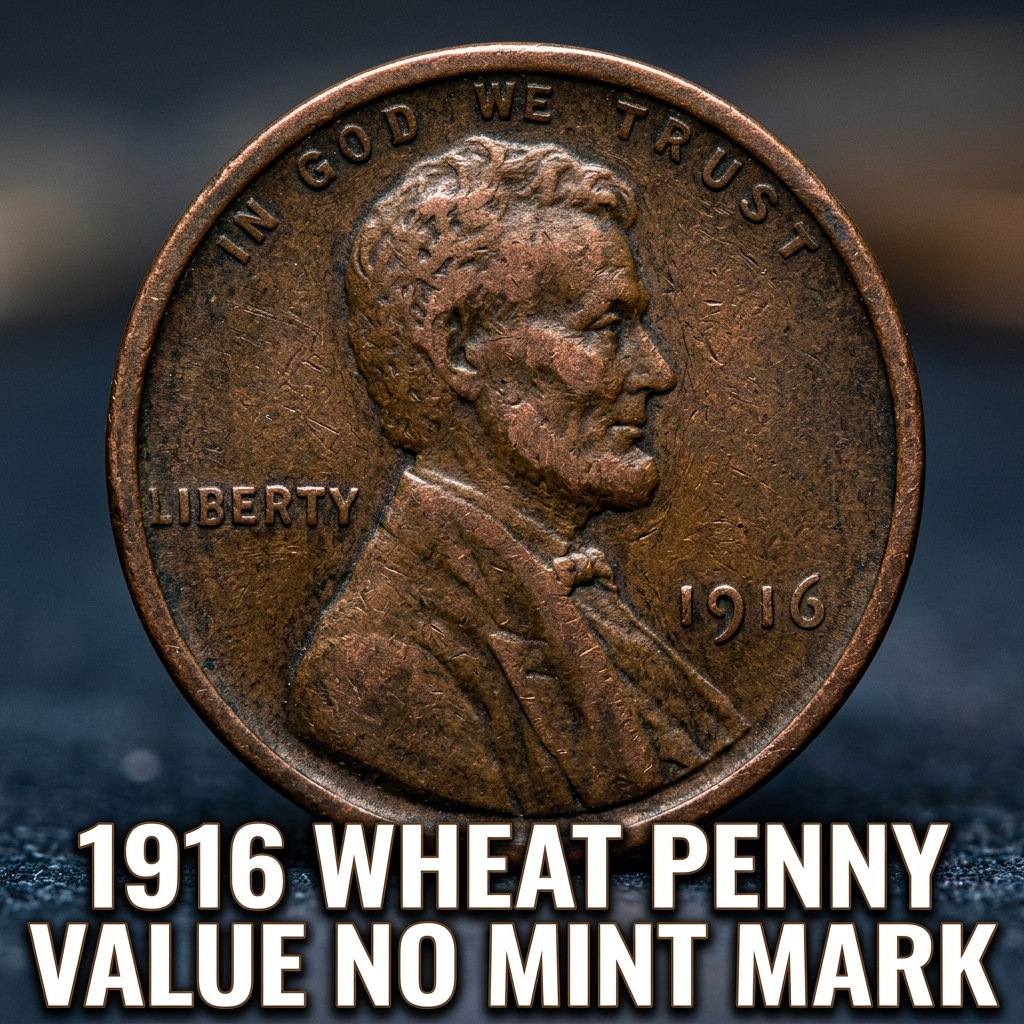
The 1916 Wheat Penny with no mint mark is worth anywhere from $0.50 in heavily worn condition to over $75 or more in pristine uncirculated grades. If you found one of these old cents in a jar, drawer, or inherited collection, you’re holding a piece of American history that could be worth more than you think.
Before diving into the numbers, it helps to know what you’re looking at. The 1916 Lincoln Wheat Penny was struck at the Philadelphia Mint, which is why it carries no mint mark — Philadelphia coins of this era were always produced without one. These coins were designed by Victor David Brenner and feature the iconic portrait of Abraham Lincoln on the obverse, with two wheat stalks framing the words “ONE CENT” on the reverse. Over 131 million of these coins were minted in 1916, making them relatively common among Wheat Pennies — but condition, color, and collector demand still drive real value differences. If you want a quick way to identify your coin without guessing, CoinHix is a handy app that lets you scan your coin and get an instant identification and value estimate.
How Much Is the 1916 Wheat Penny Worth by Grade?
Coin value is all about condition, and the 1916 Wheat Penny is no exception. Coins are graded on a scale from 1 (barely identifiable) to 70 (perfect). Here’s how values break down across the major grade categories:
| Grade | Condition | Estimated Value |
|---|---|---|
| G-4 (Good) | Heavy wear, design visible | $0.50 – $1.00 |
| VG-8 (Very Good) | Moderate wear | $1.50 – $2.50 |
| F-12 (Fine) | Light to moderate wear | $3.00 – $5.00 |
| EF-40 (Extremely Fine) | Light wear on high points | $10 – $18 |
| MS-63 (Uncirculated) | No wear, some marks | $30 – $50 |
| MS-65 RD (Gem Red) | Full original red luster | $75 – $150+ |
For detailed and up-to-date auction records and price history, you can explore 1916 Wheat Penny MS-RD price data across recent sales to see what collectors are actually paying right now.
What Makes a 1916 No Mint Mark Penny More Valuable
Not all 1916 Wheat Pennies are created equal. Beyond grade, color designation plays a huge role in value. Copper cents are graded in three color categories: Red (RD), Red-Brown (RB), and Brown (BN). A coin that retains its original mint-red color is the most desirable and commands significantly higher prices. Most coins found in circulation have turned brown or spotted over time due to oxidation, which reduces their value.
Strike quality also matters. Some 1916 cents were weakly struck, leaving details like Lincoln’s hair or the wheat stalks looking flat. A sharply struck coin with full detail on both sides is more attractive to collectors and typically sells for a premium. Error coins — like off-center strikes or die cracks — are rare but can multiply a coin’s value many times over. Always examine your coin carefully or use a coin microscope or the CoinHix app to look for anything unusual before assuming it’s an ordinary example.
1916 Wheat Penny vs Other Mint Mark Versions
The 1916 Lincoln Cent was produced at three mints: Philadelphia (no mint mark), Denver (D), and San Francisco (S). Here’s a quick comparison to put the no-mint-mark version in context:
| Mint | Mintage | Good Grade Value | MS-63 Value |
|---|---|---|---|
| Philadelphia (No MM) | 131,833,677 | $0.50 – $1.00 | $30 – $50 |
| Denver (D) | 35,956,000 | $2.00 – $4.00 | $60 – $100 |
| San Francisco (S) | 22,510,000 | $3.00 – $6.00 | $75 – $125 |
The Philadelphia issue is the most common, but that doesn’t mean it’s worthless — especially in high grades.
Tips for Getting the Most From Your 1916 Wheat Penny
If you believe your coin is in excellent condition, never clean it. Cleaning a coin — even gently — removes its natural patina and dramatically lowers its value to collectors. Keep it in a coin flip or holder and store it away from moisture and sunlight.
For a more precise value, consider submitting your coin to a professional grading service like PCGS or NGC, which will grade, authenticate, and encapsulate it. This is especially worthwhile if your coin looks uncirculated or shows original red color. You can also check out a complete breakdown of 1916 penny values across all grades and mint marks to better understand where your coin fits on the spectrum before making any decisions. And for a fast at-home check, CoinHix gives you a solid starting point without any coin knowledge required.
Frequently Asked Questions
Q: How do I know if my 1916 penny has no mint mark?
A: Look at the obverse (heads side) just below Lincoln’s portrait near the date. If you see no letter there, it was made in Philadelphia and carries no mint mark. A “D” means Denver, and an “S” means San Francisco.
Q: Is a worn 1916 Wheat Penny worth keeping?
A: Even heavily worn examples are worth holding onto as starter collector pieces. However, their monetary value in poor condition is generally under a dollar. The real value jumps significantly in EF or better grades.
Q: Can I sell my 1916 Wheat Penny?
A: Absolutely. You can sell through coin dealers, local coin shows, or online platforms like eBay and Great Collections. If your coin is in high grade, getting it professionally certified first will help you get top dollar from serious buyers.