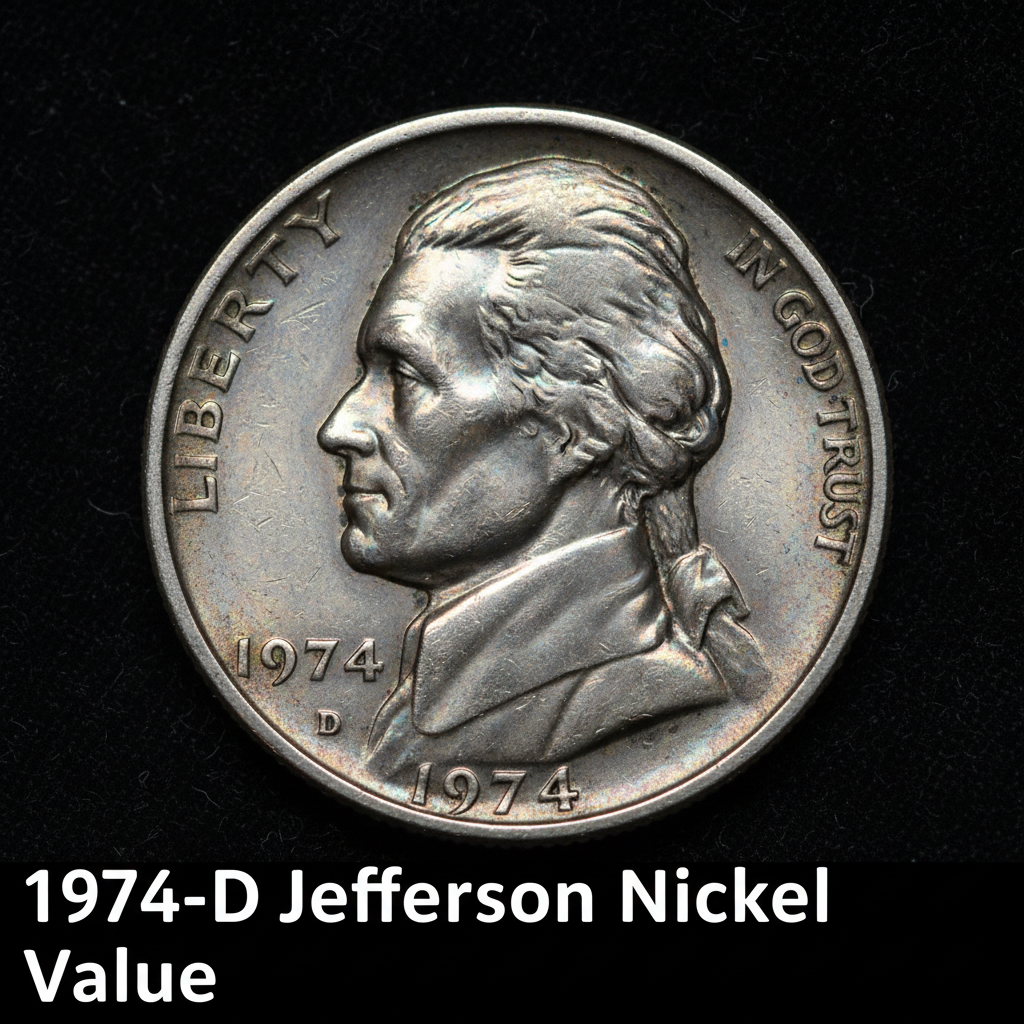
The 1974-D Jefferson Nickel is worth anywhere from face value (5 cents) in heavily circulated condition to around $5 or more in pristine mint state — and a few rare examples have sold for significantly higher at auction. If you found one in a coin jar or old collection, you’ve come to the right place to find out exactly what it’s worth.
If you’re just getting started figuring out the value of your old coins, using the best coin identifier app can save you a lot of time and guesswork, especially when you’re sorting through a pile of nickels from different years and mint marks.
What Is the 1974-D Jefferson Nickel?
The 1974-D Jefferson Nickel was struck at the Denver Mint during a period when the United States was producing enormous quantities of circulating coins. The “D” mint mark, located on the coin’s obverse just to the right of Jefferson’s portrait, tells you it came from Denver rather than Philadelphia or San Francisco. In 1974, the Denver Mint produced over 277 million of these nickels, making them extremely common in everyday circulation.
The coin features the classic design by Felix Schlag — Thomas Jefferson’s portrait on the front and Monticello, Jefferson’s Virginia estate, on the reverse. This design had been in use since 1938, and by 1974, millions of Americans were handling these nickels daily without giving them a second thought. Because so many were made and so many survived, they’re not rare coins — but condition still matters a great deal when determining value.
How Much Is a 1974-D Jefferson Nickel Worth?
For most people who find a 1974-D nickel in pocket change or an old piggy bank, the honest answer is that it’s worth face value — 5 cents — in average circulated condition. The coin is simply too common in worn grades to attract much collector interest. However, coins that were never circulated, called “mint state” coins, can be worth anywhere from $1 to $5 in lower uncirculated grades, and significantly more in the highest grades.
Here’s a general value breakdown:
| Condition | Grade | Estimated Value |
|---|---|---|
| Heavily Circulated | G–F | Face value ($0.05) |
| Lightly Circulated | EF–AU | $0.10–$0.50 |
| Uncirculated | MS-60–MS-63 | $1–$3 |
| Choice Uncirculated | MS-64–MS-65 | $3–$8 |
| Gem Uncirculated | MS-66+ | $15–$100+ |
You can check up-to-date 1974-D Jefferson Nickel auction prices and grade-by-grade market data to see what these coins are actually selling for right now. Markets do shift, and recent sales can tell a more accurate story than general price guides.
What Makes Some 1974-D Nickels Worth More?
The single biggest factor in value is condition — or as coin collectors say, “grade.” A 1974-D nickel that sat in a mint bag and was never spent or handled can look almost as sharp as the day it was struck. These fully struck, lustrous examples are what collectors actually want. Features to look for include full steps on Monticello’s reverse — coins with “Full Steps” (FS) designations from grading services like PCGS or NGC can command significant premiums.
Errors also add value. While no major error variety is specifically associated with the 1974-D nickel, doubled die errors, off-center strikes, or die cap errors can appear on any year’s production. If your coin looks visually unusual — letters or numbers appear doubled, or the design is shifted — it might be worth having it examined more closely. CoinHix is a great tool to reference when you suspect something is off about your coin, as it tracks error coin values alongside standard issues.
How to Check the Value of Your 1974-D Jefferson Nickel
Start by giving your coin a good look under natural lighting. Don’t clean it — cleaning a coin almost always reduces its value. Look at the high points of Jefferson’s cheekbone and hair, and check the steps on Monticello. If the details are sharp and the coin has a natural sheen, it may be in uncirculated condition.
For a quick and reliable identification, many collectors now use CoinHix, a popular coin valuation app that lets you scan your coin and get an instant grade estimate along with recent market prices. It’s especially handy if you’re going through a large collection and want fast answers. You can also browse detailed 1974 nickel value information including mint mark comparisons and condition guides to get a well-rounded picture before deciding whether to hold, sell, or grade your coin professionally.
If you think your coin might be in gem uncirculated condition (MS-65 or better), it’s worth spending a few dollars to have it professionally graded by PCGS or NGC. A certified coin is easier to sell and commands better prices.
Is the 1974-D Jefferson Nickel Worth Collecting?
Even if your coin is only worth face value, don’t overlook the hobby itself. Many collectors build complete Jefferson Nickel sets by date and mint mark, and the 1974-D is a necessary coin to fill that slot. Budget-friendly and widely available, it’s a perfect entry point for new collectors.
If you’re more interested in high-value coins, keep an eye out for gems in MS-66 or MS-67, which are genuinely hard to find for this date. Use CoinHix to monitor prices over time — sometimes patient collectors land great deals by watching the market carefully.
—
FAQ
Q: Is the 1974-D Jefferson Nickel made of silver?
A: No. By 1974, Jefferson Nickels were made of a standard composition of 75% copper and 25% nickel. Silver nickels (called War Nickels) were only produced from 1942 to 1945 and can be identified by the large mint mark above Monticello.
Q: How do I know if my 1974-D nickel is uncirculated?
A: An uncirculated coin will have no signs of wear on the highest points of the design — Jefferson’s cheek and hair, and the steps of Monticello. It should also have original mint luster, a subtle cartwheel shine that disappears once a coin is handled or circulated.
Q: Where can I sell a 1974-D Jefferson Nickel if it’s in great condition?
A: For common-date coins in average condition, you’re unlikely to find a buyer above face value. For high-grade examples, eBay, coin shows, and reputable coin dealers are your best options. If it grades MS-65 or higher from PCGS or NGC, certified coin auction platforms like Heritage Auctions or Stack’s Bowers will give you the best exposure to serious collectors.