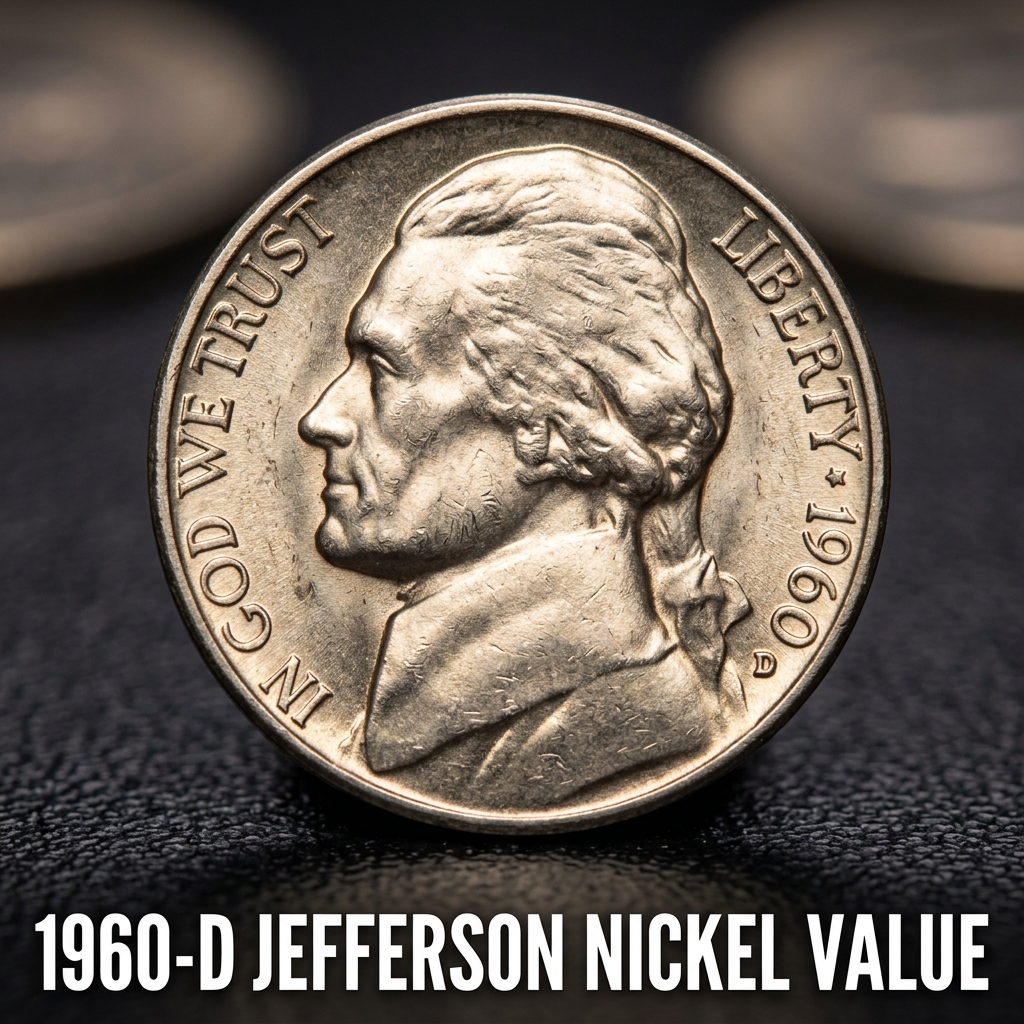
The 1960-D Jefferson Nickel is worth anywhere from $0.10 in heavily worn condition to over $20 or more in pristine uncirculated grades — and certain high-grade examples have sold for well over $100 at auction. If you found one in a drawer or old coin jar, you might be sitting on more than just five cents.
Whether you’re a first-time collector or just curious about an old coin you stumbled upon, this guide will walk you through everything you need to know about the 1960-D Jefferson Nickel’s value, what makes some worth more than others, and how to tell if yours is special.
What Is the 1960-D Jefferson Nickel?
The 1960-D Jefferson Nickel was struck at the Denver Mint, which is indicated by the small “D” mintmark on the reverse side of the coin, just to the right of Monticello. The Jefferson Nickel series started back in 1938 and replaced the Buffalo Nickel. These coins are made of 75% copper and 25% nickel — not silver — so their base metal value is minimal. However, the numismatic (collector) value is what matters here.
In 1960, the Denver Mint produced over 192 million of these nickels, making it a relatively common coin in circulated grades. But don’t let that discourage you. Even common coins can be worth solid money when they’re in exceptional condition. If you want a quick way to identify and assess coins you’ve found, using the best coin identifier app can save you a lot of time and guesswork right from your phone.
How Much Is the 1960-D Jefferson Nickel Worth Today?
The value of your 1960-D Jefferson Nickel depends almost entirely on its grade — that is, how well it has been preserved. Coins that have been circulated through everyday use show wear on the high points, like Jefferson’s cheekbone and hair details, while uncirculated examples look as fresh as the day they were minted.
Here’s a general value breakdown based on grade:
| Grade | Condition Description | Estimated Value |
|---|---|---|
| Good (G-4) | Heavy wear, design visible | $0.10 – $0.25 |
| Fine (F-12) | Moderate wear, details clear | $0.25 – $0.50 |
| Extremely Fine (EF-40) | Light wear on high points | $0.75 – $1.50 |
| About Uncirculated (AU-58) | Slight wear, near-mint look | $2 – $5 |
| Mint State (MS-63) | No wear, some contact marks | $5 – $12 |
| Gem Mint State (MS-65+) | Exceptional strike, full luster | $20 – $100+ |
For the most current auction data and certified coin prices, you can explore real-time 1960-D Jefferson Nickel price data in mint state grades to see exactly what collectors are paying right now. Prices can shift depending on market trends, so live data is always your best bet.
What Makes a 1960-D Nickel More Valuable?
Not all 1960-D Jefferson Nickels are created equal. Several factors can push your coin’s value significantly higher:
Full Steps (FS): This is the big one. On the reverse of Jefferson Nickels, Monticello’s front steps are a detail that often comes out weakly struck. If your coin shows five or six fully separated steps with no nicks or breaks in the lines, it qualifies as a “Full Steps” coin. A 1960-D in MS-65 Full Steps can be worth hundreds of dollars — sometimes well over $500 — compared to a non-FS example in the same grade.
Strike Quality: Coins struck early in a die’s life tend to be sharper. Look for crisp details in Jefferson’s hair and on the building.
Original Luster: Uncirculated coins should have a natural cartwheel-like shine when tilted under light. Cleaned or artificially polished coins lose that luster and drop significantly in collector value.
Eye Appeal: Toning, surface quality, and overall visual appeal all factor into how much a buyer will pay.
Using CoinHix to scan your coin can help you quickly assess which category it might fall into before you decide to get it professionally graded.
Should You Get Your 1960-D Jefferson Nickel Graded?
Professional grading by PCGS or NGC is generally only worth the cost if your coin appears to be in uncirculated condition — especially if it might qualify for Full Steps designation. Grading fees typically start around $20–$30 per coin, so submitting a coin worth only a dollar or two doesn’t make financial sense.
If you’re unsure where your coin stands, start by checking it yourself or using a tool like CoinHix, which lets you scan coins with your phone camera and get an instant grade estimate. It’s a smart first step before spending money on professional services.
You can also check out a detailed complete value guide for the 1960 Jefferson Nickel across all grades and mint marks to compare your coin against known examples.
Tips for Finding Value in Your Old Coin Collection
If you’ve been digging through old piggy banks, grandma’s coin jar, or estate sale finds, the 1960-D Jefferson Nickel is worth pulling out and inspecting. Here’s a quick checklist:
– Look for the “D” mintmark on the reverse, right of Monticello
– Check the steps on Monticello under magnification
– Assess the overall shine and surface quality
– Compare your coin to reference images online or use CoinHix for an instant scan
Even if your coin turns out to be common, building the habit of evaluating coins properly pays off when you eventually find a gem.
FAQ
Q: Is the 1960-D Jefferson Nickel made of silver?
A: No. The 1960-D Jefferson Nickel is composed of 75% copper and 25% nickel. There are no silver Jefferson Nickels from this era — the only silver nickels in the Jefferson series are the “War Nickels” minted from 1942 to 1945, which contain 35% silver and have a large mintmark above Monticello.
Q: How can I tell if my 1960-D nickel has Full Steps?
A: Look at the base of Monticello on the reverse side of the coin. You should see horizontal lines representing the front steps of the building. If you can count five or six fully separated, unbroken lines without any nicks cutting across them, your coin may qualify as Full Steps. A jeweler’s loupe or magnifying glass (10x) will help you see this clearly.
Q: Where is the best place to sell a valuable 1960-D Jefferson Nickel?
A: For common circulated examples, local coin dealers or coin shows are convenient options. For uncirculated or Full Steps coins, consider having the coin graded first by PCGS or NGC, then selling through major auction platforms like Heritage Auctions or eBay, where serious collectors actively bid. A graded coin always commands more buyer confidence and typically a higher final price.