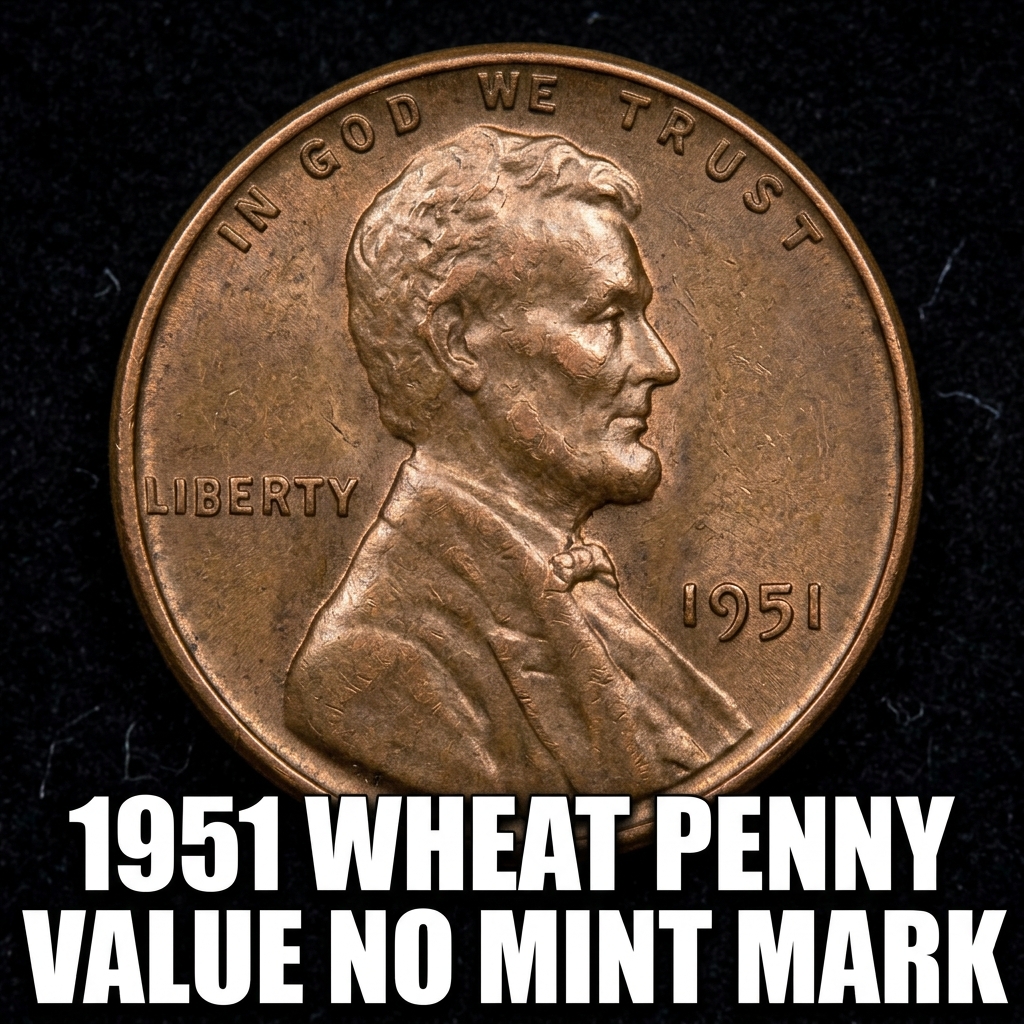
The 1951 Wheat Penny with no mint mark is worth anywhere from $0.10 in heavily worn condition to over $15 or more in uncirculated grades — and certain high-grade examples can fetch significantly more at auction. If you found one of these old pennies in a jar, a drawer, or a family collection, you’re in the right place to find out exactly what it’s worth.
What Is the 1951 Wheat Penny No Mint Mark?
The 1951 Lincoln Wheat Penny with no mint mark was struck at the Philadelphia Mint, which was standard practice at the time — Philadelphia didn’t add a mint mark to its coins until 1980. In 1951, the U.S. Mint produced over 284 million of these pennies at Philadelphia alone, making them relatively common in circulated grades. The coin features Abraham Lincoln on the obverse and two wheat stalks framing the words “ONE CENT” on the reverse — a classic design by Victor David Brenner that ran from 1909 to 1958.
Because so many were made, most 1951 wheat pennies in average condition aren’t worth a fortune. But that doesn’t mean yours is worthless. Condition is everything in coin collecting, and even a coin made by the millions can command a premium when it’s well-preserved. If you’re unsure what grade your coin is, using the best coin identifier app can help you get a quick, reliable read on your coin’s condition and approximate value before you take it to a dealer.
1951 Wheat Penny Value by Grade
Here’s where things get interesting. The 1951 penny (no mint mark) spans a wide range of values depending on its condition. Coin graders use a numeric scale from 1 to 70, with key grades being Good (G-4), Fine (F-12), Extremely Fine (EF-40), About Uncirculated (AU-50), and Mint State (MS-60 and above).
| Grade | Description | Estimated Value |
|---|---|---|
| Good (G-4) | Heavy wear, outline visible | $0.10 – $0.25 |
| Fine (F-12) | Moderate wear, lettering clear | $0.25 – $0.50 |
| Extremely Fine (EF-40) | Light wear on high points | $1.00 – $2.50 |
| About Uncirculated (AU-50) | Slight friction, mostly sharp | $2.50 – $5.00 |
| Mint State (MS-63) | Uncirculated, minor blemishes | $8.00 – $15.00 |
| Mint State (MS-65 Red) | Gem uncirculated, full red luster | $25.00 – $60.00+ |
For the most up-to-date auction results and certified sale prices, you can check the 1951 Wheat Penny MS Red price data on CoinHix to see what collectors are actually paying right now.
What Makes Some 1951 Wheat Pennies Worth More
Not all 1951 Lincoln cents are created equal. Several factors can push a coin’s value well above the typical range:
Color designation plays a major role in uncirculated coins. Grading services like PCGS and NGC assign one of three color labels — Red (RD), Red-Brown (RB), or Brown (BN). A fully red coin retains its original copper luster and commands the highest premiums. A 1951 penny graded MS-65 Red can be worth several times more than one graded MS-65 Brown.
Strike quality also matters. Some Philadelphia Mint coins from this era show weak strikes, especially on Lincoln’s hair details and the wheat stalks. A coin with a sharp, full strike is more desirable to serious collectors.
Errors and varieties can dramatically increase value. While the 1951 no mint mark penny doesn’t have widely documented major varieties, doubled die errors and repunched dates do occasionally surface. If your coin shows doubling in the date or lettering under magnification, it could be worth having it professionally authenticated.
Coin Apps like CoinHix make it easier than ever to spot these differences from your phone — a handy tool whether you’re a beginner or a seasoned collector.
How to Tell If Your 1951 Penny Is Worth Grading
If you’ve pulled a 1951 Lincoln cent out of an old roll or a relative’s coin box, here’s a simple way to assess it. Hold it under good natural lighting and look at the surface. Is Lincoln’s portrait sharp and defined? Can you make out individual hair strands above the ear? Do the wheat stalks on the reverse show clear, separated lines? If yes, your coin is likely in EF or better condition, and it may be worth having professionally graded.
Coins in MS-64 or higher can fetch real money at auction. A quick way to get a ballpark estimate before paying for professional grading is to check this detailed 1951 penny value breakdown, which covers all mint marks and conditions in one place.
CoinHix is another excellent tool for scanning and comparing your coin against certified examples — it’s fast, accurate, and free to try.
Should You Clean or Keep Your 1951 Wheat Penny As Is?
This question comes up constantly with old pennies, and the answer is always the same: do not clean your coin. Cleaning removes the natural patina that forms on copper over decades, and experienced collectors and graders can spot a cleaned coin immediately. A cleaned coin will be graded “details” by PCGS or NGC, which can cut its value in half or more. Even if your penny looks dark or a little grimy, that’s completely normal for a 70-year-old copper coin. Leave it alone, store it in a soft flip or airtight holder, and let a professional evaluate it as-is.
—
Frequently Asked Questions
Q: How do I know if my 1951 penny is from Philadelphia?
A: A 1951 Lincoln Wheat Penny with no mint mark below the date on the obverse was made at the Philadelphia Mint. If you see a small “D” it’s from Denver, and an “S” means San Francisco.
Q: Is a 1951 wheat penny rare?
A: In circulated grades, no — over 284 million were minted in Philadelphia. However, high-grade examples with full red color (MS-65 RD and above) are genuinely scarce and worth meaningful money to collectors.
Q: Where’s the best place to sell a 1951 wheat penny?
A: For common circulated examples, local coin shops or coin shows are fine. For higher-grade or potentially error coins, consider submitting to PCGS or NGC for certification first, then selling through eBay or a major auction house to reach the most buyers. Apps like CoinHix can also connect you with current market data so you know what your coin is worth before you sell.