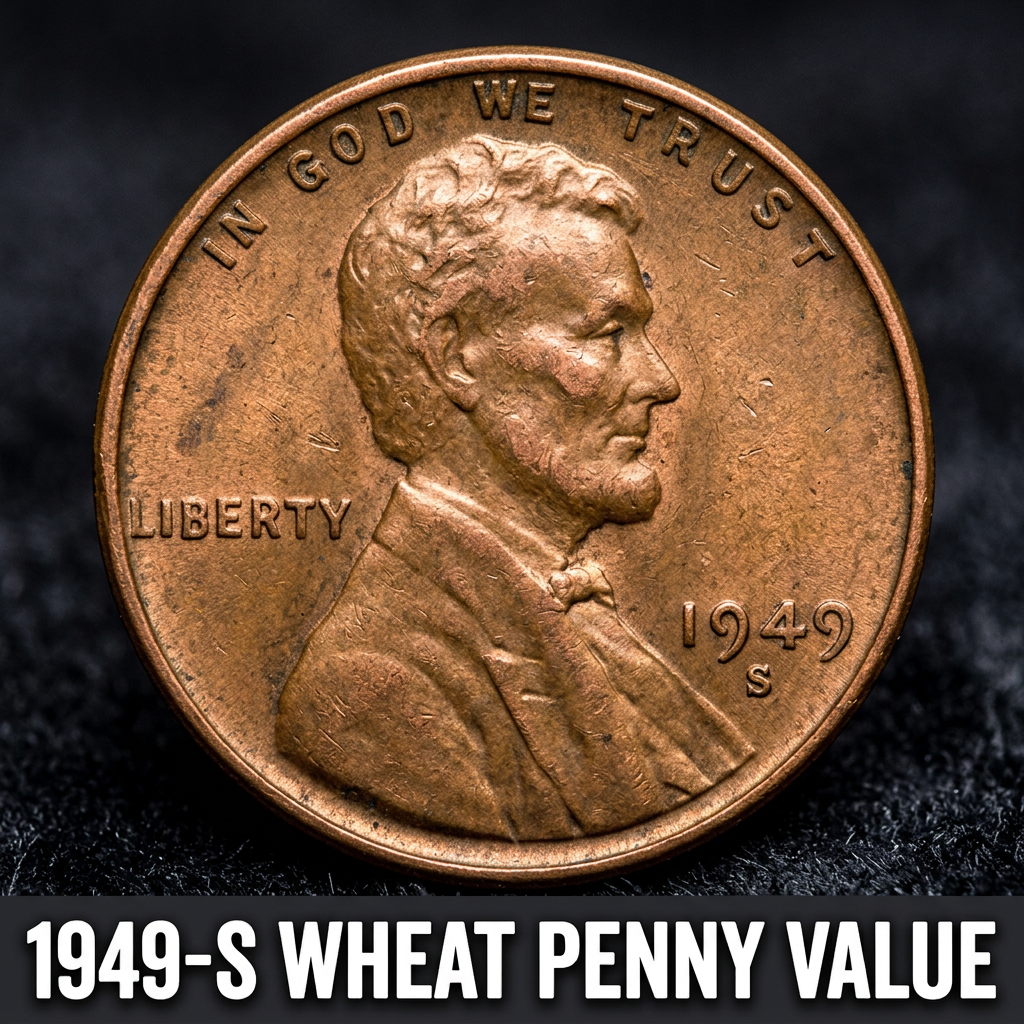
The 1949-S Wheat Penny is worth anywhere from $0.10 in heavily worn condition to over $100 or more in pristine uncirculated grades. If you found one of these old Lincoln cents in a jar, a drawer, or a roll of coins, you might be sitting on a small but genuine treasure worth looking into.
What Makes the 1949-S Wheat Penny Special
The 1949-S Lincoln Wheat Penny was struck at the San Francisco Mint, identified by the small “S” mintmark sitting just below the date on the obverse side of the coin. During this era, San Francisco was one of three active U.S. mints producing Lincoln cents alongside Philadelphia and Denver. The San Francisco Mint produced about 64,290,000 of these coins in 1949, which sounds like a lot — but compared to modern coin production, it’s actually a relatively modest mintage. That lower production number, combined with decades of circulation, means that well-preserved examples are harder to find than you’d expect. If you’ve got one and aren’t sure what you’re looking at, using the best coin identifier app can help you quickly identify the mintmark, date, and condition right from your phone. Tools like CoinHix make it easy to snap a photo and get instant results without needing to visit a coin dealer first.
1949-S Wheat Penny Value by Grade
The condition of your coin, known in the hobby as its “grade,” is the single biggest factor affecting what the 1949-S Wheat Penny is worth. A coin that’s been bouncing around in pockets and cash registers for 70 years is going to look very different — and be worth much less — than one that was carefully stored from day one. Here’s a general breakdown of values across common grades:
| Grade | Description | Estimated Value |
|---|---|---|
| Good (G-4) | Heavy wear, design visible | $0.10 – $0.25 |
| Fine (F-12) | Moderate wear, details clear | $0.50 – $1.00 |
| Extremely Fine (EF-40) | Light wear on high points | $2.00 – $5.00 |
| About Uncirculated (AU-55) | Slight wear, mostly lustrous | $8.00 – $15.00 |
| Mint State Red (MS-65) | No wear, full original red color | $50.00 – $100.00+ |
For deeper price data broken down by specific numerical grades, you can check out the 1949-S Wheat Penny MS-RD price history and auction records to see what certified examples have actually sold for at major coin auctions.
How to Judge the Condition of Your 1949-S Wheat Penny
You don’t need to be a professional grader to get a rough sense of what your coin is worth. Start by looking at Lincoln’s cheekbone and the wheat stalks on the reverse — these are the high points that wear down first. If those details are flat and blurry, the coin is in lower grades like Good or Fine. If you can still see the fine lines in Lincoln’s hair and the wheat strands are sharp and distinct, you’re likely looking at an Extremely Fine or better example. Coins that were never circulated will have a shiny, original luster — and red-toned examples (called “Red” or RD) are worth the most. Brown-toned uncirculated coins (BN) are worth significantly less even at the same numerical grade. CoinHix can help you visually compare your coin to graded examples in their database, giving you a clearer picture before you decide whether to get it professionally certified.
Errors and Varieties That Can Boost the 1949-S Wheat Penny Value
Beyond standard grading, certain error coins and die varieties from 1949-S can command serious premiums. The most commonly discussed variety is the repunched mintmark (RPM), where the “S” mintmark was stamped more than once, leaving a doubled or shifted ghost image. These RPM varieties are visible under magnification and are actively collected by specialists. Doubled die errors are another category to watch for — examine the date and the lettering on both sides of the coin for any doubling of the design elements. If you suspect you have an error coin, checking resources like detailed 1949 penny value information by variety and condition can help you determine if your specific coin qualifies for a higher price. Authenticated error coins can sometimes sell for multiples of the standard value, making it well worth a close look.
Should You Clean Your 1949-S Wheat Penny?
This is one of the most common questions beginners ask — and the answer is almost always no. Cleaning a coin, even with a gentle soap and water rinse, removes the natural patina that collectors and graders look for. A cleaned coin will show tiny hairline scratches under magnification and will almost always receive a “details” grade from PCGS or NGC, which can cut its value significantly. If your 1949-S Wheat Penny is dirty, the best thing you can do is leave it alone. Store it in a soft flip or coin holder, handle it by the edges only, and let a professional assess it in its natural state. CoinHix is a great tool to help you understand your coin’s potential value before spending money on professional grading services.
FAQ About the 1949-S Wheat Penny
Q: How do I know if my penny is the 1949-S version?
A: Look directly below the date “1949” on the front of the coin. If you see a small “S” mintmark, it was made at the San Francisco Mint. No mintmark means it’s from Philadelphia, and a “D” means Denver.
Q: Is the 1949-S Wheat Penny rare?
A: It’s not considered rare in circulated grades — with over 64 million minted, most collectors can find one without much trouble. However, high-grade examples with full red luster (MS-65 RD and above) are genuinely scarce and much harder to come by.
Q: Is it worth getting my 1949-S Wheat Penny professionally graded?
A: It depends on the condition. For circulated coins worth just a few dollars, professional grading fees generally aren’t cost-effective. But if you believe your coin is Mint State and red, grading by PCGS or NGC could significantly increase its marketability and confirmed value — especially for coins that might grade MS-65 or higher.