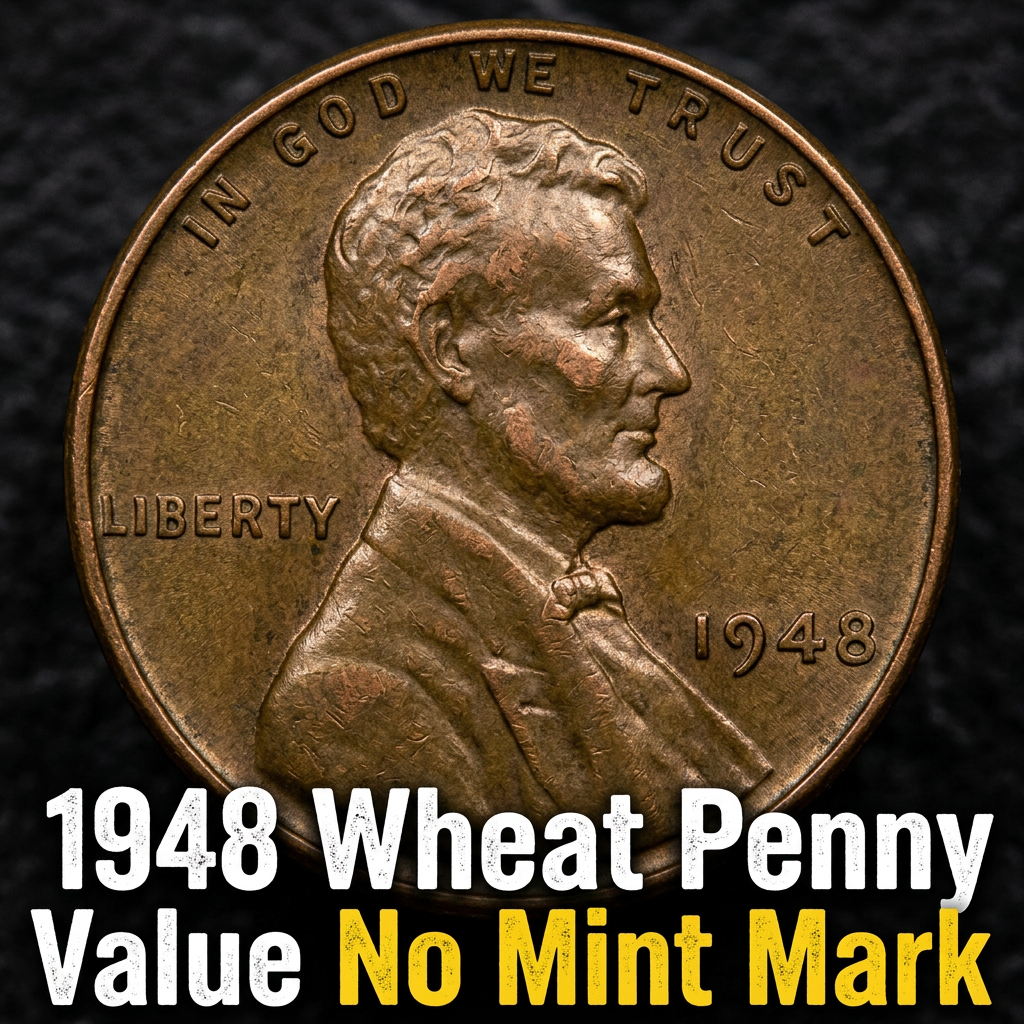
The 1948 Wheat Penny with no mint mark is worth anywhere from 10 cents in heavily worn condition to over $10 in well-preserved grades, with top certified examples selling for $50 or more. If you’ve found one of these classic Lincoln cents, you’re holding a piece of mid-century American history — and it might be worth more than you think.
What the No Mint Mark Means on a 1948 Wheat Penny
When you look at the reverse of a 1948 Wheat Penny and don’t see a small letter beneath the date, that means it was struck at the Philadelphia Mint. Philadelphia was the main U.S. Mint facility and didn’t use a mint mark on cents during this era. In 1948, the Philadelphia Mint produced over 317 million Lincoln Wheat Pennies — making it by far the highest-mintage version compared to the Denver (D) and San Francisco (S) issues.
Because so many were made, the 1948 Philadelphia cent isn’t a rare coin by any stretch. However, condition is everything. Coins that survived in uncirculated or near-uncirculated condition are far less common than worn examples, and that’s where the real value starts to build. If you’re not sure whether your coin is circulated or uncirculated, using the best coin identifier app can help you quickly assess grade and condition using just your smartphone camera.
1948 Wheat Penny Value No Mint Mark by Grade
The value of your 1948 Wheat Penny depends almost entirely on its condition, also known as its grade. Here’s a simple breakdown of what these coins typically sell for depending on wear:
| Grade | Description | Estimated Value |
|---|---|---|
| Good (G-4) | Heavy wear, design outlines visible | $0.10 – $0.25 |
| Fine (F-12) | Moderate wear, lettering clear | $0.25 – $0.50 |
| Extremely Fine (EF-40) | Light wear on high points only | $1.00 – $2.00 |
| Uncirculated (MS-63) | No wear, some bag marks | $5.00 – $10.00 |
| Gem Uncirculated (MS-65 RD) | Full red luster, sharp strike | $25.00 – $60.00+ |
For a deeper look at current auction prices and certified sale records, check out this detailed price data for the 1948 Wheat Penny in MS Red grades — it’s a great resource when you’re trying to understand what top-condition examples are actually selling for in today’s market.
What Makes a 1948 Wheat Penny More Valuable
Even though the 1948 Philadelphia Wheat Penny is a common date, certain factors can push its value significantly higher. The most important is color. Uncirculated copper cents are graded by their original mint color — Red (RD), Red-Brown (RB), or Brown (BN). A full Red example retains most of its original orange-copper luster and commands the highest premium. A Brown example, which has naturally toned over time, is worth noticeably less even at the same numerical grade.
Strike quality also matters. Some 1948 cents were struck with weak dies or show poor detail on Lincoln’s hair and the wheat stalks. A sharply struck coin with well-defined details is more desirable to serious collectors. Additionally, coins that have been professionally graded and slabbed by services like PCGS or NGC carry a premium because the grade has been independently verified.
Keep an eye out for errors too. Doubled die varieties, off-center strikes, and repunched dates occasionally turn up on 1948 cents and can multiply the coin’s value several times over.
How to Check Your 1948 Wheat Penny Value Quickly
If you’ve got a 1948 Wheat Penny sitting in a jar or found it in an old collection, there are easy ways to figure out what it might be worth. Start by examining the coin under good lighting or a magnifying glass. Look for wear on Lincoln’s cheekbone and the top of his head — those are the first areas to show circulation.
For a quick and reliable value check, CoinHix is one of the most trusted tools available for coin collectors at every level. Whether you’re a first-time finder or a seasoned hobbyist, CoinHix gives you access to real market pricing data in a clean, easy-to-use format.
You can also visit this complete guide to 1948 penny values for a thorough breakdown of all three mint marks — Philadelphia, Denver, and San Francisco — with up-to-date price estimates across all grades. It’s a helpful reference whether you’re buying, selling, or just curious.
Should You Clean or Keep Your 1948 Wheat Penny As Is
One of the most common mistakes new coin owners make is cleaning their old coins. It feels natural to want to shine up a grimy penny, but cleaning removes the original surface of the coin and drastically reduces its value. Collectors call this “cleaning damage,” and even a coin that looks brighter afterward will sell for a fraction of what a naturally toned original would bring.
Store your 1948 Wheat Penny in a coin flip, 2×2 holder, or airtight capsule to protect it from further wear and environmental damage. If you believe your coin might be in high uncirculated condition, consider having it professionally graded. The cost of slabbing is usually worth it for any coin valued over $20.
And if you want a fast, no-fuss way to identify and price coins straight from your phone, CoinHix is worth downloading — it’s designed for everyday people who stumble across old coins and want real answers without having to dig through complicated price guides.
FAQ
Q: Is a 1948 Wheat Penny with no mint mark rare?
A: No, the 1948 Philadelphia Wheat Penny is one of the most common Wheat cents with over 317 million minted. However, finding one in uncirculated condition with full red color is much harder and significantly more valuable.
Q: How do I know if my 1948 Wheat Penny is worth getting graded?
A: If your coin shows no signs of wear, retains its original copper-red color, and has no visible scratches or cleaning marks, it’s worth considering professional grading. Coins in MS-65 Red or better can sell for $30 to $60 or more, making the grading fee worthwhile.
Q: Where is the mint mark on a 1948 Wheat Penny?
A: The mint mark appears on the obverse (front) of the coin, just below the date on the right side. A “D” indicates Denver, an “S” indicates San Francisco, and no mint mark means it was made in Philadelphia.