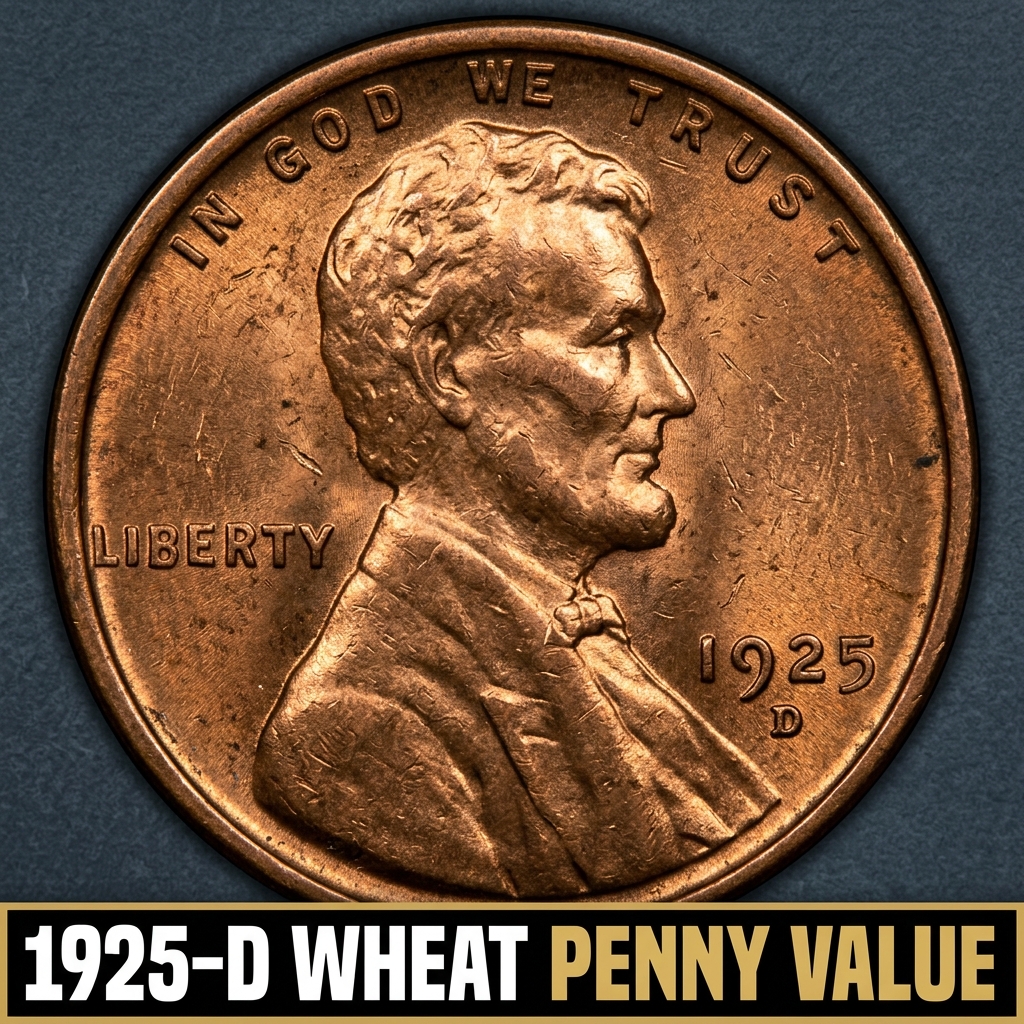
The 1925-D Wheat Penny is worth anywhere from $1 to $5 in well-worn condition, but in higher grades it can fetch $50, $100, or even several hundred dollars. If you found one in an old jar or coin collection, you might be sitting on more than you think.
What Makes the 1925-D Wheat Penny Special
The “D” in 1925-D stands for Denver, meaning this coin was struck at the Denver Mint. That small mint mark — found just below the date on the obverse — makes a big difference in value compared to the Philadelphia issue. The Denver Mint produced around 22.5 million of these pennies in 1925, which sounds like a lot, but far fewer have survived in good condition over the past century. Like all Lincoln Wheat Pennies, the obverse features Abraham Lincoln’s portrait designed by Victor David Brenner, while the reverse shows two stalks of wheat flanking the words “ONE CENT.” These coins were minted from 95% copper, giving them that warm reddish-brown color that collectors love. If you’re not sure whether the coin you’re holding is a 1925-D or another variety, using the best coin identifier app can help you confirm the mint mark and date quickly without needing to visit a dealer.
1925-D Wheat Penny Value by Grade
Coin grading is everything when it comes to value. A heavily circulated 1925-D penny with worn details might only be worth a dollar or two, while an uncirculated example in brilliant red condition can be worth hundreds. Here’s a breakdown of typical retail values based on grade:
| Grade | Description | Estimated Value |
|---|---|---|
| Good (G-4) | Heavy wear, outline visible | $1 – $2 |
| Very Good (VG-8) | Moderate wear, some detail | $3 – $5 |
| Fine (F-12) | Even wear, lettering clear | $6 – $12 |
| Very Fine (VF-20) | Light wear on high points | $15 – $25 |
| Extremely Fine (EF-40) | Slight wear, sharp detail | $35 – $55 |
| About Uncirculated (AU-50) | Trace wear only | $60 – $90 |
| Mint State Red (MS-63 RD) | No wear, original red color | $150 – $300+ |
For the most up-to-date market data, you can check the 1925-D Wheat Penny price trends in MS Red condition to see where the market currently stands. Prices shift depending on recent auction results and collector demand, so it pays to stay informed.
How to Tell If Your 1925-D Penny Is Worth More
Color matters a great deal for Wheat Pennies. Uncirculated coins are graded as Red (RD), Red-Brown (RB), or Brown (BN). Red coins — those that have retained their original copper luster — are the most desirable and command the highest premiums. A brown uncirculated 1925-D might be worth $50, while the same coin in red could be worth five times that amount. Beyond color, look for strong strike quality and minimal contact marks. You’ll also want to check for any cleaning — many old pennies were polished by well-meaning owners, which actually reduces value significantly among serious collectors. If you’re serious about getting an accurate assessment, CoinHix is a great tool that lets you look up current values and compare your coin against recent sales in seconds.
Where to Sell Your 1925-D Wheat Penny
Once you know what you have, the next step is figuring out where to sell. Options include eBay, local coin shows, coin dealers, and online platforms like Heritage Auctions or Great Collections. For lower-grade examples worth just a few dollars, eBay or a local dealer is probably the most practical route. For high-grade examples — especially those grading MS-63 or better — professional certification through PCGS or NGC is worth the investment, as it adds credibility and can significantly boost your selling price. You can also browse the complete 1925 penny value breakdown across all mint marks and grades to compare how the Denver issue stacks up against Philadelphia and San Francisco versions before you decide to sell. CoinHix also lets you track prices over time so you can sell at the right moment.
Tips for Storing and Protecting Your Coin
Whether your 1925-D penny is worth $2 or $200, proper storage helps preserve its condition. Never clean your coins — even gentle scrubbing can leave hairline scratches that tank the grade. Store coins in acid-free coin flips, hard plastic holders, or certified slabs if professionally graded. Keep them away from humidity, direct sunlight, and fluctuating temperatures. For beginners who want to start organizing a collection, CoinHix offers an easy way to catalog what you own and track each coin’s estimated value over time. A little care now can protect both the history and the value of what you’ve found.
Frequently Asked Questions
Q: How do I know if my penny is a 1925-D or a 1925 Philadelphia mint?
A: Look just below the date on the front of the coin. If you see a small “D,” it was made in Denver. No mint mark means it came from Philadelphia. A magnifying glass or loupe makes this much easier to read on worn coins.
Q: Is the 1925-D Wheat Penny rare?
A: It’s not considered a rare coin in circulated grades — over 22 million were made. However, finding one in true uncirculated condition with original red color is genuinely scarce, and those examples are highly sought after by collectors.
Q: Should I get my 1925-D penny professionally graded?
A: It depends on the condition. If your coin looks uncirculated or close to it, professional grading by PCGS or NGC is absolutely worth it. For average worn examples, the grading fee would likely exceed the coin’s market value, so it’s generally not necessary.