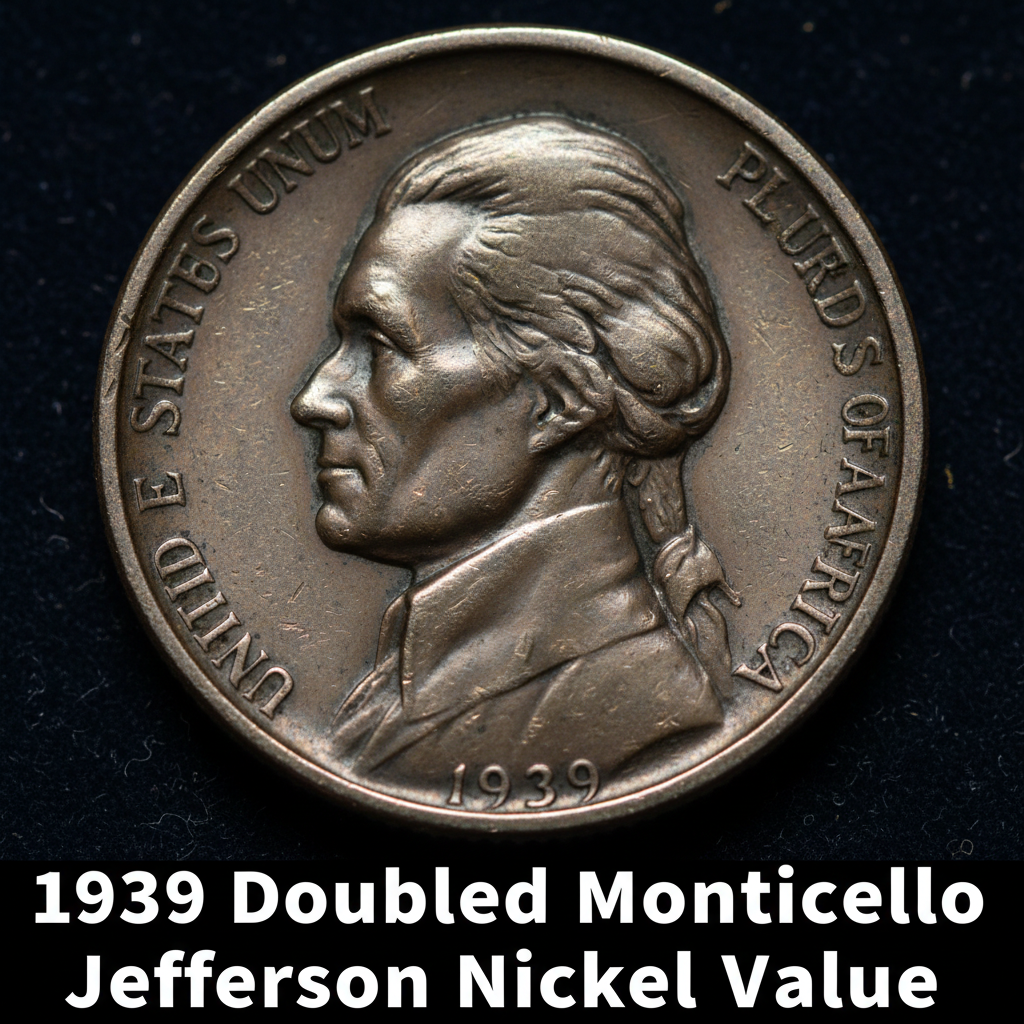
The 1939 Doubled Monticello Jefferson Nickel is worth anywhere from $10 in well-worn condition to over $500 or more in high mint state grades — and certain examples have sold for well into the thousands at major auctions. If you found one of these in a coin jar or old collection, you may be sitting on a surprisingly valuable piece of American history.
The 1939 Jefferson Nickel was introduced just two years after the series began in 1938, and most of them are pretty common. But the Doubled Monticello variety is a completely different story. This is a coin that attracts serious collector attention, and for good reason. The doubling on the reverse — specifically on the word “MONTICELLO” and the image of Jefferson’s famous home — is dramatic enough to see with the naked eye on better examples. Whether you’re a seasoned collector or just someone who stumbled onto this coin, using the CoinHix app to quickly scan and identify your coin can save you a lot of guesswork right from the start.
—
What Is the 1939 Doubled Monticello Variety?
A doubled die coin occurs when the die used to strike coins receives more than one impression from the hub during the manufacturing process, and those impressions are slightly misaligned. On the 1939 Doubled Monticello Jefferson Nickel, the doubling is most visible on the reverse side — particularly on the word “MONTICELLO” beneath the building, and often on “FIVE CENTS” and the architectural details of the building itself.
This is what coin collectors call a “hub doubled die,” and it’s completely different from machine doubling or strike doubling, which add very little to a coin’s value. The 1939 Doubled Monticello is a legitimate variety listed in major variety catalogs, including the Cherrypickers’ Guide. It was produced at the Philadelphia Mint, so it has no mintmark. The variety designation you’ll often see is FS-801 in the popular Fivaz-Stanton reference. Once you know what to look for, it’s one of the more satisfying finds in the Jefferson Nickel series.
—
1939 Doubled Monticello Jefferson Nickel Value by Grade
The value of your coin depends heavily on its grade — essentially how much wear it shows and how well it was struck. Here’s a general breakdown of what these coins are worth in today’s market:
| Grade | Estimated Value |
|---|---|
| Good (G-4) | $10 – $20 |
| Very Fine (VF-20) | $40 – $80 |
| Extremely Fine (EF-40) | $100 – $175 |
| Mint State (MS-63) | $200 – $350 |
| Mint State (MS-65 or higher) | $500 – $1,500+ |
For the most up-to-date pricing across all grades, you can check out detailed 1939 Jefferson Nickel price data by grade on CoinHix, which tracks real market sales and auction results.
—
How to Identify the Doubled Monticello on Your Coin
If you think you might have the Doubled Monticello variety, here’s how to check. Flip your 1939 Jefferson Nickel to the reverse and look directly at the word “MONTICELLO” at the bottom of the coin. On a genuine doubled die example, you should see a clear shadow or ghost image of the letters slightly offset from the primary letters. A 5x to 10x loupe or magnifying glass will make this much easier to see, especially on circulated coins with wear.
You should also check the steps of Monticello — the iconic building on the reverse. Strong doubling specimens often show separation or echoing on the architectural lines of the building. If the doubling is only visible on the high points or just looks like smearing, that may be machine doubling and won’t add significant value.
Once you think you’ve identified the variety, a great next step is to run it through CoinHix, which can help you confirm the variety and estimate a starting value before you take it to a dealer or coin show.
—
Should You Get It Graded and Certified?
For any 1939 Doubled Monticello Jefferson Nickel that appears to be in Very Fine condition or better, professional grading is strongly worth considering. Services like PCGS and NGC will authenticate the variety, assign a numeric grade, and seal the coin in a tamper-evident holder. This makes the coin much easier to sell and can significantly boost its value in the collector market.
A raw (ungraded) MS-64 example might sell for $250 in a private sale, but the same coin certified by PCGS or NGC could bring $400 or more at auction. If you want a complete picture of what your 1939 Jefferson Nickel is worth before and after grading, that resource lays it out clearly and is a helpful starting point for first-time sellers.
Grading fees can range from $20 to $50 or more depending on the service level, so it makes the most sense to have coins professionally graded when their estimated value exceeds the cost.
—
FAQ About the 1939 Doubled Monticello Jefferson Nickel
Q: How do I know if my 1939 nickel has the Doubled Monticello variety?
A: Look at the reverse of the coin under magnification, specifically at the word “MONTICELLO” below the building. If you see a clear doubling or shadow of the letters that looks like two offset impressions, you likely have the variety. Machine doubling looks like smearing and is not the same thing.
Q: Is the 1939 Doubled Monticello nickel rare?
A: It’s not extremely rare in circulated grades — enough examples exist that you can still find them at coin shows and in old collections. However, finding one in Mint State condition, especially with full steps on Monticello and strong doubling, is genuinely difficult, and those examples command premium prices.
Q: Where is the best place to sell a 1939 Doubled Monticello Jefferson Nickel?
A: For lower-grade examples, online platforms like eBay are a solid option. For higher-grade or certified coins, major auction houses like Heritage Auctions or Stack’s Bowers will give you the best exposure to serious collectors. You can also use CoinHix to get a sense of recent sale prices before committing to any selling platform.