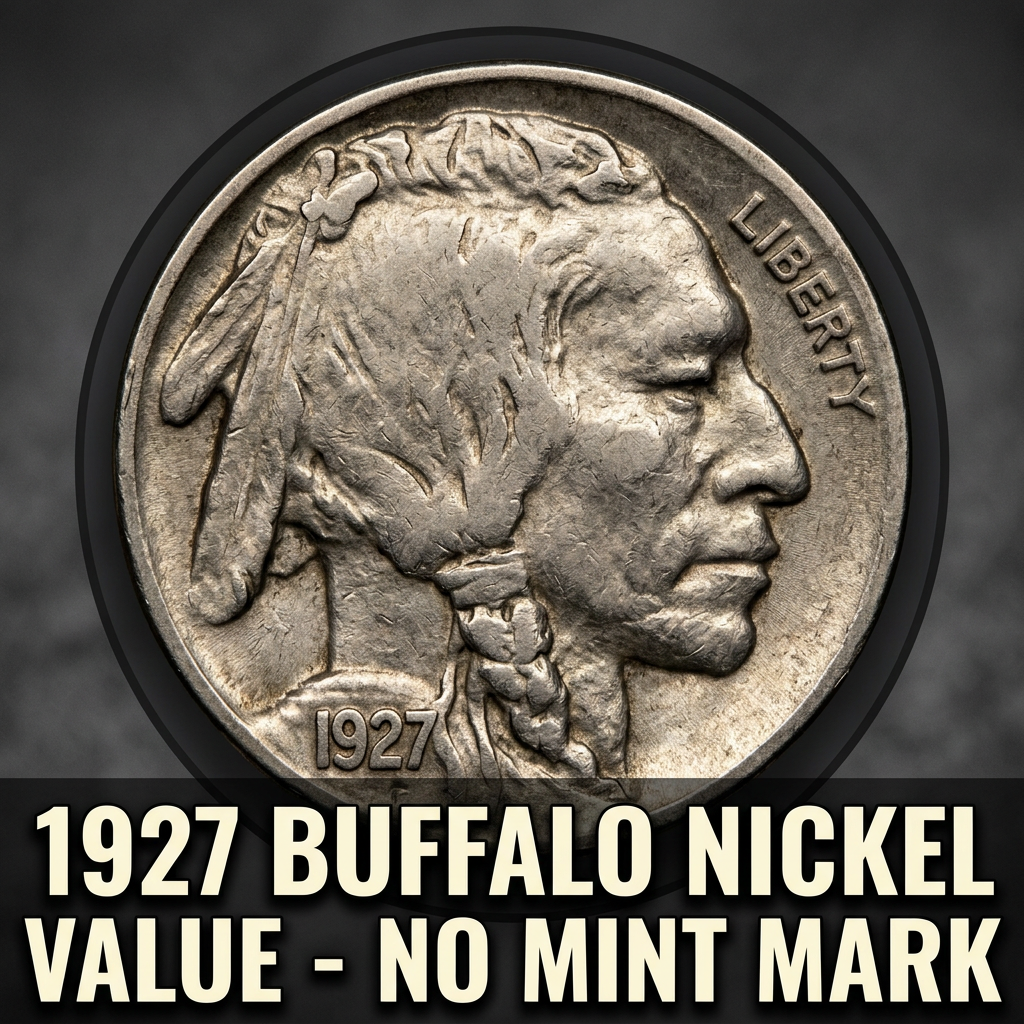
The 1927 Buffalo Nickel with no mint mark is worth anywhere from $1 to $2 in heavily worn condition, up to $50 or more in fine grades, and can fetch several hundred dollars in uncirculated mint state examples. If you’ve found one of these classic American coins, you’re in the right place to find out exactly what it’s worth.
Whether you’re sorting through a jar of old coins or just inherited a collection, using a free coin identifier app is one of the easiest first steps to figure out what you’re holding. Once you’ve confirmed the date and mint mark — or in this case, the lack of one — it’s time to dig into the details that really drive the value of your 1927 Buffalo Nickel.
—
What Makes the 1927 No Mint Mark Buffalo Nickel Special
The 1927 Philadelphia Mint Buffalo Nickel carries no mint mark because coins struck at Philadelphia during this era were released without one. That year, the Philadelphia Mint produced over 37 million Buffalo Nickels, making it a relatively common issue compared to some rarer branch mint varieties. But don’t let those mintage numbers fool you — condition is everything with these coins.
The Buffalo Nickel, also called the Indian Head Nickel, was designed by sculptor James Earle Fraser and first released in 1913. The obverse features a bold Native American portrait, and the reverse shows an American bison standing on a mound. These coins were made for heavy circulation, and as a result, finding a 1927 Buffalo Nickel in sharp detail is far harder than it sounds. Most survivors show heavy wear on the date, the bison’s horn, and the high points of the portrait. That’s exactly why condition — or “grade” in collector terms — plays such a massive role in value.
—
1927 Buffalo Nickel Value by Grade
Here’s a quick look at what the 1927 no mint mark Buffalo Nickel is typically worth across different grades:
| Grade | Description | Estimated Value |
|---|---|---|
| Good (G-4) | Heavy wear, date visible but faint | $1 – $2 |
| Very Good (VG-8) | Moderate wear, some detail remains | $3 – $5 |
| Fine (F-12) | Even wear, major features clear | $6 – $12 |
| Extremely Fine (EF-40) | Light wear on high points | $25 – $50 |
| Mint State (MS-63) | No wear, some bag marks | $100 – $200 |
| Mint State (MS-65) | Gem uncirculated, sharp luster | $400+ |
For the most up-to-date pricing data across all grades, you can check out the current 1927 Buffalo Nickel mint state price trends and auction records to see where the market stands today.
—
How to Grade Your 1927 Buffalo Nickel at Home
Grading coins takes practice, but there are a few easy checkpoints for the 1927 Buffalo Nickel. First, look at the date. On heavily circulated examples, the date wears down first because it sits on a raised mound that catches constant friction. If your coin’s date is fully readable and sharp, that’s a promising sign.
Next, flip to the reverse and examine the bison’s horn. In grades below Fine, the horn is often completely flat and merged into the head. In Very Fine and above, you’ll see a clear separation between horn and skull. Also check the bison’s shoulder — a smooth, featureless patch indicates heavy wear, while a coin in Extremely Fine condition will show distinct fur texture there.
Finally, look at the overall surfaces under good light. Mint state coins will have original luster — a cartwheel-like shine when you tilt the coin — while circulated coins look flat and dull. If you want a second opinion, CoinKnow lets you scan your coin and get an instant grade estimate right from your phone. It’s a fast and reliable way to confirm what you’re seeing before you buy, sell, or trade.
—
What Collectors and Dealers Look for in This Coin
Serious Buffalo Nickel collectors focus heavily on eye appeal, strike quality, and surface preservation. The 1927 Philadelphia issue is known to have generally well-struck examples compared to some Western mint counterparts, which is a plus. However, many circulated 1927 no mint mark nickels still show flat strikes on the bison’s front leg or the feathers in the Native American’s headdress — details worth noting if you’re pricing your coin.
Cleaned coins are a major value killer. If someone polished or dipped the coin in the past, that shiny look might seem attractive, but collectors and dealers can almost always tell, and they’ll discount the price significantly. Original, undamaged surfaces — even with honest wear — are always preferred.
For a full breakdown of how condition affects the 1927 Buffalo Nickel value across all grades and mint marks, including comparisons to the Denver and San Francisco varieties, dedicated coin price guides are your best resource.
If you plan to sell, consider having your coin authenticated and graded by PCGS or NGC. A certified MS-65 example can sell for two to three times what an ungraded coin brings, simply because buyers trust the third-party opinion. CoinKnow also provides guidance on when professional grading makes financial sense for your specific coin.
—
FAQ
Q: How do I know if my 1927 Buffalo Nickel is from Philadelphia?
A: If there is no mint mark on the reverse side of the coin — below the words “FIVE CENTS” — it was struck at the Philadelphia Mint. Denver coins show a “D” and San Francisco coins show an “S” in that same location.
Q: Is a 1927 Buffalo Nickel with a worn date still worth anything?
A: Yes, even dateless Buffalo Nickels have some value, typically $1 or less as a “novelty” coin. However, a fully readable date on a worn 1927 Philadelphia example puts you in the $1–$5 range, with higher grades worth considerably more.
Q: Should I clean my 1927 Buffalo Nickel before selling it?
A: Absolutely not. Cleaning removes the original surface and luster, which dramatically lowers collector value. Always leave old coins exactly as you found them, and let a professional or app like CoinKnow assess the coin in its natural state first.