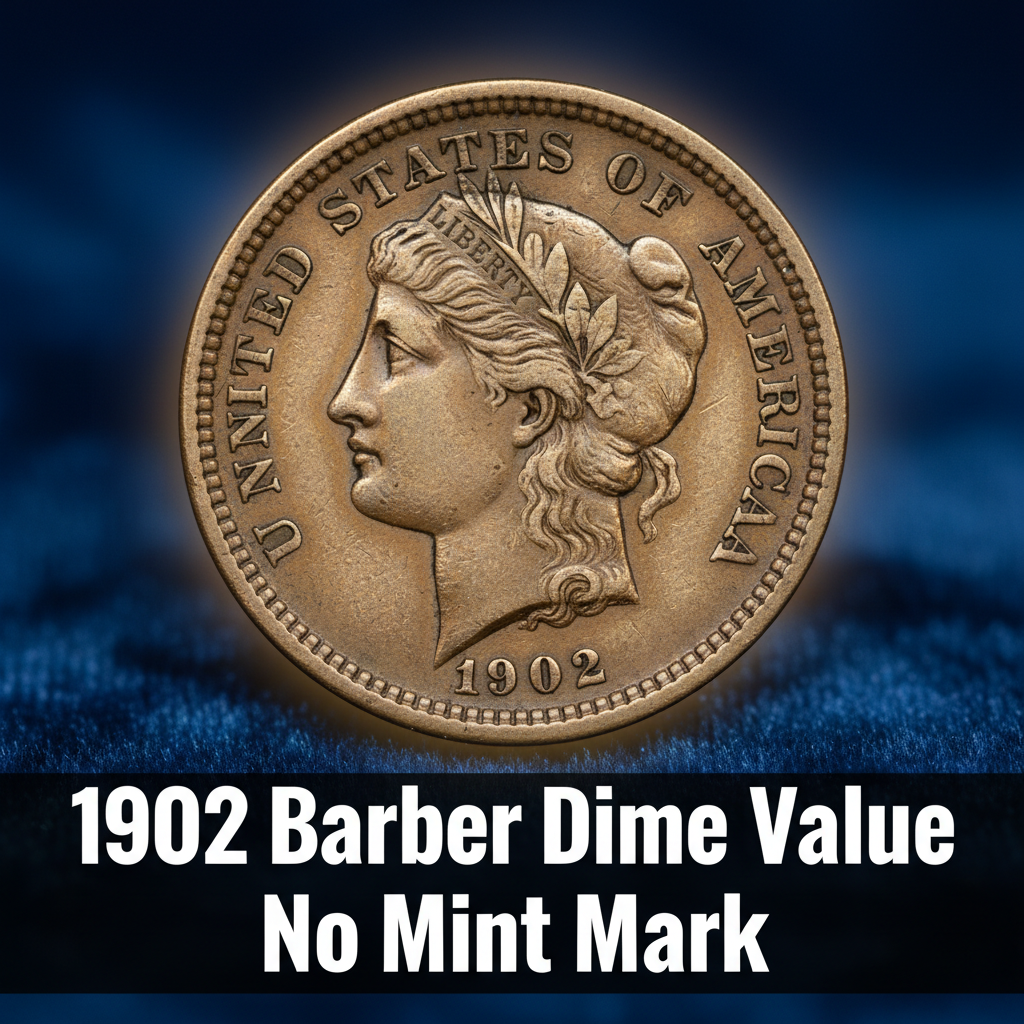
The 1902 Barber Dime with no mint mark is worth anywhere from $3 to $5 in heavily worn condition, climbing to $30 or more in fine grade, and potentially reaching $100 to $300 or higher in uncirculated mint state. If you found one of these old silver dimes in a jar or inherited collection, you’re holding a piece of early 20th century American history — and it might be worth more than you think.
What Is the 1902 Barber Dime?
The 1902 Barber Dime was struck at the Philadelphia Mint, which is why coins from this facility carry no mint mark at all. Designed by Charles E. Barber, the Chief Engraver of the U.S. Mint at the time, these dimes feature Lady Liberty wearing a Greco-Roman helmet on the obverse and a wreath surrounding the word “ONE DIME” on the reverse. The Philadelphia Mint produced 21,380,777 of these dimes in 1902, making them relatively common compared to some other Barber Dime dates. Still, surviving examples in high grades are harder to come by than the mintage numbers suggest — most were circulated heavily in everyday commerce. If you’re trying to identify whether your coin is the real deal or figure out its exact grade, using the best coin identifier app can save you a lot of guesswork and give you a reliable starting point before you head to a professional dealer.
How Much Is the 1902 Barber Dime Worth by Grade?
Coin value depends heavily on condition, known in the hobby as “grade.” A coin with smooth, nearly flat details is at the low end, while one that looks nearly brand new commands a premium. Here’s a general value breakdown for the 1902 Barber Dime with no mint mark:
| Grade | Description | Estimated Value |
|---|---|---|
| Good (G-4) | Heavy wear, design outline visible | $3 – $5 |
| Very Good (VG-8) | Moderate wear, some detail remains | $6 – $10 |
| Fine (F-12) | Even wear, clear lettering | $12 – $20 |
| Very Fine (VF-20) | Light wear on high points | $25 – $40 |
| Extremely Fine (EF-40) | Slight wear, strong details | $50 – $75 |
| Mint State (MS-60 to MS-65+) | No wear, full luster | $100 – $300+ |
For a more detailed breakdown including recent auction results, you can check out this helpful guide on 1902 Barber Dime values across all grades and mint marks to see exactly where your coin falls.
What Makes Some 1902 Barber Dimes More Valuable?
Beyond grade, a few other factors can bump up the value of your 1902 no mint mark Barber Dime significantly. Luster is one of the biggest. An uncirculated coin with original, unbroken mint luster looks almost alive under light — it will catch the eye of serious collectors and command top dollar at auction. Strike quality also matters. Some 1902 Philadelphia examples were struck with a sharp, crisp die while others look a bit soft. A fully struck coin with defined hair curls on Liberty’s portrait and complete wreath details on the reverse is more desirable. Eye appeal — the overall look of a coin — plays a bigger role than many beginners realize. Two coins with identical grades can sell for very different prices based on color, surface quality, and visual impact. If your coin looks especially clean and bright, don’t assume it’s worth the same as a dull example in the same technical grade. CoinHix is a great tool to photograph your coin and get an instant AI-powered assessment of its condition and approximate value before you sell or trade.
Silver Content and Melt Value
One thing many people overlook is that Barber Dimes are made of 90% silver. The 1902 Barber Dime weighs 2.5 grams and contains approximately 0.07234 troy ounces of pure silver. That means even a worn, low-grade example has intrinsic metal value based on the current silver spot price. When silver trades around $25 per troy ounce, the melt value alone is roughly $1.80. While that’s below what most circulated examples sell for, it does set a natural floor on the coin’s worth — nobody should be selling these for less than melt. If silver prices rise significantly, that floor rises too. Always factor this in when evaluating what you’ve got. CoinHix automatically pulls live silver prices and calculates melt value for any coin you scan, which takes the math off your plate entirely.
FAQ
Q: Does the 1902 Barber Dime without a mint mark mean it’s rare?
A: Not necessarily. No mint mark simply means it was made in Philadelphia, which was the main U.S. Mint facility. The 1902 Philadelphia issue had a large mintage of over 21 million coins, so it’s one of the more common Barber Dime dates. Rarity comes from the condition, not the absence of a mint mark in this case.
Q: How can I tell if my 1902 Barber Dime is in Good or Fine condition?
A: Look at the details on Lady Liberty’s head. In Good condition, her hair and helmet are nearly smooth from wear. In Fine condition, you can see individual hair strands and some helmet detail. The motto “IN GOD WE TRUST” should be fully readable in Fine grade. If you’re unsure, try scanning it with CoinHix for an instant grade estimate using your phone’s camera.
Q: Is it worth getting my 1902 Barber Dime professionally graded?
A: It depends on the coin’s condition. If your coin appears to be in Very Fine grade or better, professional grading by PCGS or NGC can add credibility and potentially increase its sale price. For coins in Good to Fine condition worth under $20, the grading fee usually isn’t worth it. A coin that looks uncirculated, however, is absolutely a candidate for professional certification.