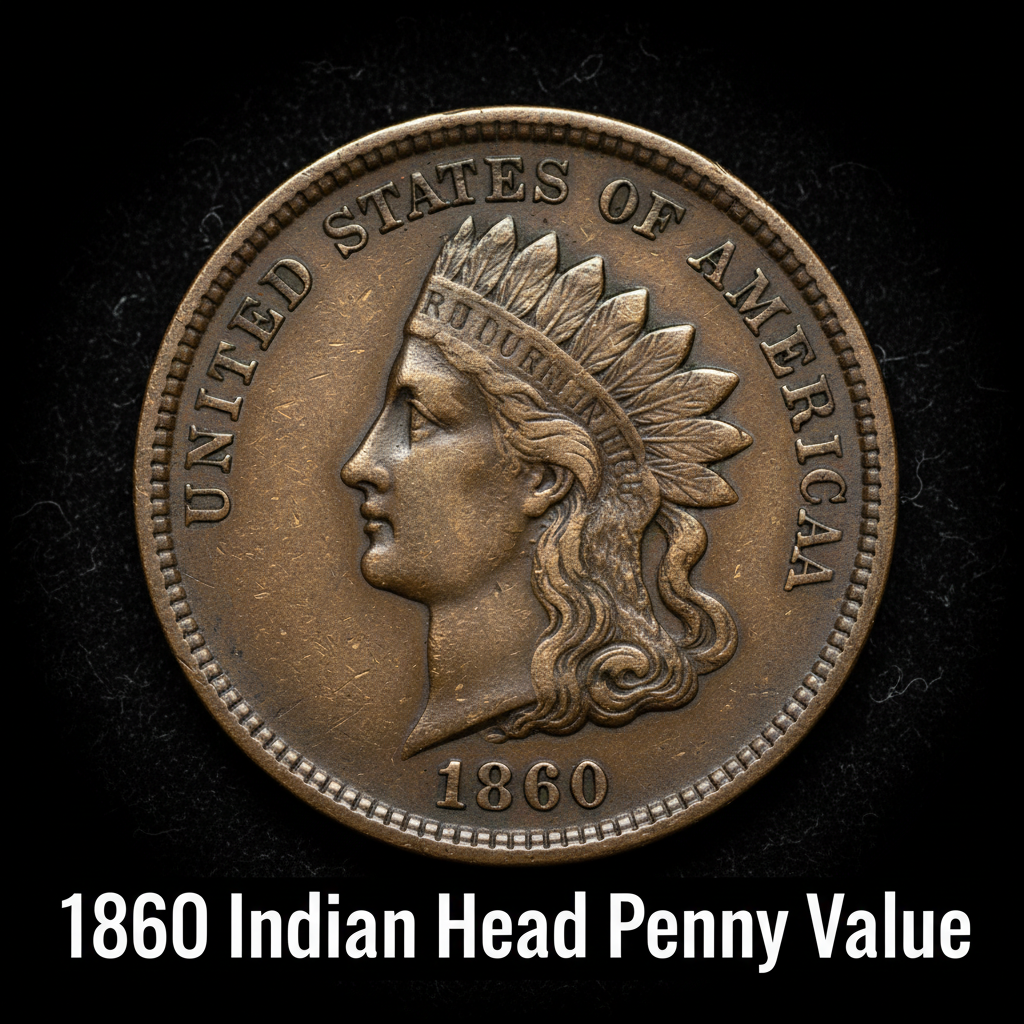
The 1860 Indian Head Penny is worth anywhere from $5 in heavily worn condition to over $150 or more in mint state, depending on grade and eye appeal. If you’ve found one of these old cents in a drawer, jar, or inherited collection, you’re in the right place to find out exactly what it’s worth.
—
What Makes the 1860 Indian Head Penny Special
The 1860 Indian Head Penny holds a unique place in American coin history. This was actually a transitional year for the series — the design shifted from a pointed bust to a more rounded bust on Lady Liberty’s portrait, making 1860 a fascinating date for collectors. The coin was struck at the Philadelphia Mint, with a mintage of over 20 million pieces, which sounds like a lot, but more than 160 years of circulation have made well-preserved examples surprisingly hard to find.
If you’ve come across one of these pennies and want a quick identification, using the best coin identifier app on your phone is one of the easiest ways to confirm what you have before diving into the value research. A clear photo and a reliable app can save you a lot of guesswork right from the start.
The 1860 Indian Head Penny features a copper-nickel composition (88% copper, 12% nickel), giving it a distinctive pale, almost silver-like tone compared to later bronze Indian Head cents. That unique color is one of the first things you’ll notice when you hold one.
—
1860 Indian Head Penny Value by Grade
Coin value is almost entirely driven by condition, or “grade” in collector language. A coin that looks like it spent a century bouncing around in a pocket is worth far less than one that was tucked away safely and still shows its original detail and luster.
Here’s a general value breakdown for the 1860 Indian Head Penny:
| Grade | Description | Estimated Value |
|---|---|---|
| Good (G-4) | Heavy wear, outline visible | $5 – $8 |
| Very Good (VG-8) | Major details clear | $10 – $15 |
| Fine (F-12) | Moderate wear, lettering sharp | $18 – $28 |
| Extremely Fine (EF-45) | Light wear on high points | $55 – $80 |
| Mint State (MS-63) | No wear, some contact marks | $120 – $175 |
| Mint State (MS-65) | Gem quality, full luster | $300+ |
For the most up-to-date auction results and certified coin sales, you can browse detailed 1860 Indian Head Penny price data by grade on CoinHix, which tracks real market transactions so you’re seeing what collectors are actually paying today.
—
How to Tell What Grade Your 1860 Penny Is
You don’t need to be a professional numismatist to get a rough idea of your coin’s grade. Start by looking at the feathers in Lady Liberty’s headdress — on a well-worn coin, these will be flat and indistinct. On a finer coin, you’ll see sharp individual feathers and a clear “LIBERTY” inscription on the headband.
Next, check the diamond-shaped shield on the reverse. On heavily worn examples, the horizontal lines inside the shield tend to merge together. In higher grades, those lines stay crisp and separated.
Hold your coin under a single light source and tilt it slowly — this is called “raking light,” and it’s the best way to spot wear on the high points of the design. If you see smooth, shiny flat spots on Liberty’s cheek or on the eagle’s breast feathers, that’s wear. If the entire surface has the same texture and luster, you might have an uncirculated example worth significantly more.
Using CoinHix to photograph and compare your coin against graded examples is a smart move before you decide whether to sell, hold, or get it professionally certified.
—
Should You Get Your 1860 Indian Head Penny Graded?
Professional grading by PCGS or NGC is generally worth the cost if your coin looks uncirculated or close to it. A certified MS-63 or better coin commands a substantial premium because buyers trust the grade. For circulated examples in Good or Fine condition, the grading fee may outweigh the benefit since the coins themselves sell for under $30.
If you’re unsure where your coin falls, CoinHix offers a straightforward way to compare your coin’s appearance to certified examples in their database, giving you a realistic sense of value before spending money on professional submission.
You might also find it helpful to check how similar Indian Head cents from nearby dates perform — for example, see how the 1898 Indian Head Penny compares in value across different grades to understand how date and condition interact across the series.
—
FAQ
Q: Is the 1860 Indian Head Penny rare?
A: It’s not considered rare in lower grades since over 20 million were minted, but finding one in Extremely Fine or better condition is genuinely difficult. High-grade mint state examples are scarce and actively sought by collectors.
Q: What is the 1860 Indian Head Penny made of?
A: The 1860 cent is made of a copper-nickel alloy (88% copper, 12% nickel), which gives it a lighter, almost silvery appearance compared to the bronze cents introduced in 1864.
Q: Where is the best place to sell my 1860 Indian Head Penny?
A: eBay, Heritage Auctions, and local coin dealers are all solid options. For lower-grade circulated coins, a local dealer or coin show may be the fastest route. For higher-grade examples, a major auction house will typically get you the best price. Always research current market values using a tool like CoinHix before accepting any offer.