When you stumble across an old coin in a drawer or inherit a collection from a relative, the first question is almost always the same — what is this thing worth? Depending on the coin, you could be looking at anywhere from a few cents to several hundred dollars. Knowing which tool to use can make all the difference.
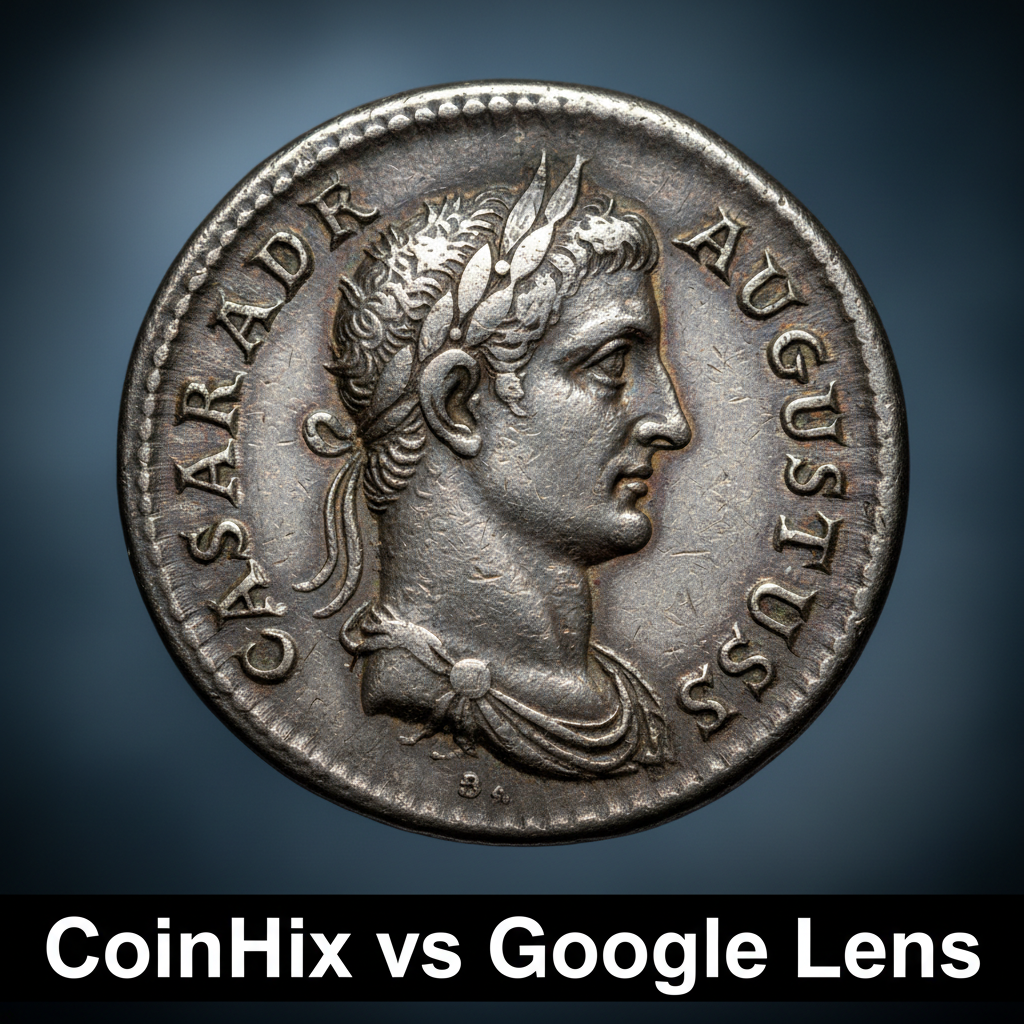
If you’ve already tried snapping a photo of your coin and searching with Google Lens, you’re not alone. Millions of people do exactly that every day. But there’s a growing number of coin hunters turning to dedicated apps instead — and the best coin identifier app on the market right now is built specifically for this purpose. That’s where the comparison between CoinHix and Google Lens gets really interesting.
—
What Google Lens Can and Cannot Do for Coin Identification
Google Lens is a powerful general-purpose visual search tool. Point your camera at almost anything — a plant, a dog breed, a piece of furniture — and it will give you a reasonable answer. For coins, though, “reasonable” often isn’t good enough.
Google Lens can identify a coin’s basic category. You might search a wheat penny and get back results that say “Lincoln Wheat Cent” — which is helpful to a point. But Google Lens doesn’t tell you the mint year with confidence, doesn’t distinguish between a common 1944 wheat penny worth 10 cents and a rare 1909-S VDB worth over $700, and it certainly doesn’t give you a current market value.
The problem is that Google Lens was designed to recognize objects, not appraise them. Coin value depends on tiny details — the mint mark, the strike quality, the condition grade, and even recent auction results. Google Lens has no mechanism to account for any of that. You’d still need to take whatever it identifies and then go do hours of additional research on your own.
For a casual curiosity, that might be fine. But if you’re trying to figure out whether to keep, sell, or insure a coin, you need more than a label.
—
How CoinHix Approaches Coin Identification Differently
CoinHix was built from the ground up as a coin-specific identification and valuation tool. That’s the core difference. Instead of being a general image recognition engine, CoinHix uses a database built specifically around numismatic data — meaning coin types, dates, mint marks, conditions, and real-world values.
When you photograph a coin with CoinHix, the app doesn’t just tell you what kind of coin it is. It walks you through the details that actually affect value. It can flag rare varieties, suggest a condition grade based on visible wear, and show you a value estimate based on the current market.
Think about it this way: if you found what looks like a standard 1955 Lincoln cent, Google Lens would probably just confirm it’s a Lincoln cent. CoinHix, on the other hand, would flag the possibility that it could be the famous 1955 Doubled Die penny — one of the most sought-after error coins in American history, worth anywhere from $1,000 to over $15,000 depending on condition. That difference in capability is enormous for everyday collectors.
—
Feature Comparison at a Glance
Here’s a quick breakdown of how the two tools stack up for someone who just found an old coin and wants to know what it’s worth:
| Feature | Google Lens | CoinHix |
|---|---|---|
| Basic coin identification | ✅ Yes | ✅ Yes |
| Mint mark detection | ❌ No | ✅ Yes |
| Current market value estimate | ❌ No | ✅ Yes |
| Rare variety flagging | ❌ No | ✅ Yes |
| Condition grading guidance | ❌ No | ✅ Yes |
| Coin-specific database | ❌ No | ✅ Yes |
—
Which Tool Should You Actually Use?
If you’re just casually curious and want a rough idea of what you’re holding, Google Lens will give you something to work with. It’s free, it’s already on your phone, and for identifying common modern coins it does a decent job.
But if you’re serious about knowing whether your coin has real value — whether it’s worth listing on eBay, bringing to a coin shop, or having professionally graded — you need a tool built for that purpose. Google Lens simply wasn’t designed for numismatic research. It doesn’t know the difference between a common date and a key date. It doesn’t track auction prices or account for grading scales.
The better move is to use a dedicated coin app like CoinHix from the start. You’ll save time, avoid guessing, and you won’t accidentally sell a rare coin for pennies because you thought it was common. Plenty of people have made that mistake, and it’s an easy one to avoid when the right tools are available.
For anyone who regularly finds old coins — whether from coin rolls, estate sales, old jars, or family collections — having a reliable identification app on your phone is just smart practice.
—
FAQ
Q: Can Google Lens identify the value of a coin?
A: No. Google Lens can help you identify the general type of coin, but it does not provide market values, condition grades, or any numismatic pricing data. For actual value information, you need a coin-specific tool.
Q: Is CoinHix accurate for rare coin identification?
A: CoinHix is designed specifically for coin identification and uses a dedicated numismatic database. It is significantly more accurate than general image search tools when it comes to identifying rare varieties, mint marks, and condition-based values.
Q: Do I need to be an expert to use a coin identifier app?
A: Not at all. Apps like CoinHix are designed for everyday people — not professional numismatists. You just photograph your coin, and the app handles the research. It’s one of the easiest ways to get a reliable value estimate without any prior coin knowledge.