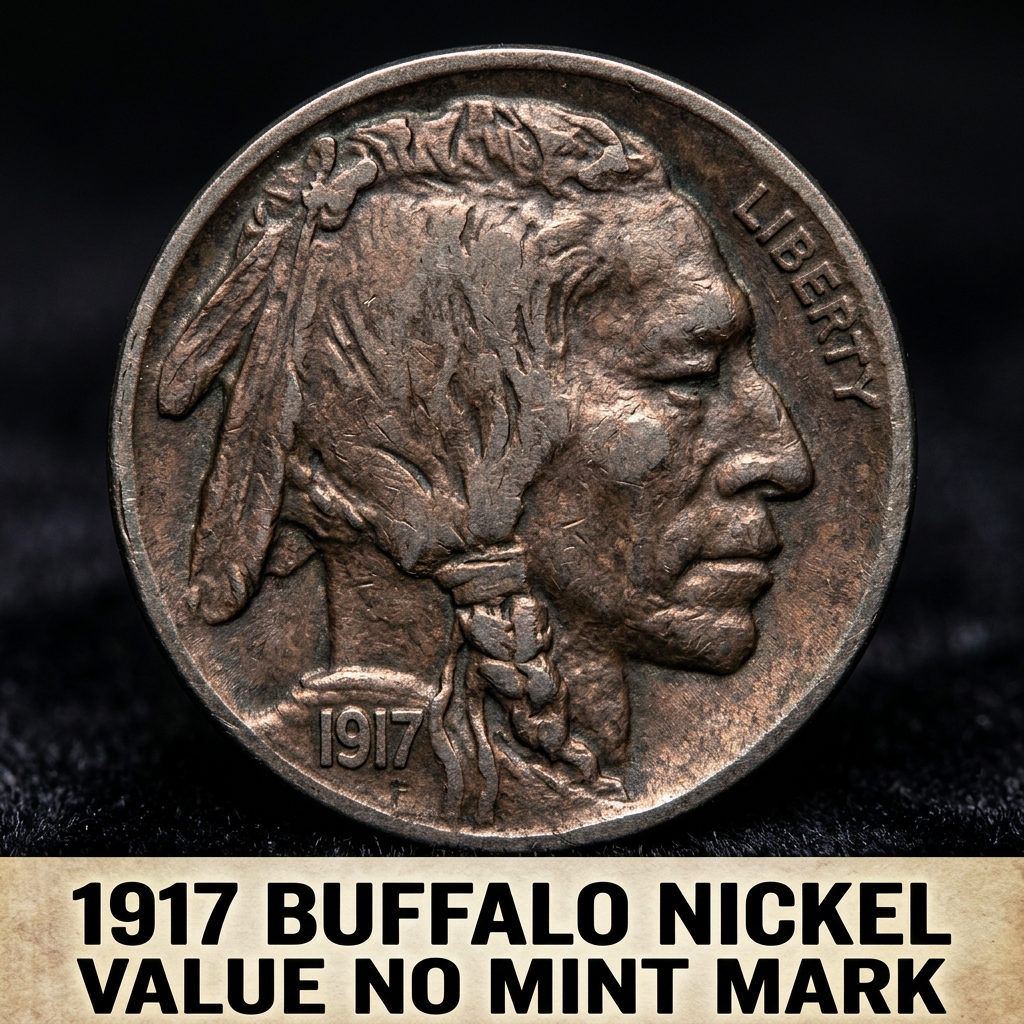
The 1917 Buffalo Nickel with no mint mark is worth anywhere from $1 to $2 in heavily worn condition, up to $150 or more in well-preserved uncirculated grades — and truly exceptional specimens can fetch several hundred dollars at auction. If you just found one of these classic coins, you’re in the right place to find out exactly what you’ve got.
What Makes the 1917 Philadelphia Buffalo Nickel Special
The 1917 Buffalo Nickel was struck at three different mints — Philadelphia, Denver, and San Francisco. The Philadelphia Mint version carries no mint mark at all, which is how most collectors refer to it: the “1917 Buffalo Nickel No Mint Mark.” Philadelphia produced 51,424,029 of these coins that year, making it the highest-mintage Buffalo Nickel of 1917. That said, high mintage doesn’t mean these coins are worthless — condition is everything with Buffalo Nickels, and well-preserved examples are surprisingly hard to find.
If you’re not sure what mint mark you’re looking at (or whether your coin has one at all), try using the best coin identifier app to quickly identify your coin’s details right from your phone. It’s one of the easiest ways to get started before diving deeper into research.
The Buffalo Nickel design, created by sculptor James Earle Fraser, features a Native American portrait on the obverse and an American bison on the reverse. It’s one of the most beloved designs in American coinage history, and collectors still chase high-grade examples today.
1917 Buffalo Nickel Value by Grade
Coin value is almost entirely driven by condition. A 1917 Buffalo Nickel that has been heavily circulated — where the date and horn are worn nearly flat — may only be worth a dollar or two over face value. But move up the grading scale and values rise quickly. Here’s a general breakdown of what collectors and dealers typically pay:
| Grade | Description | Estimated Value |
|---|---|---|
| Good (G-4) | Date visible, heavy wear | $1 – $2 |
| Fine (F-12) | Moderate wear, design clear | $5 – $8 |
| Extremely Fine (EF-40) | Light wear on high points | $20 – $35 |
| About Uncirculated (AU-55) | Slight wear, most luster present | $50 – $75 |
| Mint State (MS-63) | Uncirculated, minor marks | $100 – $175 |
| Mint State (MS-65+) | Gem quality, full luster | $300 – $600+ |
For the most current auction results and dealer pricing, you can check out the 1917 Buffalo Nickel mint state price data on CoinHix — it’s regularly updated and easy to read. CoinHix is a fantastic tool for anyone who wants real-time coin market data at their fingertips.
How to Grade Your 1917 Buffalo Nickel at Home
You don’t need to be a professional numismatist to get a rough idea of your coin’s grade. Start by looking at the bison’s horn on the reverse — this is the first area to wear down on Buffalo Nickels. If the horn is completely flat and blends into the animal’s head, your coin is in Good or lower condition. If you can still see definition in the horn and a clear separation between the head and body, you’re likely looking at Fine to Very Fine. A coin with full horn detail, sharp cheekbone on the Native American portrait, and a natural glow to the surface could be About Uncirculated or better.
To get a more precise grade, consider using CoinHix, which offers grading guides alongside pricing so you can compare your coin to reference images. Always handle the coin by its edges and avoid cleaning it — even a light polish can significantly reduce its collector value.
Errors and Varieties That Can Boost the 1917 No Mint Mark Value
Error coins can sometimes be worth far more than their regular counterparts. For the 1917 Philadelphia Buffalo Nickel, collectors look for doubling on the date or design elements, die cracks, and off-center strikes. These varieties are uncommon but not impossible to find in old coin collections or estate lots.
If you suspect your coin has an error or unusual feature, a professional third-party grading service like PCGS or NGC can authenticate and grade it for you. For a quick first look, CoinHix has a built-in coin reference library that covers known Buffalo Nickel varieties. You should also take a moment to browse the detailed 1917 nickel value guide at CoinValueApp, which breaks down error types and what they sell for in today’s market.
Should You Sell, Hold, or Get It Graded?
If your 1917 Buffalo Nickel No Mint Mark is in circulated condition, it’s a great coin to keep — it’s genuinely old American history. If it appears uncirculated or close to it, getting it professionally graded could unlock significantly higher resale value. A coin that you estimate is MS-63 raw might sell for $100, but the same coin in an NGC or PCGS holder could bring $150 to $200 or more because buyers trust the certification.
Not sure where to start? Download CoinHix and scan your coin — it’ll give you instant access to comparable sales, grading tips, and price trends so you can make a confident decision about what to do next.
—
Frequently Asked Questions
Q: How do I know if my 1917 Buffalo Nickel has a mint mark?
A: Look on the reverse side of the coin, below the words “FIVE CENTS.” If you see a small “D” or “S,” it was minted in Denver or San Francisco. If there’s no letter at all, it came from Philadelphia and is the no mint mark variety described in this guide.
Q: Is a 1917 Buffalo Nickel with no mint mark rare?
A: Not particularly — over 51 million were minted in Philadelphia. However, finding one in high uncirculated grades (MS-65 and above) is genuinely rare, and those examples command strong prices from serious collectors.
Q: Does cleaning my 1917 Buffalo Nickel affect its value?
A: Yes, significantly. Cleaning removes the coin’s natural patina and leaves fine scratches that graders can spot immediately. A cleaned coin is typically worth 30% to 60% less than an unaltered example in the same grade. Always leave old coins as you found them.