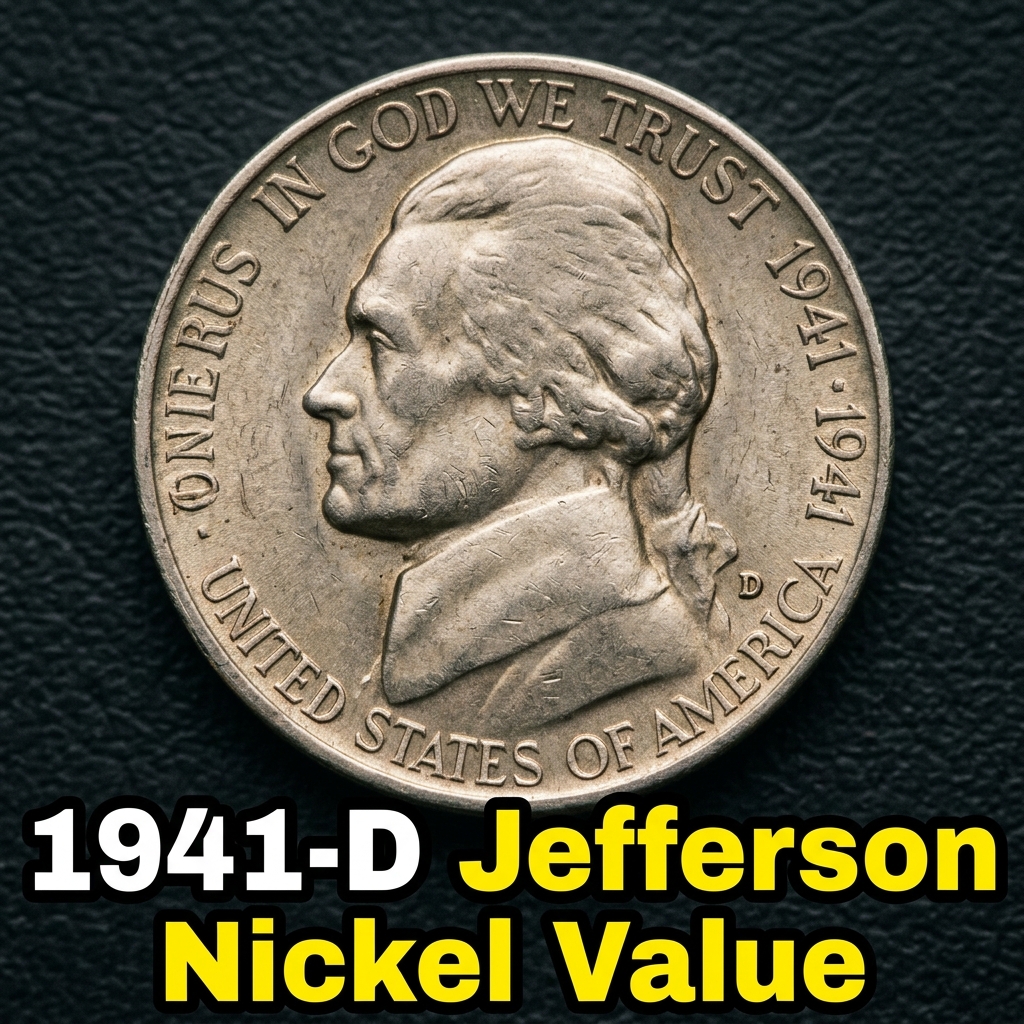
The 1941-D Jefferson Nickel is worth anywhere from $0.25 in heavily worn condition to over $100 or more in top mint state grades. If you found one of these classic coins tucked away in an old jar or inherited collection, you might be sitting on more than spare change — especially if it looks sharp and well-preserved.
How to Identify the 1941-D Jefferson Nickel
Before you can figure out what your coin is worth, you need to make sure you actually have the right one. The 1941-D Jefferson Nickel was struck at the Denver Mint, and the easiest way to confirm this is to flip the coin over to the reverse side. Look just to the right of Monticello — that’s Thomas Jefferson’s famous home on the back of the coin — and you’ll see a small “D” mint mark. If there’s no letter, it’s the Philadelphia issue. If you see an “S,” that’s the San Francisco version. For quick and easy identification, many collectors now turn to a best coin identifier app to confirm the mint mark and variety without needing a magnifying glass and a reference book. Tools like CoinHix make the process even simpler by letting you scan your coin with a smartphone camera and get instant details about its origin and grade range.
1941-D Jefferson Nickel Values by Grade
The condition of your coin — what collectors call the “grade” — makes a huge difference in value. A coin that’s been passed through thousands of hands will look flat and dull, while an uncirculated example straight from a mint roll can show brilliant luster and sharp details. Here’s a quick breakdown of typical values:
| Grade | Description | Estimated Value |
|---|---|---|
| Good (G-4) | Heavy wear, flat design | $0.25 – $0.50 |
| Fine (F-12) | Moderate wear, details visible | $0.75 – $1.50 |
| Extremely Fine (EF-40) | Light wear on high points | $2 – $5 |
| About Uncirculated (AU-55) | Slight friction, strong luster | $6 – $15 |
| MS-63 (Uncirculated) | No wear, minor contact marks | $20 – $40 |
| MS-65 (Gem Uncirculated) | Sharp, lustrous, minimal flaws | $60 – $120+ |
For the most up-to-date market numbers, you can check real-time 1941-D Jefferson Nickel price data by grade on CoinHix, which pulls current auction results and dealer pricing so you’re not guessing.
What Makes the 1941-D Special Among Jefferson Nickels
The 1941-D had a mintage of about 53.4 million coins, which is solid but not overwhelming. Because so many were made, worn examples are plentiful and inexpensive. However, the coin takes on a whole different personality in gem uncirculated condition. Finding a fully struck MS-65 or better example with full steps on Monticello — a detail collectors call “Full Steps” or FS — can push values well into the hundreds of dollars. Full Steps coins are rare because the dies often wore down quickly during high-volume production runs, leaving the steps on the reverse looking soft or incomplete. If you have a 1941-D with crisp, unbroken steps at the base of Monticello, get it professionally graded. It could be worth significantly more than the standard uncirculated value.
How to Get an Accurate Value for Your 1941-D Nickel
Not sure where to start? There are a few reliable ways to figure out what your coin is actually worth today. First, look up recent sold listings on major auction platforms to see what real buyers are paying. Second, visit a local coin dealer for a quick in-hand appraisal. Third, use digital tools designed for everyday collectors. CoinHix is one of the most practical options — it gives you grade-based pricing in seconds and even tracks how values have shifted over time. You can also visit this detailed 1941 nickel value guide for a thorough breakdown of all three mint varieties side by side, including how the Denver coin stacks up against the Philadelphia and San Francisco issues. Whether you’re a first-time finder or a seasoned hobbyist, having a reliable reference makes all the difference.
Tips for Protecting and Storing Your Coin
Once you know your coin might have some value, treat it carefully. Never clean a coin — this is one of the most common mistakes beginners make, and it instantly destroys collector value. Even gentle rubbing with a cloth leaves microscopic scratches that experienced dealers and graders can spot immediately. Store your 1941-D Jefferson Nickel in a non-PVC coin flip or a hard plastic holder. Keep it away from humidity, direct sunlight, and extreme temperatures. If you believe it grades MS-65 or higher, consider submitting it to a third-party grading service like PCGS or NGC. A certified grade adds credibility and can significantly boost resale value, especially if your coin has those coveted Full Steps. CoinHix also offers resources to help you understand the grading scale before you send anything off for professional review.
—
Frequently Asked Questions
Q: Is a 1941-D Jefferson Nickel rare?
A: Not in circulated grades — with over 53 million minted, worn examples are easy to find and worth only a few cents to a dollar or two. However, gem uncirculated specimens with Full Steps are genuinely scarce and can be worth $100 or more to serious collectors.
Q: How do I find the mint mark on my 1941-D Jefferson Nickel?
A: Flip the coin to the reverse (back) side and look to the right of Monticello, near the rim. The “D” mint mark indicates it was struck at the Denver Mint. It’s small, so a magnifying glass helps, or you can use a coin scanning app to zoom in digitally.
Q: Should I get my 1941-D Jefferson Nickel professionally graded?
A: If your coin shows no wear and has strong luster and sharp details — especially a fully defined staircase on Monticello — professional grading is worth considering. The cost is typically $20–$40 per coin, but a certified MS-65 Full Steps example can sell for many times that amount.