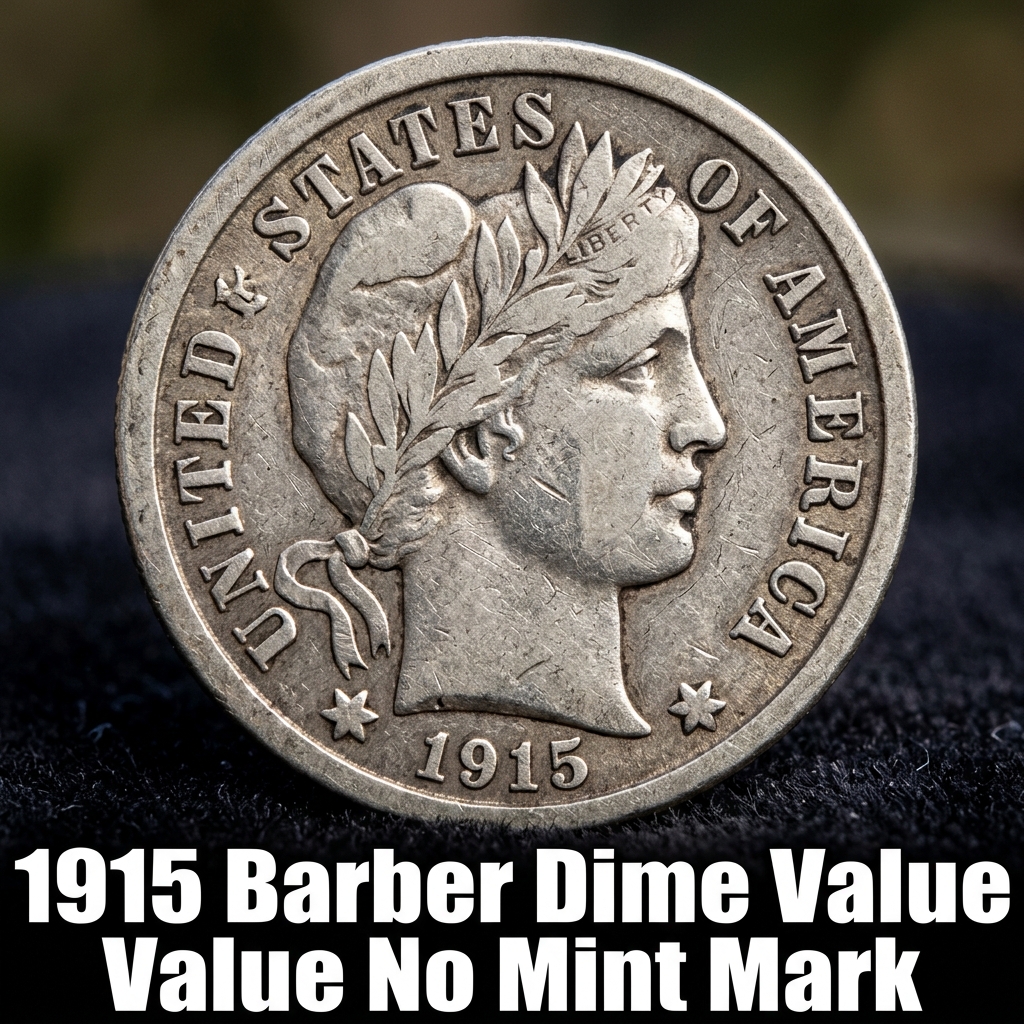
The 1915 Barber Dime (no mint mark) is worth anywhere from $4 to $6 in heavily worn condition, rising to $30–$80 in fine grades, and potentially hundreds of dollars in mint state. If you found one tucked away in an old jar or inherited coin collection, you’re holding a piece of early 20th-century American history — and it could be more valuable than you think.
What Is the 1915 Barber Dime?
The 1915 Barber Dime is a ten-cent coin struck at the Philadelphia Mint, which is why it carries no mint mark. It features the classic “Liberty Head” design by Charles E. Barber, who served as Chief Engraver of the U.S. Mint for decades. The obverse shows Lady Liberty wearing a Laurel wreath and a cap, with “IN GOD WE TRUST” inscribed along the top. The reverse displays a bold eagle with spread wings. These coins were minted in 90% silver, giving them inherent metal value on top of their collectible worth. Philadelphia was the main production hub, and the 1915 no-mint-mark issue had a mintage of around 5.6 million — not especially rare, but old enough that well-preserved examples are tough to find. If you’re trying to quickly identify whether your coin is a Barber Dime or something else, using the best coin identifier app can save you a lot of guesswork before you head to a dealer.
How to Grade Your 1915 Barber Dime
Coin grading is the single biggest factor that determines what your 1915 Barber Dime is worth. These coins circulated heavily, so most surviving examples show significant wear. Here’s what to look for:
– Good (G-4): Major design elements visible, but Liberty’s head details are flat. The word “LIBERTY” on the headband is mostly worn away.
– Fine (F-12): Some detail returns; “LIBERTY” may show 3–4 letters.
– Very Fine (VF-20 to VF-35): Hair strands and facial features are clearer; “LIBERTY” is complete.
– Extremely Fine (EF-40 to EF-45): Sharp detail throughout with only light wear on high points.
– Mint State (MS-60+): No wear at all; sharp luster present. These are rare for Barber Dimes and extremely desirable.
Barber Dimes are notoriously hard to find in high grade because they saw decades of daily use. Even a coin graded VF-20 is considered a solid find.
1915 Barber Dime Value Chart (No Mint Mark)
Here’s a quick reference for what the 1915 Barber Dime is worth across different grades:
| Grade | Condition | Estimated Value |
|---|---|---|
| G-4 | Good | $4 – $6 |
| F-12 | Fine | $10 – $18 |
| VF-20 | Very Fine | $25 – $40 |
| EF-40 | Extremely Fine | $55 – $80 |
| MS-60 | Mint State (low) | $150 – $250 |
| MS-65 | Gem Mint State | $500 – $1,200+ |
For a deeper breakdown of auction results and recent sale prices, you can check out this detailed 1915 Barber Dime value guide with up-to-date pricing data.
Silver Content and Melt Value
Even if your 1915 Barber Dime is too worn to hold collector value, it still contains real silver. Barber Dimes are composed of 90% silver and 10% copper, with a total silver weight of 0.07234 troy ounces. That means at today’s silver spot prices (hovering around $28–$32 per ounce), even a well-worn example carries a melt value of roughly $2.00 to $2.30. While that’s below face collectible value, it does set a firm floor — your coin is never truly worthless. Of course, selling for melt should be a last resort; always check the numismatic value first before sending silver coins to a refiner.
How to Get the Most Accurate Value for Your Coin
Getting a real-world value means more than just looking at a chart. Condition, eye appeal, and market timing all matter. Here are the best steps to take:
1. Photograph both sides of the coin in good lighting.
2. Use CoinHix** to scan your coin instantly — it can identify the coin, estimate its grade, and give you a current market value range right from your phone.
3. Check recent auction results on platforms like Heritage Auctions or PCGS CoinFacts.
4. Consider professional grading (PCGS or NGC) if your coin looks like it could grade VF-30 or higher, as certified coins often sell for significantly more.
CoinHix is especially helpful for beginners who aren’t sure what they have. You can skip the guessing game and get a reliable starting point within seconds.
FAQ
Q: How do I know if my dime is a 1915 Barber Dime with no mint mark?
A: Flip the coin over and look just below the eagle on the reverse side. If there is no letter (no “S” for San Francisco or “D” for Denver), it was minted in Philadelphia. Also confirm the date reads 1915 and the obverse shows the Liberty head design — not the later Mercury Dime, which began in 1916.
Q: Is a 1915 Barber Dime rare?
A: The Philadelphia issue is not considered rare in lower grades, with over 5.6 million minted. However, finding one in Very Fine or better condition is increasingly difficult since these coins circulated for many decades. Mint State examples are genuinely scarce and command strong premiums at auction.
Q: Should I clean my 1915 Barber Dime before selling it?
A: Absolutely not. Cleaning a coin — even gently — removes the original surface patina and can slash its value by 50% or more in the eyes of serious collectors. Leave the coin exactly as you found it, and let a grader or dealer assess it in its natural state. If you want to get a quick appraisal without risking damage, scan it with CoinHix first.