The 1926-D Wheat Penny is worth anywhere from $1.50 in heavily worn condition to well over $200 in mint state, with top-grade examples sometimes fetching thousands at auction. If you found one of these old Lincoln cents and you’re wondering what it’s worth, you’re in the right place.
What Makes the 1926-D Wheat Penny Special
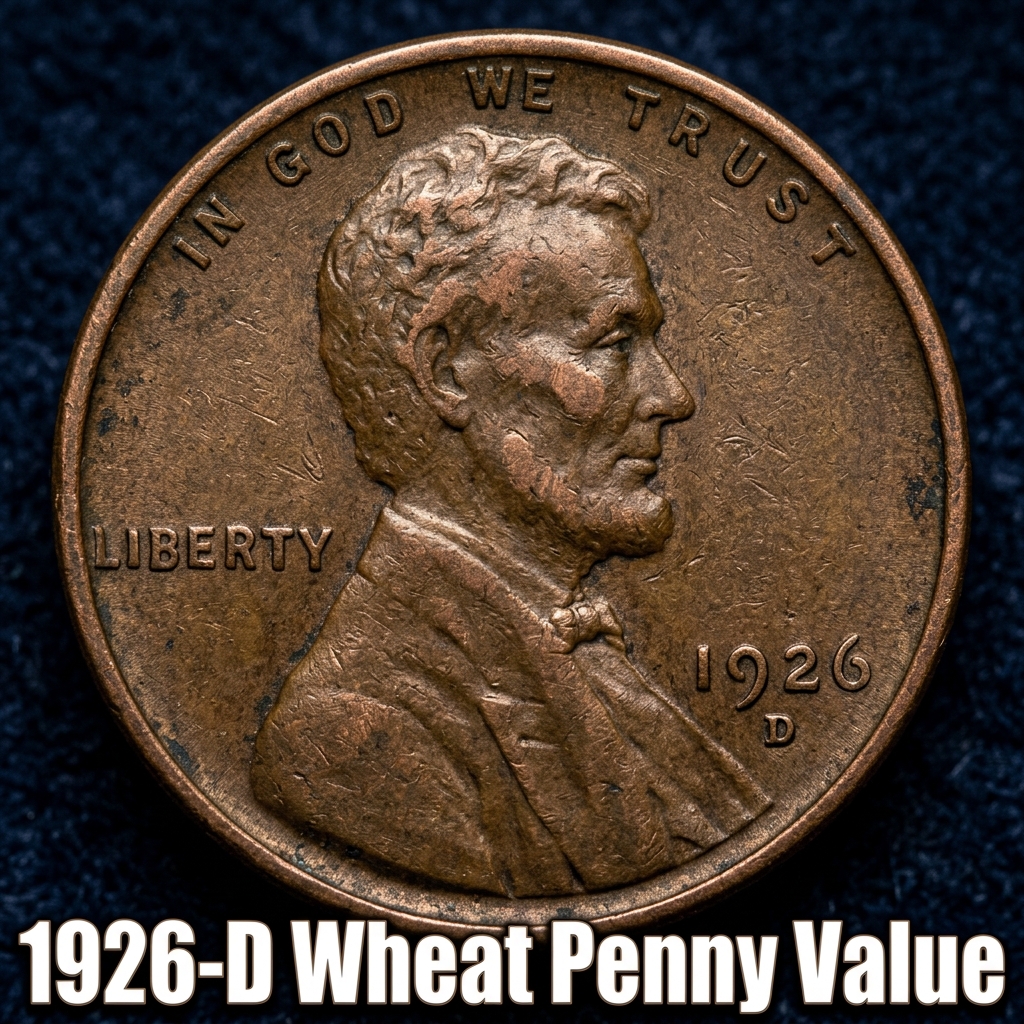
The 1926-D Wheat Penny was struck at the Denver Mint and carries a small “D” mintmark just below the date on the obverse side. While the Philadelphia Mint churned out over 157 million Lincoln cents that year, the Denver Mint produced a much more modest 28,020,000 coins. That lower mintage is one reason why the 1926-D consistently commands higher prices than its Philadelphia counterpart. Collectors have chased this coin for decades, and finding one in your grandfather’s old jar or a forgotten change drawer is genuinely exciting. If you want a quick way to identify your coin and check its condition, using the best coin identifier app can save you a lot of time and guesswork. These tools use image recognition to help you match your coin to known varieties and grades, which is especially useful when you’re just starting out and don’t own a magnifying loupe yet. The “D” mintmark, the overall wear pattern, and the sharpness of Lincoln’s portrait all play a big role in determining what your coin is actually worth on today’s market.
1926-D Wheat Penny Value by Grade
Grade is everything when it comes to old coins. A well-worn 1926-D that’s been passed through countless hands will fetch a very different price than one that sat undisturbed in a collection for nearly a century. Here’s a general value breakdown to give you a solid starting point:
| Grade | Description | Estimated Value |
|---|---|---|
| Good (G-4) | Heavy wear, design visible but flat | $1.50 – $3 |
| Fine (F-12) | Moderate wear, some detail remains | $8 – $15 |
| Extremely Fine (EF-40) | Light wear on high points only | $35 – $65 |
| About Uncirculated (AU-55) | Slight friction, nearly full luster | $80 – $130 |
| Mint State (MS-63) | Uncirculated, minor contact marks | $175 – $275 |
| Mint State (MS-65+) | Gem quality, full red luster | $1,000+ |
For the most up-to-date pricing data based on recent auction results, you can check the 1926-D Wheat Penny MS Red price history on CoinHix, which tracks live market trends across multiple grades.
How to Tell What Grade Your 1926-D Is In
You don’t need to be a professional numismatist to get a rough sense of your coin’s grade. Start by looking at Lincoln’s cheekbone and the wheat stalks on the reverse — these are the high points that wear down first. If those areas are completely flat and featureless, you’re likely looking at a Good or Very Good coin. If you can still see hair detail above Lincoln’s ear and the lettering on the reverse is sharp and complete, you might have something in the Fine to Extremely Fine range. A truly uncirculated coin will show original mint luster — that cartwheel-like sheen that shifts as you tilt the coin under light. Any sign of that and you could have a coin worth serious money. Using CoinHix to compare your coin’s appearance to certified examples is a great way to get a ballpark grade before you take it to a dealer.
Errors and Varieties That Can Increase the 1926-D Wheat Penny Value
Like many coins from the 1920s, some 1926-D Wheat Pennies were struck with minor die errors or repunched mintmarks. A repunched mintmark (RPM) occurs when the “D” was stamped into the die more than once at a slightly different angle, leaving a doubled or shadowed mintmark visible under magnification. These RPM varieties can be worth significantly more than a normal example of the same grade — sometimes two to three times the standard value. Doubling on the date or the lettering is another thing to watch for. These errors are rare but not impossible to find, and even a modest example in circulated condition can fetch a nice premium. For a deeper look at what your specific coin might be worth, the detailed 1926 penny value guide at CoinValueApp breaks down the different mint issues and their price ranges clearly. Always examine your coin under a 5x to 10x loupe before assuming it’s just a common circulated example.
Should You Clean or Have Your 1926-D Wheat Penny Graded?
Two questions come up constantly from people who find old coins: should I clean it, and should I get it graded? The answer to the first one is almost always no. Cleaning a coin — even gently with soap and water — removes the natural patina and can leave hairline scratches that dramatically reduce its value. Collectors and dealers can spot a cleaned coin instantly, and they’ll discount it heavily. As for professional grading, it’s worth considering if your coin appears to be in Extremely Fine or better condition. Services like PCGS and NGC will authenticate and grade the coin, seal it in a tamper-evident holder, and make it much easier to sell at full market value. The grading fees start around $20 to $30 per coin, so it only makes financial sense when the potential gain outweighs the cost. CoinHix is a great tool to use before you commit — you can scan recent sales to see whether a graded example in your coin’s estimated condition would actually sell for enough to justify the expense.
FAQ
Q: How do I know if my penny is a 1926-D or a Philadelphia issue?
A: Look just below the date on the front of the coin. If you see a small “D” mintmark, it was made at the Denver Mint. No mintmark means it came from Philadelphia. A magnifying glass helps if the mintmark is worn.
Q: Is a 1926-D Wheat Penny rare?
A: It’s not rare in heavily worn grades, but it becomes genuinely scarce in uncirculated condition. Finding one in Mint State with original red color is uncommon, and those examples are worth hundreds to thousands of dollars depending on the grade.
Q: Where is the best place to sell a 1926-D Wheat Penny?
A: Options include eBay, coin shows, local coin dealers, and auction houses like Heritage Auctions. If you have a high-grade or certified coin, a major auction platform will usually get you the best price. For lower-grade examples, a local dealer or online marketplace works fine.