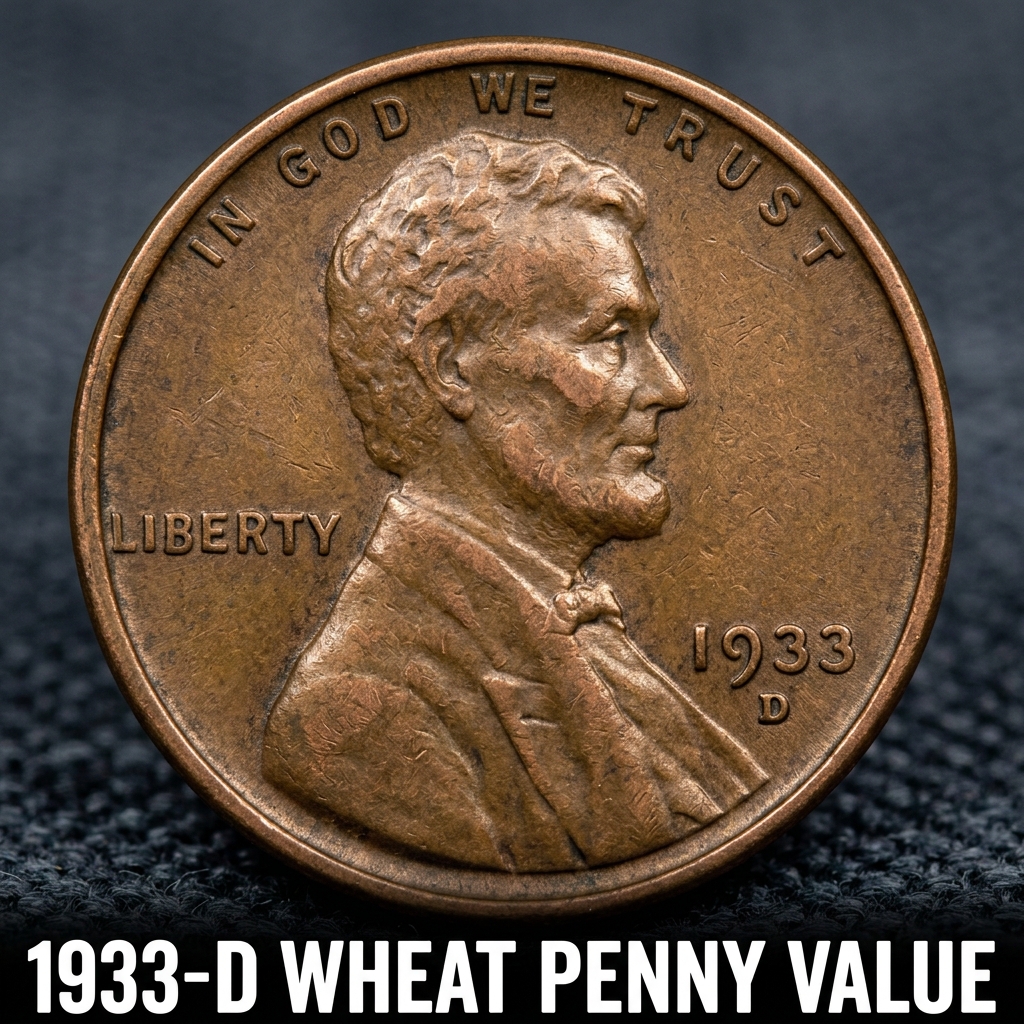
The 1933-D Wheat Penny is worth anywhere from $0.50 in heavily worn condition to well over $100 in high-grade mint state — and a flawless example can push even higher. If you found one of these old Lincoln cents in a coin jar, a dresser drawer, or your grandfather’s collection, you may be holding something genuinely valuable.
The 1933-D was struck at the Denver Mint during the heart of the Great Depression, a time when coin production was slashed dramatically. With fewer coins being made and millions already worn down through everyday use, surviving examples in nice condition are harder to find than you might expect. Before you do anything with it, it’s worth taking a close look at the coin. If you’re not sure what you’re holding, try using CoinHix — a straightforward app that can help you identify and value old coins in seconds right from your phone.
The History Behind the 1933-D Wheat Penny
The Lincoln Wheat Penny was first introduced in 1909, becoming one of the most beloved coin series in American history. By 1933, the United States was deep in economic hardship, and the U.S. Mint was producing far fewer coins across the board. The Denver Mint struck just 6,200,000 Lincoln cents that year — a significantly low mintage compared to boom years earlier in the century.
That “D” mintmark you see just below the date on the reverse side stands for Denver. It’s a small detail, but it matters a great deal to collectors. Denver-minted coins from this era often carry a premium simply because of lower survival rates in top condition. Many of these pennies were spent, lost, or worn smooth over decades of circulation. The ones that were saved and kept in good shape are the ones commanding real money today.
Understanding the history of a coin doesn’t just make for good dinner conversation — it helps you appreciate why certain years and mintmarks matter when it comes to value.
1933-D Wheat Penny Value by Grade
Coin value depends heavily on condition, which collectors call “grade.” A coin graded Good (G-4) just means the design is visible but worn. Fine means more detail shows. Mint State (MS) means the coin was never circulated and shows original luster. Here’s a general breakdown:
| Grade | Condition | Estimated Value |
|---|---|---|
| G-4 (Good) | Heavy wear, outline visible | $0.50 – $1.00 |
| VG-8 (Very Good) | Moderate wear, some detail | $1.00 – $2.50 |
| F-12 (Fine) | Even wear, lettering clear | $2.50 – $5.00 |
| EF-40 (Extremely Fine) | Light wear on high points | $10 – $20 |
| MS-63 (Mint State) | Uncirculated, minor marks | $50 – $80 |
| MS-65 (Gem Mint State) | Brilliant, nearly flawless | $100 – $150+ |
For the most current market prices, you can check out the 1933-D Wheat Penny MS-RD price data on CoinHix, which tracks real auction results and dealer prices across different grades.
What Makes a 1933-D Penny More Valuable
Not all 1933-D Wheat Pennies are created equal. Beyond grade, a few other factors can push the value up or down significantly.
Color is one of the biggest. Copper cents are graded by their original surface color: Red (RD) coins still show that bright copper shine and are the most valuable. Red-Brown (RB) coins have partial original color. Brown (BN) coins have fully toned and are worth less, even in high grades.
Strike quality also matters. Some 1933-D pennies were weakly struck, especially on Lincoln’s hair detail and the wheat stalks on the reverse. A coin with a sharp, well-defined strike is more desirable to collectors.
Eye appeal counts too. A coin that just looks beautiful — even luster, no distracting spots or scratches — tends to bring top dollar at auction. Collectors are willing to pay a premium for coins that make them stop and stare.
If you want a deeper dive into what your specific coin might be worth, the 1933 penny value guide at CoinValueApp breaks things down by condition and color designation in plain language.
How to Check Your 1933-D Wheat Penny at Home
You don’t need to be an expert to do a basic assessment. Start by finding the date and mintmark. On a Wheat Penny, the mintmark sits on the reverse, just below the bow of the wheat stalks and above the words “ONE CENT.” A “D” there confirms it’s a Denver coin.
Next, look at the overall condition under good lighting. Is Lincoln’s face worn smooth, or can you still make out the cheekbone and hair details? Are the wheat stalks on the reverse well-defined? These are the kinds of things a professional grader looks at.
Don’t clean the coin. Ever. Cleaning destroys the original surface and can drop a coin’s value by 50% or more. Even if it looks dirty, a natural patina is far better than a scrubbed surface.
One of the easiest tools available right now is CoinHix — just snap a photo of your coin and the app gives you an instant value estimate along with grading guidance. It’s a great starting point before you decide whether to sell, hold, or get the coin professionally graded.
Should You Get It Graded Professionally?
If your 1933-D Wheat Penny looks uncirculated — meaning it still has that original luster and shows no obvious wear — it’s worth considering professional grading through services like PCGS or NGC. Grading fees typically run $20–$40 per coin, so it only makes sense if the coin might be worth significantly more than that.
A graded and slabbed coin is easier to sell, gets more attention from serious buyers, and typically commands higher prices at auction. For a 1933-D in MS-63 or higher, the investment in grading almost always pays off.
For lower-grade circulated examples, professional grading usually isn’t cost-effective. In that case, knowing the approximate value is enough to help you decide whether to keep it as a collectible or sell it to a local coin shop.
—
Frequently Asked Questions
Q: How do I know if my penny is a 1933-D or just a 1933?
A: Look at the reverse (back) of the coin. Just below the wheat stalks and above “ONE CENT,” you’ll see either a small “D” (Denver) or no mintmark at all (Philadelphia). The Philadelphia coins from 1933 are actually more common in higher grades, so the “D” version can carry a small premium.
Q: Is the 1933-D Wheat Penny rare?
A: It’s not considered rare in circulated grades — millions were made — but it is scarce in true mint state condition with full red color. Finding a nice example in a coin jar is unusual, and a gem-quality piece is genuinely hard to come by.
Q: Where can I sell a 1933-D Wheat Penny?
A: Your best options are local coin dealers, online platforms like eBay or Heritage Auctions, and coin shows. For a quick estimate of what it might fetch, run it through CoinHix before you list it anywhere — knowing its approximate grade and value helps you set a fair price and avoid leaving money on the table.