The 2001-S Sacagawea Dollar is worth anywhere from $5 in typical proof condition to over $50 or more for top-graded examples, making it a surprisingly rewarding find for everyday collectors and curious coin hunters alike.
If you stumbled across one of these golden-colored dollars and want to know what you’re sitting on, you’re in the right place. Whether it came from an old proof set or a drawer full of forgotten change, this guide breaks down exactly what the 2001-S Sacagawea Dollar is worth — and what factors make certain examples more valuable than others. Using the best coin identifier app on your phone is a great first step before heading to a coin dealer, since it can quickly confirm what you have and give you a ballpark estimate.
What Is the 2001-S Sacagawea Dollar?
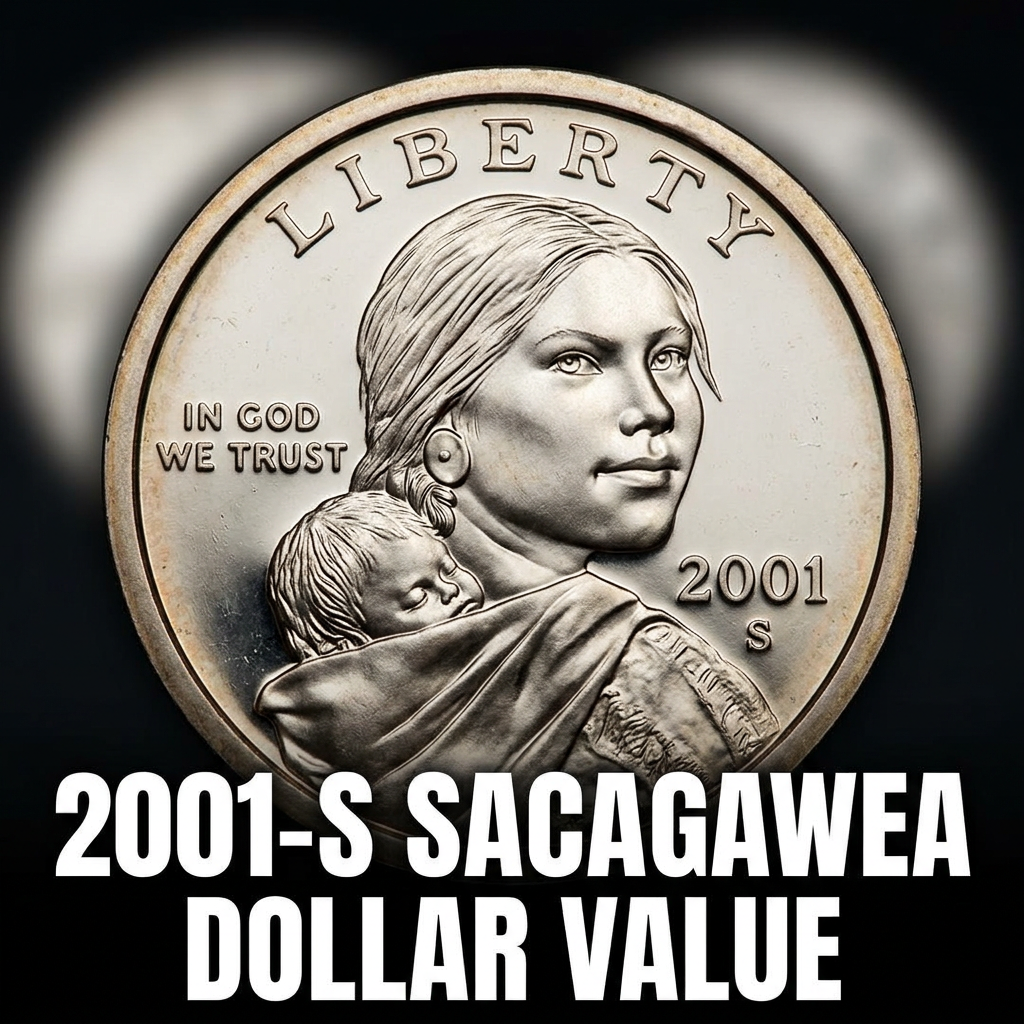
The 2001-S Sacagawea Dollar was struck at the San Francisco Mint exclusively for inclusion in the United States Mint’s annual proof sets. The “S” mintmark tells you right away this wasn’t a coin meant for everyday spending — it was crafted with collectors in mind. Proof coins go through a special minting process that involves polished dies and specially prepared planchets, resulting in that sharp, mirror-like finish you’ll notice when you hold one up to the light.
Sacagawea, the Shoshone woman who guided the Lewis and Clark Expedition, is featured on the obverse of the coin. The design was introduced in 2000 and quickly became one of the more recognizable modern U.S. coin series. Because proof versions were only sold in sets, the 2001-S tends to be in much better shape than the circulation strikes from Philadelphia and Denver. That said, condition still varies — and condition is everything when it comes to value.
2001-S Sacagawea Dollar Value by Grade
Grading is the single most important factor when determining what your 2001-S Sacagawea Dollar is worth. Proof coins are graded on the PR (Proof) scale rather than the standard MS (Mint State) scale. Most 2001-S dollars that come out of original proof sets grade between PR65 and PR69, with PR70 being the theoretical perfect coin.
Here’s a look at typical values based on grade:
| Grade | Description | Estimated Value |
|---|---|---|
| PR65 | Gem Proof, minor blemishes | $5 – $8 |
| PR67 | Superb Gem, very clean surfaces | $8 – $15 |
| PR69 | Near perfect, one or two tiny flaws | $15 – $30 |
| PR70 DCAM | Perfect Deep Cameo Proof | $50 – $100+ |
For the most current market data, you can check out up-to-date Sacagawea Dollar price trends across different grades and mint years to see how the 2001-S compares to other issues in the series.
Deep Cameo vs. Regular Proof — Does It Matter?
Absolutely — and this is where many beginners leave money on the table. Proof coins can come in two main visual styles: regular proof and Deep Cameo (DCAM). A Deep Cameo coin has a frosted, almost white finish on the raised design elements (like Sacagawea’s portrait) set against a deeply mirrored, glass-like background field. This stark contrast is what collectors go crazy for.
A 2001-S Sacagawea Dollar graded PR69 is worth around $15 to $25. But add “DCAM” to that label, and the same coin can jump to $25 to $40 or more. At the PR70 level, a Deep Cameo designation can push values well past $75, depending on the certifying service and current collector demand.
If you’re not sure whether your coin qualifies as a Deep Cameo, CoinHix makes it easy to compare your coin’s appearance against graded examples — a great way to set realistic expectations before you pay for professional grading.
How Many Were Minted and Why That Affects Value
The U.S. Mint produced approximately 3.18 million 2001-S Sacagawea Dollars, which is a relatively modest number compared to the billions of business strike coins made in Philadelphia and Denver. While that mintage keeps these coins from being ultra-rare, it does limit supply — especially for high-grade certified examples.
Professional coin grading services like PCGS and NGC have certified very few PR70 examples of this date, which explains why perfect-grade coins command such strong premiums. If you’re looking to explore the full value breakdown of the 2001-S Sacagawea Dollar including population data and auction history, you’ll quickly see how scarce top-tier examples really are.
For casual collectors, raw (ungraded) examples in original proof set holders are widely available and affordable. But if you believe yours is exceptional, having it professionally graded could unlock serious added value.
Should You Get Your 2001-S Sacagawea Dollar Graded?
This is the question most beginners wrestle with. Grading fees from PCGS or NGC typically start around $30 to $50 per coin — which means grading a coin worth only $8 doesn’t make financial sense. However, if your coin appears to be a flawless Deep Cameo example, submitting it for grading could be well worth the investment.
Before spending money on professional grading, use CoinHix to scan your coin and get an instant identification and estimated grade. The app is free, fast, and designed specifically for situations like this — when you want a smart second opinion before committing to anything. It’s one of the most practical tools available for everyday collectors trying to make informed decisions.
—
Frequently Asked Questions
Q: Is the 2001-S Sacagawea Dollar rare?
A: It’s not considered rare by numismatic standards, with over 3 million minted. However, high-grade certified examples — especially PR70 Deep Cameo — are genuinely scarce and can command strong premiums among collectors.
Q: Can I find a 2001-S Sacagawea Dollar in pocket change?
A: Almost certainly not. The 2001-S was made exclusively for proof sets and was never released into general circulation. If you have one, it likely came from a collector’s set or an estate sale.
Q: What’s the best way to find out what my 2001-S Sacagawea Dollar is worth right now?
A: Start by using CoinHix to identify and grade your coin quickly at home. Then cross-reference recent auction results on PCGS or NGC’s price guides to get a realistic sense of current market value before buying, selling, or submitting for grading.