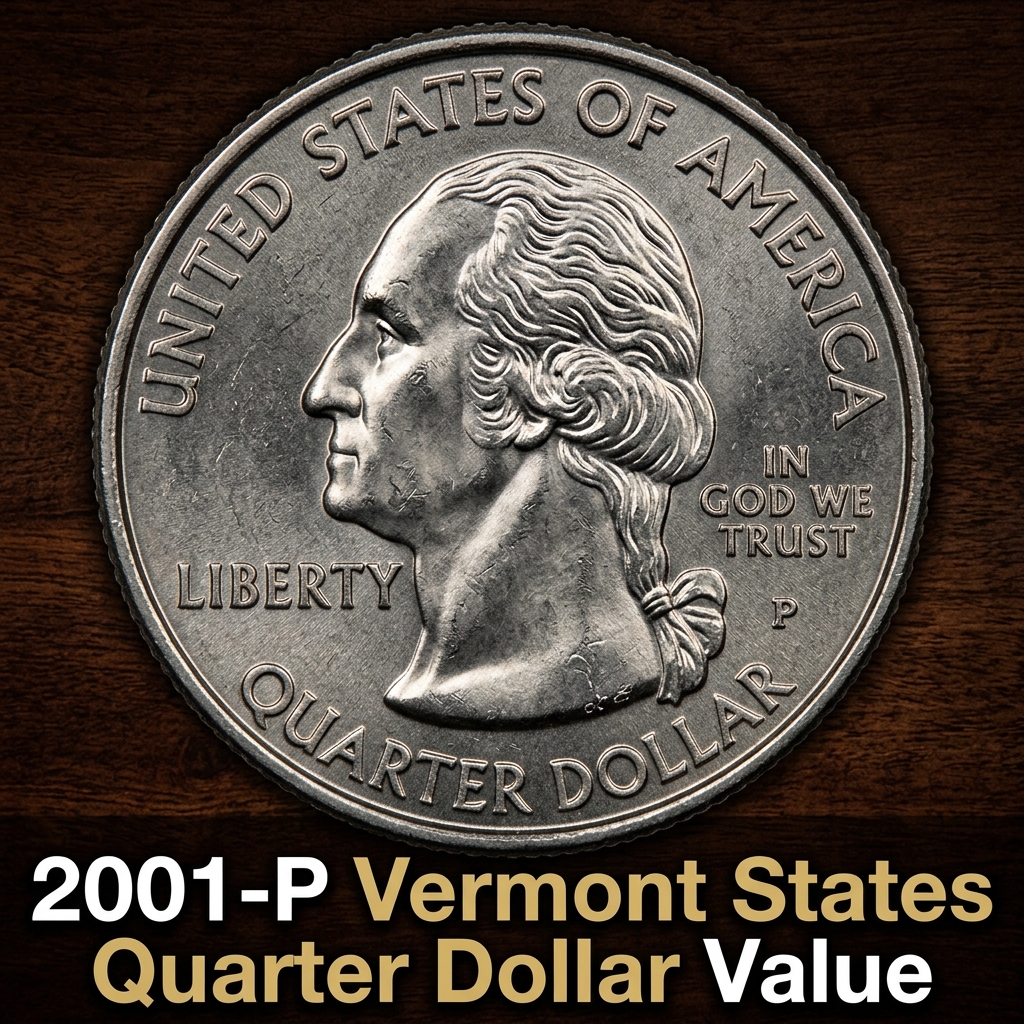
The 2001-P Vermont State Quarter is worth between $0.25 and $1 in circulated condition, but well-preserved mint state examples can fetch anywhere from $5 to over $20 depending on grade — and certified high-grade coins can go even higher.
If you’ve ever dug through a jar of old coins and wondered whether that Vermont quarter hiding at the bottom might be worth something, you’re in the right place. This guide breaks down everything a regular person needs to know about the 2001-P Vermont State Quarter — from what affects its value to what collectors actually pay for it. You might also want to download the best coin identifier app to quickly identify and evaluate coins you find at home, in change, or at estate sales.
What Is the 2001-P Vermont State Quarter?
The 2001-P Vermont State Quarter is part of the United States Mint’s 50 State Quarters Program, which ran from 1999 to 2008. Each state got its own unique reverse design, and Vermont’s features the iconic Camel’s Hump mountain, a maple tree being tapped for sap, and the words “Freedom and Unity” — Vermont’s state motto. The “P” in the coin’s name simply tells you it was struck at the Philadelphia Mint.
More than 423 million of these coins were produced at the Philadelphia Mint in 2001 alone. That’s a huge number, which is one reason most circulated examples aren’t worth much above face value. However, the sheer volume of coins produced doesn’t tell the whole story. The condition of any individual coin matters enormously when it comes to collector value.
The coin is made of copper-nickel clad — a layer of 75% copper and 25% nickel bonded over a pure copper core — just like most modern U.S. quarters. It weighs 5.67 grams and measures 24.26 mm in diameter. These specs are standard, but collectors care most about how sharp the details look under a magnifying glass.
How Much Is the 2001-P Vermont Quarter Worth by Grade?
Coin value is almost entirely tied to condition, also called “grade.” Coins are graded on a scale from Poor (P-1) to Perfect Mint State (MS-70). Here’s a simple breakdown of what the 2001-P Vermont Quarter is generally worth at different grades:
| Condition / Grade | Description | Estimated Value |
|---|---|---|
| Circulated (Good to Fine) | Heavy wear, flat details | $0.25 – $0.50 |
| Extremely Fine (EF-40) | Light wear, most detail visible | $0.50 – $1.00 |
| Mint State (MS-63) | Uncirculated, minor bag marks | $3 – $6 |
| Mint State (MS-65) | Gem uncirculated, sharp luster | $8 – $15 |
| Mint State (MS-67 or higher) | Near perfect, certified | $20 – $100+ |
For a deeper look at 2001-P State Quarter graded price data across multiple mint state levels, certified auction records offer useful real-world comparisons. Keep in mind that values can shift based on current collector demand.
What Makes Some 2001-P Vermont Quarters More Valuable
While most of these quarters won’t make you rich, certain factors can push the value higher. The biggest one is grade — but there’s more to the story.
Luster and strike quality matter a lot to serious collectors. A coin with brilliant, original mint luster and sharp, well-defined details (especially around the maple tree and mountain imagery on the reverse) commands a premium over a dull or weakly struck example.
Error coins are where things get exciting. Some 2001-P Vermont quarters show known errors such as doubled dies, off-center strikes, or die cracks. A notable off-center error (where the design is shifted by 10% or more) can be worth $20 to $100 or more depending on severity. Dramatic errors have sold for even higher at auction.
Certified coins — those graded and encapsulated by PCGS or NGC — tend to sell for more because buyers trust the grade. If you think you have an especially nice Vermont quarter, it might be worth the fee to have it professionally graded.
You can also check current 2001 quarter value estimates and recent sales data to see what the market looks like right now before making any decisions about selling or holding.
How to Check Your Coin’s Value at Home
You don’t have to be an expert to get a rough sense of what your 2001-P Vermont quarter is worth. Start by checking the coin’s surface under good lighting — look for scratches, spots, or wear on the high points. Then compare it to grading images you can find on reputable coin sites or in a basic guide.
If you want a fast and easy option, CoinHix is a popular coin valuation tool that gives you real-time price data across different grades and mintmarks. It’s especially useful when you’re sorting through a collection and need quick answers without spending hours on research.
Another smart move is using CoinHix to cross-check values before listing or selling. Prices on secondary markets can vary a lot, and knowing what certified examples have actually sold for gives you a realistic starting point.
Is the 2001-P Vermont Quarter Worth Keeping?
For most people, the circulated 2001-P Vermont quarter they found in a change jar is worth exactly 25 cents in spending terms. But if the coin looks like it was barely touched — bright, shiny, and scratch-free — it might be worth setting aside. Gem-quality examples from rolls or original bank bags can still fetch a nice premium with the right collector.
The Vermont design is genuinely attractive, and the 50 State Quarters series remains one of the most collected modern series in American numismatics. If you’re just starting out with coin collecting, these quarters are an affordable and accessible entry point.
CoinHix can help you track the value of your Vermont quarter over time, especially if you’re building a complete set of the State Quarters series. As collector interest ebbs and flows, staying updated on pricing makes a real difference.
—
Frequently Asked Questions
Q: Is a 2001-P Vermont quarter rare?
A: Not really — over 423 million were minted in Philadelphia. That makes it a common coin in circulated grades. However, gem uncirculated examples and error coins are far less common and hold real collector value.
Q: What errors should I look for on the 2001-P Vermont quarter?
A: The most valuable errors include off-center strikes, doubled dies (where design elements appear doubled or blurry), and die cracks. Even a minor off-center error of 10–15% can multiply a coin’s value significantly. Examine your coin closely under magnification.
Q: Should I clean my 2001-P Vermont quarter before selling it?
A: Never clean a coin you think might have value. Cleaning removes the natural surface and luster, which dramatically lowers the grade — and the price — that collectors will pay. Leave the coin exactly as you found it and let a professional assess it first.