The 1903 Liberty Nickel is worth anywhere from $2 in heavily worn condition to over $100 or more in well-preserved mint state examples. If you found one of these old nickels in a drawer or inherited a coin collection, you’re in the right place — let’s break down exactly what it might be worth.
If you want a quick and easy way to identify and value old coins like this one, the best coin identifier app can save you a lot of time and guesswork. Tools like CoinHix let you scan coins with your phone and get instant value estimates, which is a great starting point before doing deeper research.
What Is the 1903 Liberty Nickel?
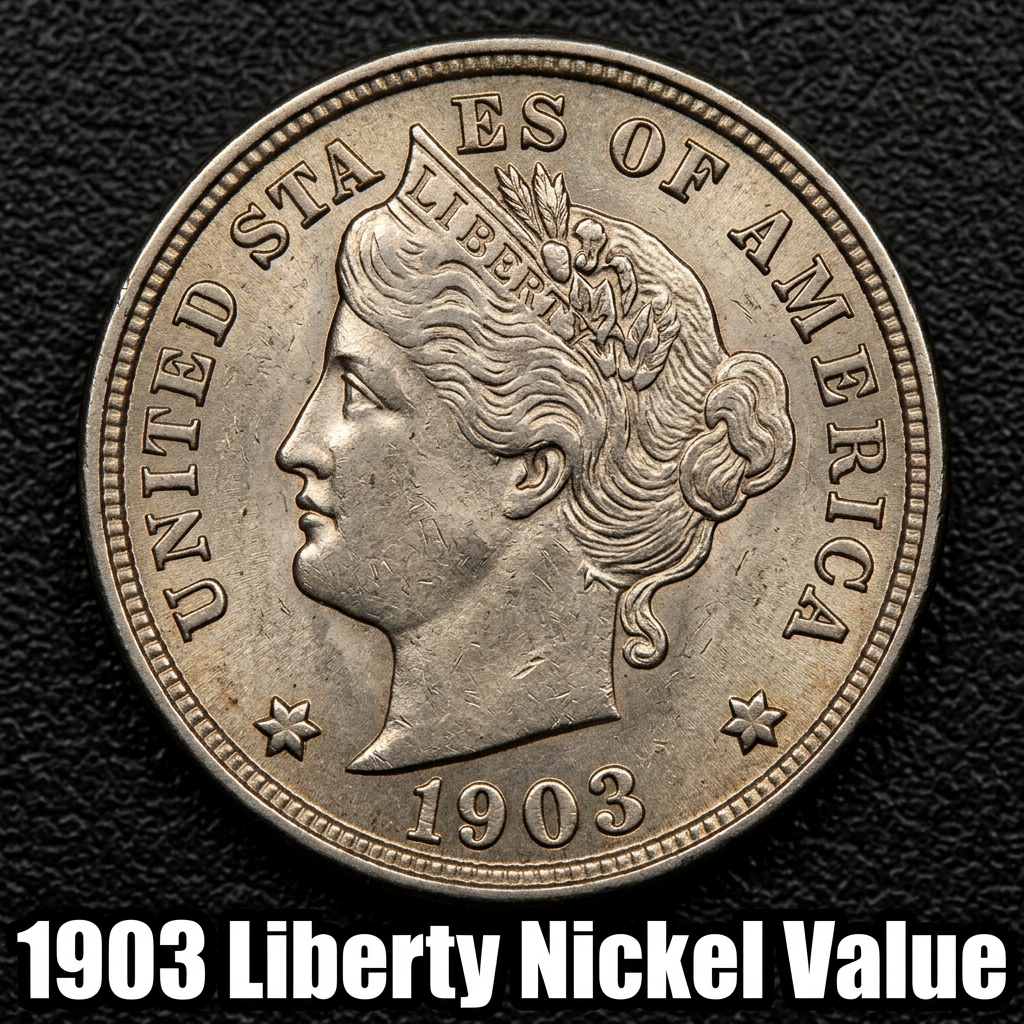
The 1903 Liberty Nickel, also known as the V Nickel because of the large Roman numeral “V” on the reverse, was struck at the Philadelphia Mint during an era when American coinage had a distinctly classic feel. Designed by Charles Barber, the coin features Lady Liberty on the obverse wearing a coronet inscribed with the word “LIBERTY.” The reverse is relatively simple, displaying the denomination surrounded by a wreath and the words “UNITED STATES OF AMERICA.”
By 1903, the Liberty Nickel had been in production since 1883, and the series was winding down — it would be replaced by the Buffalo Nickel in 1913. The 1903 issue had a mintage of approximately 28.5 million coins, which is fairly substantial. That high mintage means circulated examples are not rare, but problem-free, high-grade specimens are still very desirable among collectors.
1903 Liberty Nickel Value by Grade
The condition of your coin is the single biggest factor in determining its value. Coin collectors use a standardized grading scale ranging from Poor (P-1) to Perfect Mint State (MS-70). Here’s a general breakdown of 1903 Liberty Nickel values across common grades:
| Grade | Description | Estimated Value |
|---|---|---|
| Good (G-4) | Heavy wear, major details visible | $2 – $4 |
| Fine (F-12) | Moderate wear, clear lettering | $6 – $12 |
| Extremely Fine (EF-40) | Light wear on high points | $25 – $45 |
| About Uncirculated (AU-55) | Slight wear, nearly full luster | $55 – $80 |
| Mint State (MS-63) | No wear, minor contact marks | $100 – $175 |
| Mint State (MS-65) | Gem quality, strong luster | $300 – $600+ |
For the most up-to-date auction results and certified coin prices, you can check out current 1903 Liberty Nickel mint state price data directly from recent market sales. Prices shift with collector demand, so staying current matters.
Does the Mint Mark Affect the 1903 Nickel’s Worth?
Here’s some straightforward news: the 1903 Liberty Nickel was only struck at the Philadelphia Mint. Philadelphia coins of this era carried no mint mark, so you won’t find an “S” (San Francisco) or “D” (Denver) version of this date. If someone is trying to sell you a 1903 Liberty Nickel with a mint mark, that’s a red flag worth investigating further.
This single-mint reality simplifies things for collectors. All 1903 Liberty Nickels came from the same production facility, so the main variables affecting value are grade and whether the coin has been cleaned or damaged. A coin that has been harshly cleaned — even if it looks shiny — is considered “impaired” and will sell for significantly less than a naturally toned example of the same grade.
How to Tell If Your 1903 Liberty Nickel Is Worth More
Beyond basic grade, there are a few things that can push your coin’s value higher. First, look for strong strike quality — the details of Liberty’s hair and the lettering should be crisp and well-defined. A weakly struck example, even in higher grade, is less desirable.
Second, original surfaces matter. Coins that haven’t been cleaned, polished, or altered are called “original” and command a premium. Look for natural toning — shades of gray or light brown are normal for a coin over 120 years old.
Third, if you’re serious about getting top dollar, consider professional grading. Services like PCGS or NGC will grade and encapsulate your coin in a tamper-evident holder, which makes it much easier to sell. You might also want to explore the detailed coin value information for early 20th century coinage to understand how related coins from this period compare in today’s market.
Using CoinHix can also give you a solid preliminary read on condition and value before spending money on professional grading — a smart first step for any coin you think might be worth something.
Where to Sell Your 1903 Liberty Nickel
If you’ve decided you want to sell, you have several good options. Local coin dealers will offer a quick transaction, though they’ll typically pay below retail value since they need to make a profit. Online platforms like eBay or Heritage Auctions give you access to a wider pool of buyers and often yield better prices for nicer coins.
Before selling anything, it’s worth using CoinHix to get a ballpark value so you walk into any negotiation informed. No matter where you sell, knowing your coin’s approximate grade and market value puts you in a much stronger position. Don’t leave money on the table just because you weren’t sure what you had.
FAQ
Q: Is a 1903 Liberty Nickel rare?
A: Not in general. With a mintage of about 28.5 million, circulated examples are common. However, high-grade mint state specimens — especially MS-65 and above — are genuinely scarce and much more valuable.
Q: How do I know if my 1903 Liberty Nickel has been cleaned?
A: Cleaned coins often show an unnatural brightness, fine hairline scratches under magnification, or a lack of natural toning. A coin that looks too shiny for its age is often a sign of cleaning, which reduces its collector value significantly.
Q: Can I get my 1903 Liberty Nickel graded, and is it worth the cost?
A: Professional grading makes the most sense for coins in Extremely Fine condition or better. If your coin appears to be in lower circulated grades, the grading fee may not be worth it. For coins that look like they could be AU or Mint State, grading can dramatically increase buyer confidence and sale price.