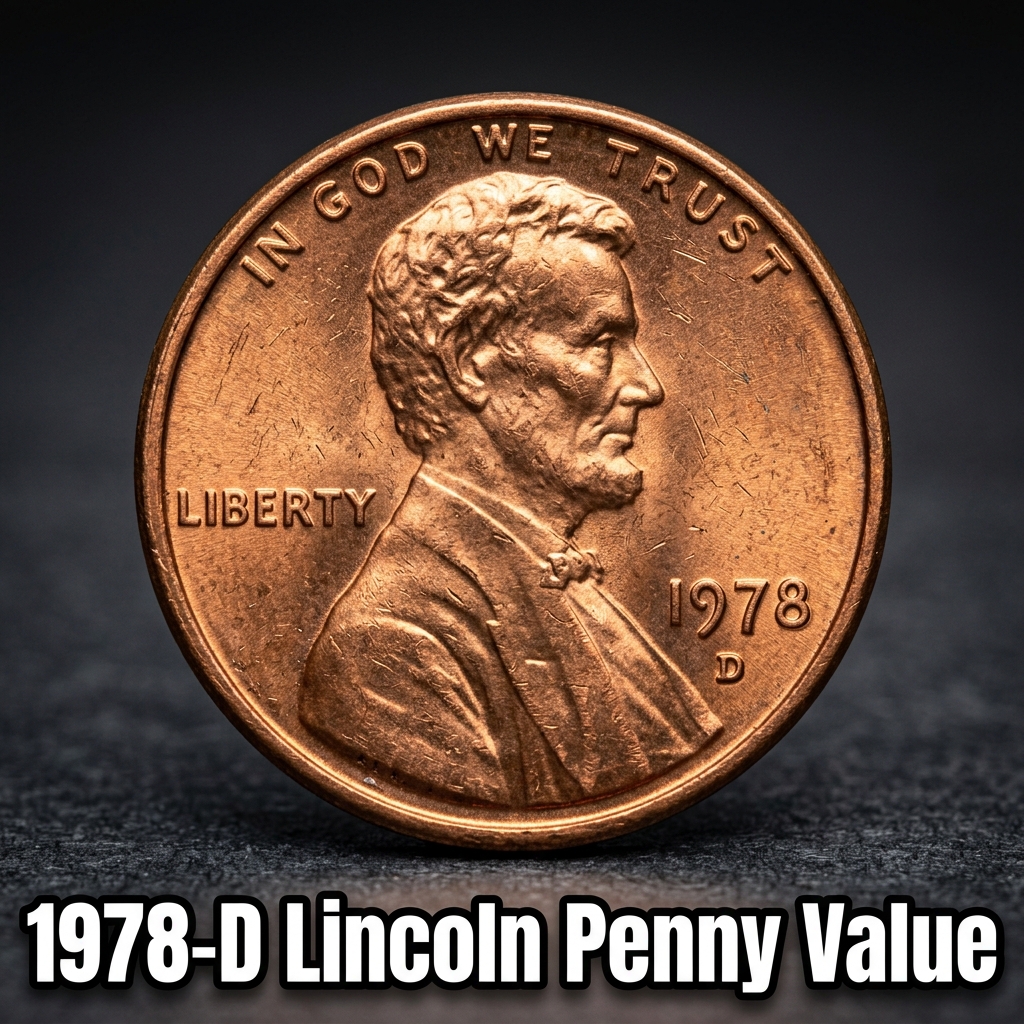
The 1978-D Lincoln Penny is worth anywhere from a few cents in heavily worn condition to over $10 or more in pristine uncirculated grades — and rare high-grade examples have sold for significantly more at auction. If you just found one in a coin jar or old drawer, you’re in the right place to find out exactly what you have.
—
What Makes the 1978-D Lincoln Penny Special
The “D” mintmark on the 1978 Lincoln Penny tells you it was struck at the Denver Mint. In 1978, Denver produced a massive number of these coins — over 4 billion — which means they’re not rare in the traditional sense. However, that doesn’t mean yours is worthless. Condition is everything in the coin world, and a 1978-D Lincoln Penny that has survived decades without heavy wear can still carry real numismatic value.
If you want a quick and easy way to identify what you’re holding, try using the best coin identifier app available today to scan your coin and get an instant read on its details and estimated value. It saves a lot of guesswork.
Lincoln cents from this era are made of 95% copper and 5% zinc — a composition that was actually changed just a few years later in 1982. That copper content adds a small but meaningful layer of metal value, especially as copper prices fluctuate over time.
—
1978-D Lincoln Penny Value by Grade
The grade of your coin is the single biggest factor in determining its value. Coins are graded on a scale from 1 (Poor) to 70 (Perfect Uncirculated). Here’s a general breakdown of what you might expect:
| Grade | Condition | Estimated Value |
|---|---|---|
| G-4 (Good) | Heavy wear, design visible | $0.02 – $0.05 |
| VF-20 (Very Fine) | Moderate wear, clear details | $0.10 – $0.25 |
| MS-63 (Choice Unc.) | Uncirculated, minor marks | $1.00 – $3.00 |
| MS-65 (Gem Unc.) | Strong luster, few marks | $5.00 – $10.00 |
| MS-67 RD (Superb Gem) | Near perfect, full red color | $50.00+ |
For the most up-to-date auction results and certified sale prices, you can browse 1978-D Lincoln Penny MS-RD price data on CoinHix to see what top-grade examples have actually sold for in recent months.
—
Understanding Coin Color Designations (RD, RB, BN)
One thing that surprises a lot of new collectors is that Lincoln cents from this era are graded not just by sharpness, but also by color. You’ll often see three designations:
– RD (Red): The coin still has 95% or more of its original red copper luster. This is the most desirable and commands the highest prices.
– RB (Red-Brown): The coin has lost some luster but retains a mix of red and brown tones.
– BN (Brown): The coin has fully toned to brown. Still collectible but the lowest of the three in value.
A 1978-D in MS-65 BN might sell for under a dollar, while the same coin in MS-65 RD could fetch several times more. This is why storage matters — coins kept in proper holders maintain their red color much longer than those left loose in jars or bags.
CoinHix is a great tool for tracking these color-specific price tiers. The CoinHix app breaks down values by grade and color designation so you know exactly what you’re working with before you buy or sell.
—
How to Tell If Your 1978-D Penny Is Worth More
Not every worn penny in your pocket is a treasure, but there are a few things to check that could bump up the value of your 1978-D Lincoln Penny:
1. Check for full red luster. Hold it under a light — does it glow a warm copper-red? If so, it may grade RD.
2. Look for die errors. Doubling on Lincoln’s portrait or on the lettering is a sign of a Doubled Die variety, which can multiply value considerably.
3. Examine the mintmark. A strong, cleanly struck “D” is a good sign of a well-made coin.
4. No cleaning. Cleaned coins drop significantly in value. Harsh cleaning leaves tiny scratches visible under magnification.
If you want a deeper look at the full range of 1978 penny values across all mint marks and grades, that resource breaks it down clearly for both casual finders and serious collectors.
—
FAQ About the 1978-D Lincoln Penny
Q: Is the 1978-D Lincoln Penny rare?
A: No, it’s not rare — over 4 billion were minted. But high-grade examples, especially in MS-67 RD, are genuinely scarce and can sell for $50 or more.
Q: How do I find out what grade my coin is?
A: You can get a rough idea using CoinHix or by comparing your coin to grading photos online. For official certification and maximum resale value, consider submitting to PCGS or NGC.
Q: Should I clean my 1978-D penny before selling it?
A: Absolutely not. Cleaning a coin — even gently with a cloth — permanently damages its surface and lowers its grade. Always sell coins in their natural, uncleaned state.