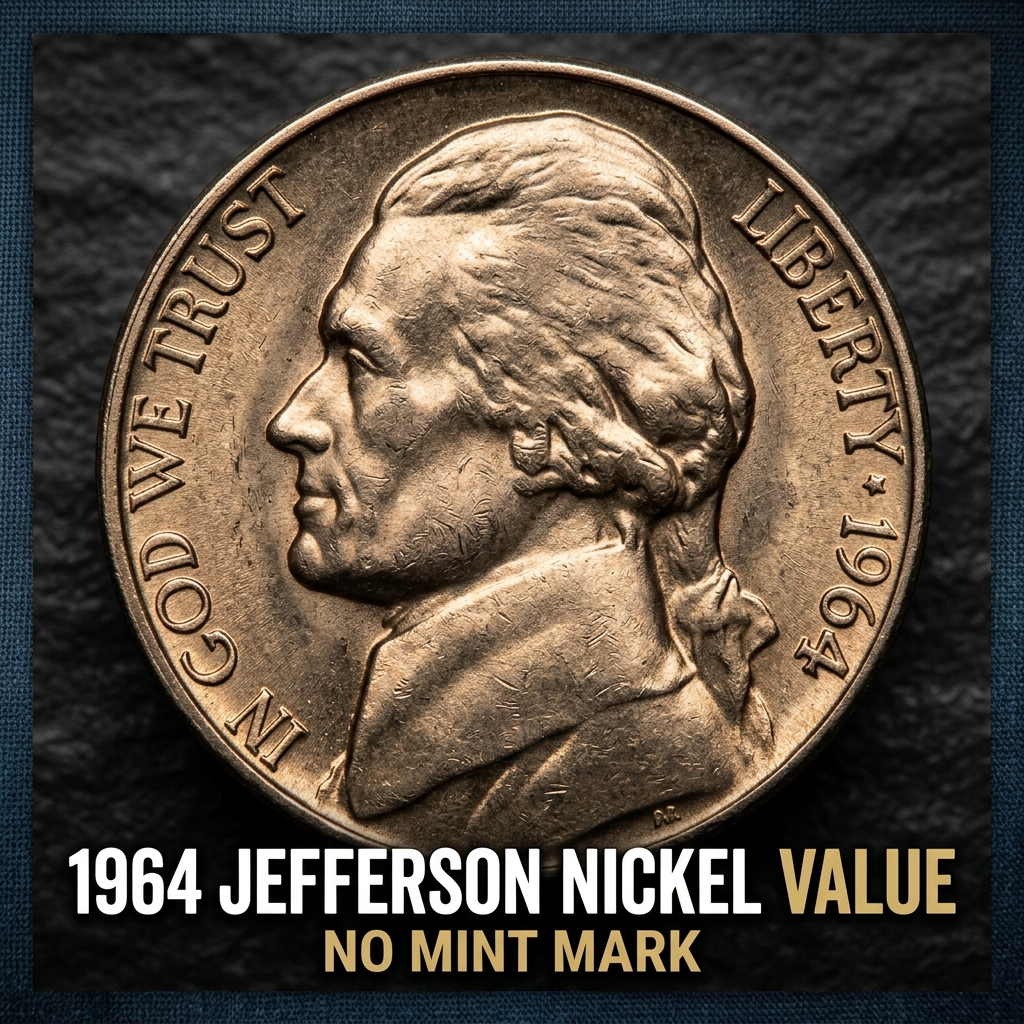
The 1964 Jefferson Nickel with no mint mark is worth anywhere from face value in heavily worn condition to over $100 or more in pristine uncirculated grades. Most coins you find in pocket change fall somewhere in the middle, but a few special examples can surprise you.
What Makes the 1964 Jefferson Nickel Special
The 1964 Jefferson Nickel is one of the most widely recognized coins in American history, and for good reason. The Philadelphia Mint produced a staggering 1,024,672,000 nickels that year — over one billion pieces — making it one of the highest-mintage nickels ever struck. You might wonder: if so many were made, why would any of them be valuable?
The answer lies in condition. Because billions were made and circulated heavily, finding one in truly gem-quality uncirculated condition is harder than you’d think. Most examples show signs of wear, bag marks, or dull luster. A sharp, well-struck coin with full original mint luster stands out from the crowd and commands serious attention from collectors.
If you’ve found one of these coins and want to know what you’re holding, using a best coin identifier app is a great first step. These tools can help you identify the coin, estimate its grade, and get a ballpark value before you take it to a dealer or auction.
The 1964 Jefferson Nickel features Felix Schlag’s classic portrait of Thomas Jefferson on the obverse and Monticello on the reverse. When the reverse shows crisp, fully defined steps on Monticello — known as Full Steps — those coins carry a significant premium.
1964 Jefferson Nickel Value by Grade
The grade of your coin is the single most important factor in determining its value. Coins are graded on the Sheldon scale from 1 (barely identifiable) to 70 (perfect). Here’s a general breakdown of what the 1964 no mint mark Jefferson Nickel is worth at different grades:
| Grade | Description | Estimated Value |
|---|---|---|
| G-4 (Good) | Heavy wear, outline visible | $0.05 – $0.10 |
| F-12 (Fine) | Moderate wear, details clear | $0.10 – $0.25 |
| EF-40 (Extremely Fine) | Light wear on high points | $0.50 – $1.00 |
| MS-63 (Uncirculated) | No wear, some bag marks | $3 – $8 |
| MS-65 (Gem Uncirculated) | Strong luster, minor contact marks | $15 – $40 |
| MS-66 Full Steps | Gem grade with full Monticello steps | $75 – $150+ |
For the most current auction results and graded coin sales, you can check out real-time 1964 Jefferson Nickel MS price data to see what collectors are actually paying right now.
The Full Steps Designation and Why It Matters
Among all the factors that affect the 1964 Jefferson Nickel’s value, Full Steps (FS) is the one that can turn a $5 coin into a $100+ coin almost instantly. The reverse of the Jefferson Nickel shows Monticello with a set of steps leading to the entrance. When those steps are fully and sharply struck — showing complete, uninterrupted step lines — the coin is designated “Full Steps” by grading services like PCGS and NGC.
Because the Philadelphia Mint was under enormous pressure to produce billions of coins in 1964, many were struck with worn dies or insufficient striking pressure, leaving the steps soft or incomplete. Finding a 1964 no mint mark nickel with a genuine Full Steps designation in MS-65 or higher is legitimately rare compared to the massive mintage numbers.
If you’re not sure whether your coin qualifies, CoinHix is a fantastic resource. The CoinHix app allows you to scan your coin, compare it to population data, and understand how Full Steps coins are graded and valued — right from your phone.
How to Tell If Your 1964 Nickel Is Worth More Than Face Value
Start by looking at the coin under good lighting. A circulated coin will show flatness on Jefferson’s cheekbone and hair above the ear on the obverse, and soft or worn details on Monticello’s columns on the reverse. If your coin still has bright, shiny luster and all the details look sharp and crisp, you might have an uncirculated example worth setting aside.
Next, check the mint mark. The 1964 nickel with no mint mark was struck in Philadelphia. The Denver Mint version carries a “D” mint mark on the reverse. Both are common, but knowing which one you have matters for accurate valuation.
For a full breakdown of 1964 nickel values across all grades and varieties, it’s worth consulting a dedicated coin value resource so you have all the details before buying or selling.
Also, be aware of errors. Some 1964 nickels were struck with doubled die obverses or off-center strikes. These error coins can be worth anywhere from a few dollars to several hundred depending on the error’s severity and the coin’s condition.
Should You Get Your 1964 Jefferson Nickel Graded
If your coin looks uncirculated and shows sharp Full Steps, professional grading is absolutely worth considering. A PCGS or NGC-graded MS-65 Full Steps example could easily sell for $75 to $150 or more, compared to the few dollars an ungraded coin might fetch from a casual buyer.
For lower-grade or circulated coins, grading fees probably outweigh the benefit. But if you’re sitting on something that looks exceptional, don’t leave money on the table.
CoinHix makes this decision easier by giving you instant access to population data — how many coins have been graded at each level — so you can see whether your coin is genuinely rare at that grade.
FAQ
Q: Is a 1964 Jefferson Nickel with no mint mark rare?
A: Not in general — over one billion were made at the Philadelphia Mint. However, high-grade examples, especially those with Full Steps, are significantly scarcer and genuinely sought after by collectors.
Q: How do I know if my 1964 nickel is in good condition?
A: Look for original luster (a bright, slightly cartwheel-like shine under light), no visible wear on Jefferson’s cheek or hair, and sharp details on Monticello’s steps. If the coin looks dull or flat, it has been circulated.
Q: Where is the best place to sell a valuable 1964 Jefferson Nickel?
A: For coins in circulated condition, a local coin dealer is quick and simple. For high-grade or Full Steps examples, consider submitting to PCGS or NGC for grading first, then selling through eBay, Heritage Auctions, or a major coin show to reach the widest audience of serious collectors.