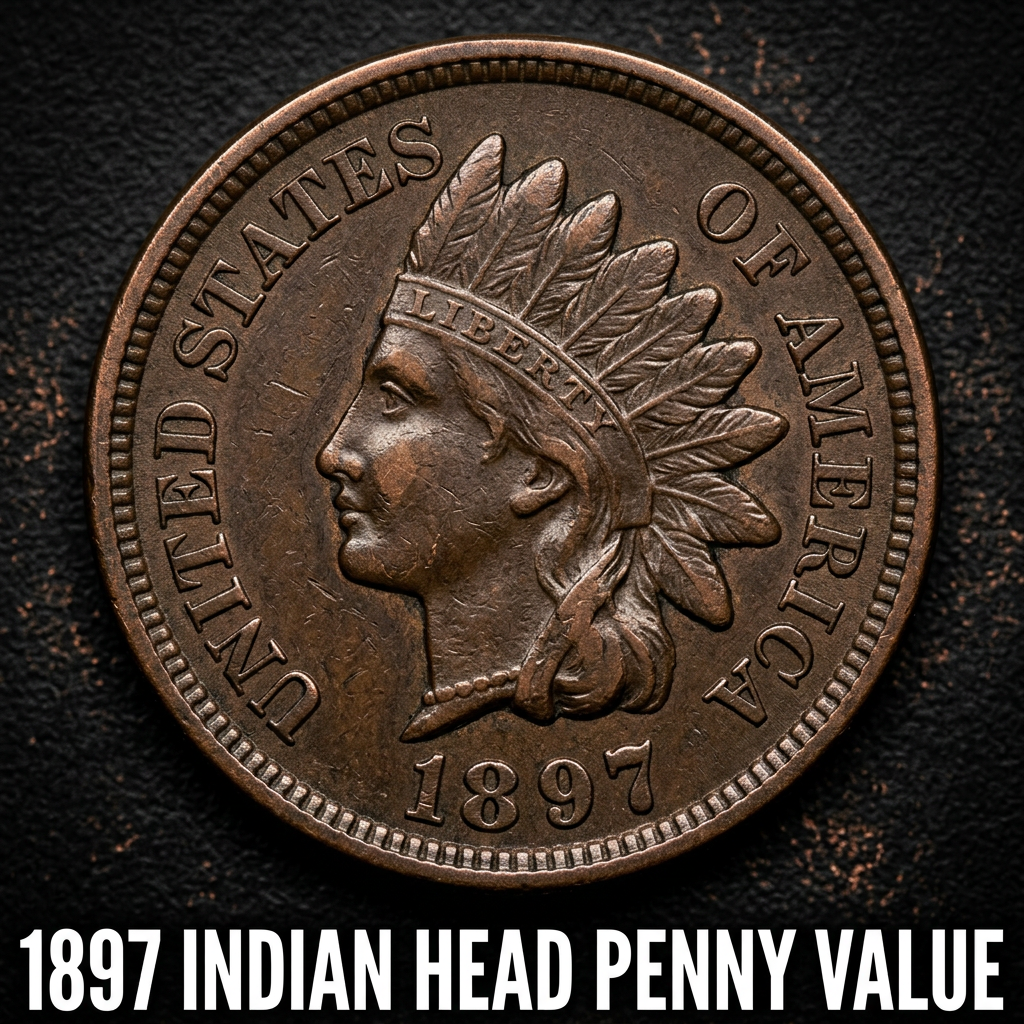
The 1897 Indian Head Penny is worth anywhere from $2 in heavily worn condition to over $100 or more in uncirculated mint state grades. If you recently found one of these beautiful old cents, you’re in the right place — let’s break down exactly what yours might be worth.
A Quick History of the 1897 Indian Head Penny
The Indian Head Penny was designed by James Barton Longacre and minted from 1859 to 1909. By 1897, the Philadelphia Mint was producing tens of millions of these coins each year, making them relatively common in circulated grades but still cherished by collectors. The obverse features a Native American-inspired portrait of Liberty wearing a feathered headdress, while the reverse displays a wreath and the denomination “ONE CENT.” Even though millions were struck, time has not been kind to most surviving examples — truly well-preserved coins from 1897 are harder to find than you might think. If you’re not sure what you’re holding, using the best coin identifier app can help you quickly identify the coin, its grade, and a rough value estimate without needing to visit a dealer right away. Technology has made coin identification more accessible than ever for everyday collectors.
1897 Indian Head Penny Value by Grade
The condition of your coin — what collectors call the “grade” — is the single biggest factor in determining value. A coin pulled from circulation and heavily worn is going to be worth far less than one that sat in a collection untouched for over a century. Here’s a general value breakdown:
| Grade | Description | Estimated Value |
|---|---|---|
| Good (G-4) | Heavily worn, major details visible | $2 – $4 |
| Fine (F-12) | Moderate wear, clear lettering | $5 – $10 |
| Extremely Fine (EF-40) | Light wear on high points | $20 – $35 |
| About Uncirculated (AU-55) | Slight friction, most luster present | $45 – $65 |
| Mint State (MS-63) | Uncirculated, minor surface marks | $80 – $120 |
| Mint State Red (MS-65 RD) | Full original red luster, gem quality | $200 – $400+ |
For the most up-to-date certified coin prices, you can check the 1897 Indian Head Penny MS-RD price data on CoinHix to see what top-grade examples are actually selling for at auction right now.
What Makes an 1897 Indian Head Penny More Valuable
Beyond grade, a few other factors can push your coin’s value higher. Color designation matters a great deal for uncirculated examples. Coins graded “Red” (RD) retain their original copper luster and command the highest premiums. “Red-Brown” (RB) coins are a step below, and “Brown” (BN) examples, while still collectible, are the most common. Strike quality also plays a role — a sharply struck coin with full feather details on the headdress is more desirable. Look closely at the ribbon ends and the diamond shapes in the headband. If those details are crisp and well-defined, you likely have a better-quality example. Eye appeal matters too. A coin free from spots, cleaning, or corrosion will always sell better than one that has been improperly cleaned. Many people unknowingly reduce a coin’s value by polishing it — so if you found an old penny, resist the urge to shine it up.
How to Get an Accurate Value for Your 1897 Indian Head Penny
If you want a reliable estimate without spending money on professional grading, start with a good photo under natural light and compare it to grading images online. CoinHix is a fantastic resource that lets you look up real auction results for Indian Head Pennies across all grades, giving you a realistic picture of the current market. For a more detailed breakdown of what affects pricing at every grade level, this comprehensive 1897 Indian Head Penny value guide walks you through the specifics in plain language. For casual collectors or those who just found a coin in grandma’s drawer, CoinHix also offers a mobile-friendly experience that makes it easy to research values on the go. If you think your coin might be worth $50 or more, it’s worth submitting it to a grading service like PCGS or NGC for official certification, which protects its value and makes it easier to sell.
Is the 1897 Indian Head Penny Rare?
The short answer is no — in circulated grades, the 1897 Indian Head Penny is not particularly rare. The Philadelphia Mint struck approximately 50,466,330 examples that year, which was a very high mintage for the era. However, rarity is relative. High-grade red examples grading MS-65 RD or above are genuinely scarce and can fetch hundreds of dollars at auction. So while your average well-worn penny might only bring a few dollars, don’t dismiss the series entirely — condition rarity means that truly pristine examples are quite special. If you’ve inherited a coin collection or found a stash of old cents, using CoinHix to scan through values quickly can help you spot the gems before they end up in a jar on the shelf.
FAQ
Q: How do I know if my 1897 Indian Head Penny has been cleaned?
A: Cleaned coins often have an unnatural shine, hairline scratches under magnification, or a color that looks too bright or too uniform for their age. Cleaned coins are worth significantly less to collectors, so always store old coins in their original condition.
Q: Is there a mint mark on the 1897 Indian Head Penny?
A: No. All 1897 Indian Head Pennies were struck at the Philadelphia Mint, which did not use a mint mark on cents at that time. There are no branch mint varieties for this date.
Q: Where is the best place to sell an 1897 Indian Head Penny?
A: For common circulated examples, eBay or a local coin shop are fine options. For higher-grade or certified coins, major auction houses like Heritage Auctions or Stack’s Bowers will expose your coin to serious collectors and often yield better prices.