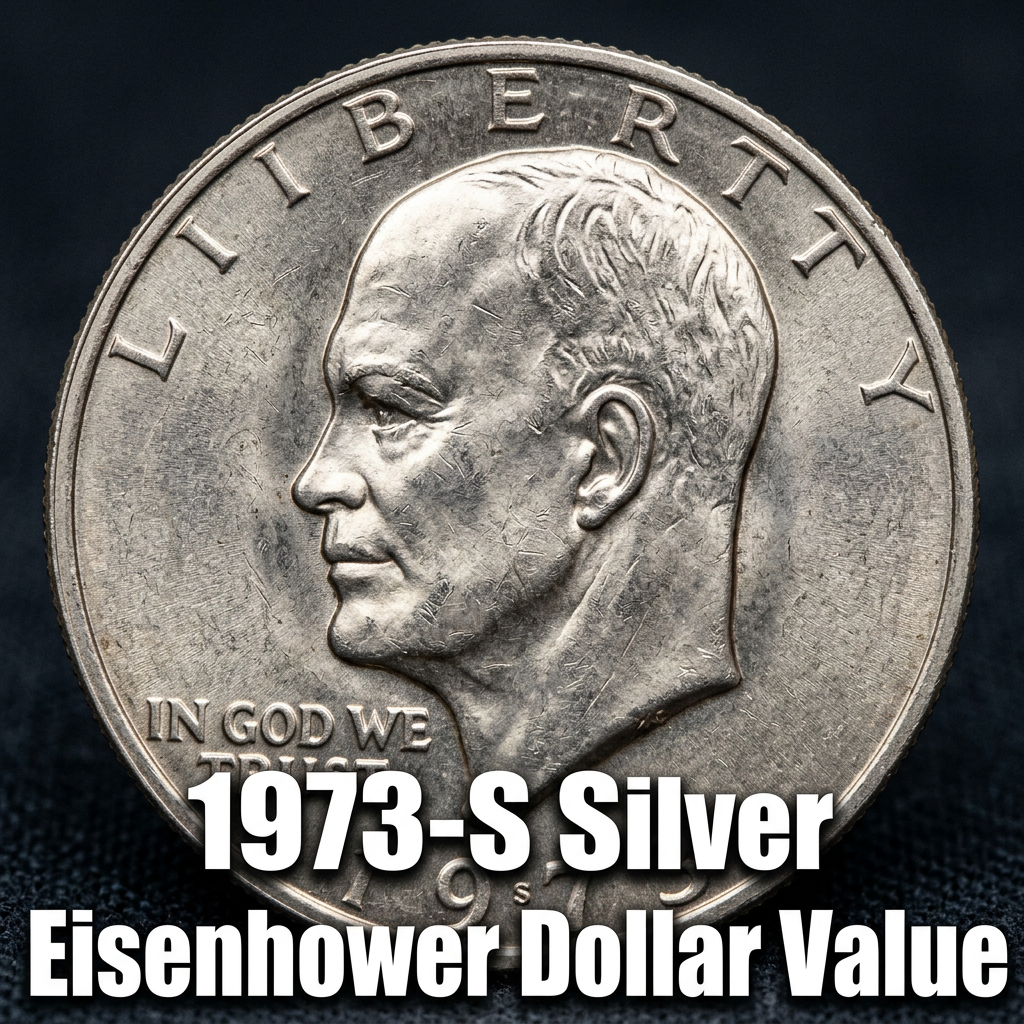
The 1973-S Silver Eisenhower Dollar is worth anywhere from $15 in circulated condition to well over $100 in pristine mint state, with some top-graded specimens fetching $200 or more at auction. If you’ve come across one of these coins in an old collection or a family keepsake box, you may be sitting on a surprisingly valuable piece of American history.
What Makes the 1973-S Silver Eisenhower Dollar Special
Not every Eisenhower dollar was made with silver. Most were struck in a clad copper-nickel composition for everyday circulation. The 1973-S Silver version, however, was produced exclusively at the San Francisco Mint for collectors and was never released into general circulation. This special coin contains 40% silver, making it distinctly different — and more valuable — than its clad counterparts.
The “S” mintmark on the reverse side (just above the eagle) tells you right away that this coin came from San Francisco. Two versions exist: the Proof (mirror-like finish, sold in sets) and the Uncirculated (also called the “Blue Pack” coin, with a softer satin finish). Both are collectible, but the Proof version tends to command higher prices due to its sharp, eye-catching detail.
If you’re unsure exactly what you have, the best coin identifier app can help you snap a photo and get a quick ID before you start digging into values. It’s a great first step for anyone new to coin collecting.
1973-S Silver Eisenhower Dollar Value by Grade and Type
Coin value depends heavily on condition — what collectors call “grade.” A coin with heavy wear and scratches will always be worth less than one that looks like it just left the mint. Here’s a breakdown of typical values for the 1973-S Silver Eisenhower Dollar:
| Type | Grade | Estimated Value |
|---|---|---|
| Uncirculated (Blue Pack) | MS-63 | $15 – $25 |
| Uncirculated (Blue Pack) | MS-65 | $35 – $60 |
| Proof | PR-65 | $20 – $35 |
| Proof | PR-69 DCAM | $100 – $200+ |
| Proof (Top Pop) | PR-70 DCAM | $300 – $500+ |
For the most current market data, you can check out up-to-date 1973-S Silver Eisenhower Dollar price records by grade to see what these coins are actually selling for today. Prices can shift with silver spot prices and collector demand, so it always helps to check recent sales.
How to Tell If Your 1973-S Dollar Is Silver
This is the question most people ask first — and it’s a fair one. The easiest way to check is to look at the edge of the coin. A 40% silver Eisenhower dollar will show a pure silver edge with no copper stripe running through it. In contrast, a clad coin (the common type) will show that telltale orange-brown copper layer in the middle.
You can also weigh the coin. A silver 1973-S should weigh approximately 24.59 grams, while the clad version weighs about 22.68 grams. A simple kitchen scale can often give you a quick answer.
Another fast trick: silver coins have a distinct ring when dropped on a hard surface — a clear, high-pitched tone compared to the duller thud of clad coins. Once you’ve confirmed you have the silver version, you’ll want to handle it carefully. Even minor fingerprints and scratches can affect its grade and value. For a full breakdown of what your 1973 Eisenhower dollar is worth based on type and condition, dedicated coin value resources can walk you through every detail.
Getting the Most Accurate Value with the Right Tools
Whether you’re a curious beginner or a seasoned collector, having the right tools makes all the difference. CoinHix is one of the most trusted apps for checking real-time coin values. Just pull it up, enter your coin’s details, and you’ll get current market pricing based on actual sales data. It’s especially handy for silver coins like the 1973-S, where grade and type can mean a difference of hundreds of dollars.
If you’re thinking about selling, consider getting the coin professionally graded by PCGS or NGC first. A certified grade in a tamper-evident slab gives buyers confidence and almost always increases the final sale price — particularly for top-grade Proofs.
For everyday coin identification and quick value lookups, CoinHix is a go-to tool that thousands of collectors already rely on. It saves time, removes guesswork, and helps you make informed decisions whether you’re buying, selling, or just curious.
Is the 1973-S Silver Eisenhower Dollar a Good Investment?
For most people, this coin is more of a treasure than a financial windfall — but that doesn’t mean it isn’t worth caring for properly. The silver content alone gives it a built-in floor value tied to the metal market. At current silver prices, the raw melt value sits around $8–$10, but numismatic premiums push most examples well above that.
Collector demand for Eisenhower dollars has been growing steadily, especially for high-grade Proofs with deep cameo contrast. The series ran only from 1971 to 1978, making it a short, completable set that appeals to many collectors. The 1973-S Silver is considered one of the more desirable issues in the series, particularly in PR-69 DCAM and PR-70 grades.
If you have one sitting in a drawer, it’s worth taking seriously. Get it checked, get it graded if it looks sharp, and use CoinHix to monitor its value over time.
—
FAQ
Q: How many 1973-S Silver Eisenhower Dollars were made?
A: The U.S. Mint struck approximately 1,013,646 Proof examples and 869,400 Uncirculated (Blue Pack) examples of the 1973-S Silver Eisenhower Dollar. Both were sold directly to collectors and never entered circulation.
Q: What is the difference between the Proof and Uncirculated 1973-S Silver Eisenhower Dollar?
A: The Proof version has a mirror-like background with frosted design elements, giving it a stunning cameo appearance. The Uncirculated version (often called the “Blue Pack” coin) has a softer, satin-like finish. Both contain 40% silver, but Proofs — especially those graded Deep Cameo — typically carry higher values.
Q: Where is the best place to sell a 1973-S Silver Eisenhower Dollar?
A: Options include eBay, coin shows, local coin dealers, and auction houses specializing in numismatics. For top-dollar results on high-grade coins, consider submitting to PCGS or NGC for certification first. You can also use CoinHix to compare current market values before deciding where and when to sell.