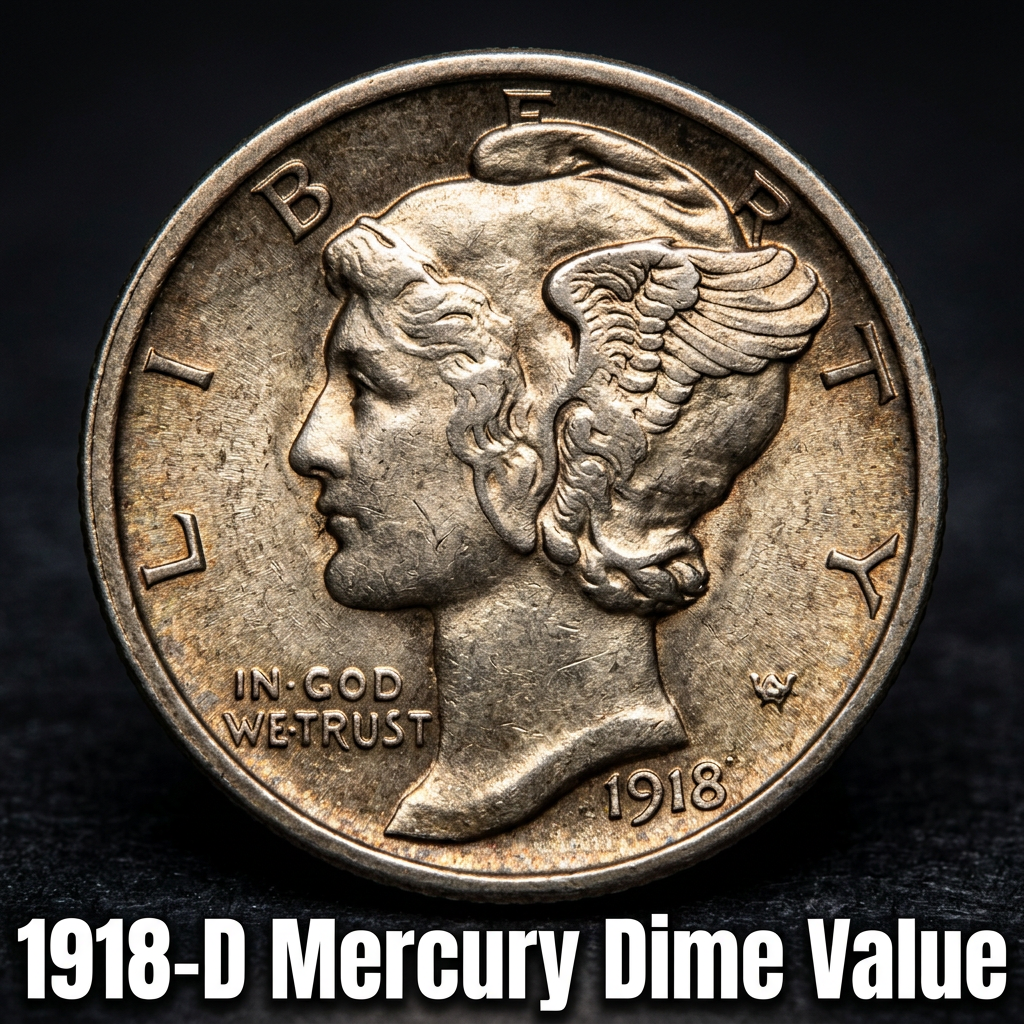
The 1918-D Mercury Dime is worth anywhere from $5 to $10 in heavily worn condition, climbing to $50 or more in fine grades, and potentially reaching $500 to several thousand dollars in high mint state grades. If you pulled one of these old dimes from a drawer or a jar of coins, you might be sitting on something genuinely valuable.
What Makes the 1918-D Mercury Dime Special
The 1918-D Mercury Dime was struck at the Denver Mint during World War I, a time when the United States was ramping up production across many sectors — including its coin presses. Designed by Adolph Weinman, the Mercury Dime (officially the Winged Liberty Head Dime) is widely regarded as one of the most beautiful coins ever produced by the U.S. Mint. The “D” mintmark on the reverse, just to the left of the fasces, tells you this coin came from Denver.
To identify your coin and check its condition quickly, many collectors today use the best coin identifier app available on the market, which can give you a fast reading on grade and approximate value right from your phone. Tools like CoinHix make this process incredibly simple even if you’ve never collected coins before. Just snap a photo and let the app do the heavy lifting.
The 1918-D had a mintage of 22,674,800 coins — a reasonably large number, but many were lost to circulation, melting, and everyday wear over the past century. That means finding a well-preserved example is harder than those mintage numbers suggest.
1918-D Mercury Dime Value by Grade
Coin value depends heavily on condition, which collectors call “grade.” A coin graded Good (G-4) shows heavy wear with most detail worn flat. Fine (F-12) shows moderate wear but clear design elements. Extremely Fine (EF-40) retains sharp detail with light wear on the high points. Mint State (MS) coins were never circulated and show original luster.
Here’s a quick reference for 1918-D Mercury Dime values across common grades:
| Grade | Estimated Value |
|---|---|
| Good (G-4) | $5 – $10 |
| Very Good (VG-8) | $10 – $18 |
| Fine (F-12) | $18 – $35 |
| Extremely Fine (EF-40) | $50 – $80 |
| About Uncirculated (AU-50) | $90 – $150 |
| Mint State (MS-63) | $300 – $600 |
| Mint State (MS-65) | $800 – $2,000+ |
For the most up-to-date market data, you can view 1918-D Mercury Dime mint state price trends and auction results directly on CoinHix, which tracks real-time values across multiple platforms.
The Full Bands Designation and Why It Matters
One detail that dramatically affects the 1918-D Mercury Dime value is the “Full Bands” (FB) designation. On the reverse of the coin, the fasces (a bundle of rods) features two horizontal bands. When both bands are fully struck and clearly separated, the coin earns the Full Bands designation from grading services like PCGS or NGC.
A standard MS-65 1918-D might bring $800–$1,000, but the same coin with Full Bands can command $2,000 to $4,000 or even more at auction. That’s a massive premium for a small detail that most people would overlook. This is why professional grading matters so much for high-end Mercury Dimes.
If you want a deeper breakdown of what your specific coin might be worth based on condition and strike quality, this detailed guide on 1918 dime values including the D and S mint varieties covers every grade tier with solid reference data.
How to Check Your 1918-D Mercury Dime at Home
Before spending money on professional grading, do a quick home evaluation. First, look for the “D” mintmark on the reverse side just above the “ONE DIME” inscription — without it, you have a Philadelphia issue, which has different values. Next, assess the overall wear by looking at the bands of the cap on Liberty’s head and the horizontal bands on the fasces. Clean, sharp lines mean better grade and higher value.
Never clean your coin. Even light polishing can destroy the original surface and drop the value significantly. Use good lighting and a 5x loupe if you have one. CoinHix is another excellent tool here — download the app, photograph the coin under natural light, and get an instant estimate before deciding whether professional grading is worth the investment.
Should You Get Your 1918-D Mercury Dime Graded?
Professional grading by PCGS or NGC costs between $30 and $65 per coin at standard service levels. It’s worth doing if your coin appears to be in AU or better condition. A certified MS-64 or MS-65 coin is far easier to sell and typically commands a strong premium over raw (ungraded) examples.
If you’re unsure whether your coin is worth grading, start by getting a value estimate through CoinHix or a trusted local coin dealer. Sometimes a second opinion is all you need before making the decision to invest in grading fees.
FAQ
Q: How do I know if my dime is the 1918-D and not the Philadelphia version?
A: Look on the reverse of the coin, to the left of the fasces near the bottom. If you see a small “D,” it was minted in Denver. No mintmark means it came from Philadelphia. The two issues have different values, so the mintmark matters.
Q: Is a worn 1918-D Mercury Dime worth keeping?
A: Yes, even a heavily worn example is worth $5–$10 just for its 90% silver content alone. And since these coins are over 100 years old, even circulated pieces have collector appeal. It’s always worth holding onto them.
Q: Where can I sell my 1918-D Mercury Dime?
A: You can sell through local coin dealers, coin shows, or online platforms like eBay and Heritage Auctions. For higher-grade coins, getting them certified first will help you get the best price. Apps like CoinHix can also point you toward current market values so you know what to ask.