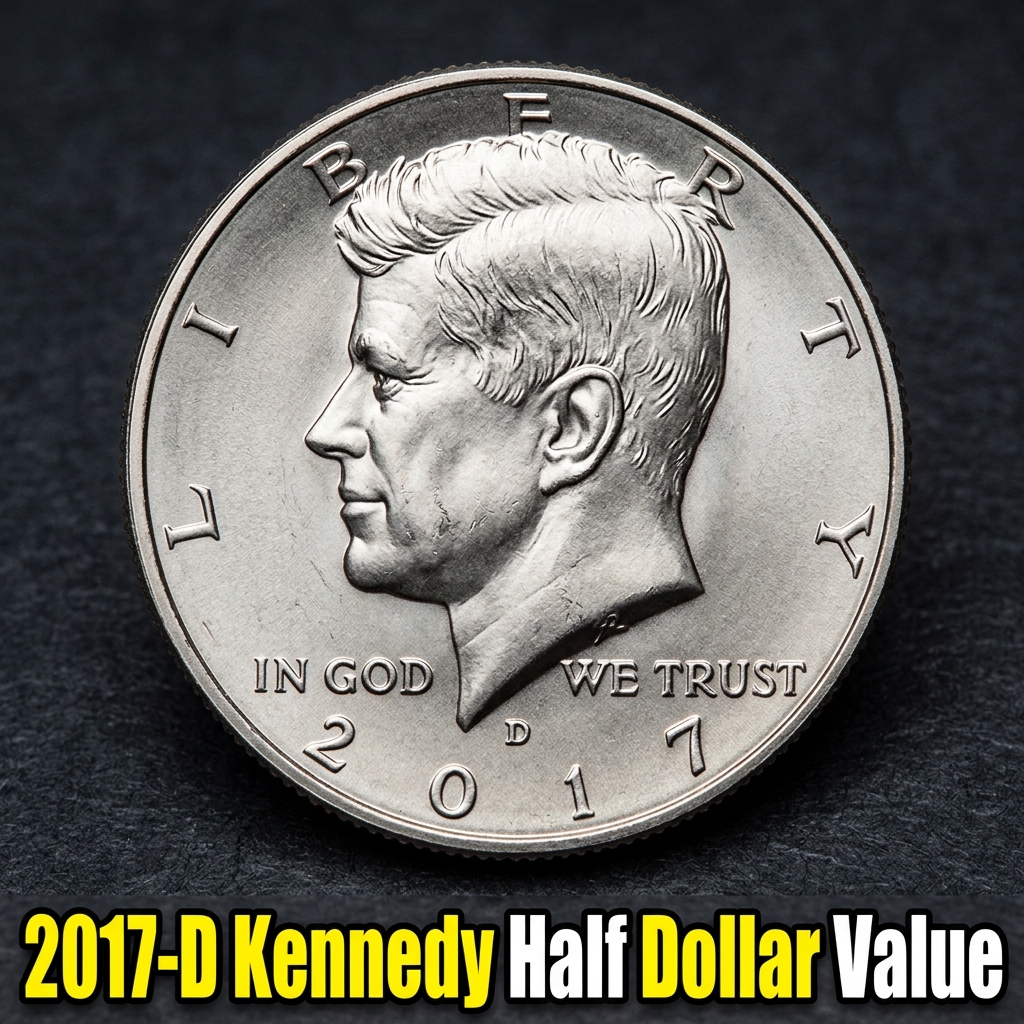
If you’ve got a 2017-D Kennedy Half Dollar sitting in your pocket change or old coin jar, here’s the quick answer: it’s worth anywhere from 50 cents in circulated condition to around $15 or more in pristine mint state. Most of these coins are common, but knowing the details can help you spot if yours is something special.
What Makes the 2017-D Kennedy Half Dollar Special
The 2017-D Kennedy Half Dollar was struck at the Denver Mint, as indicated by the small “D” mintmark on the obverse side of the coin. Like all modern Kennedy Half Dollars, it features the profile portrait of President John F. Kennedy on the front and the Presidential Coat of Arms on the reverse — a design that has remained largely unchanged since the coin’s introduction in 1964.
In terms of composition, the 2017-D is made of a copper-nickel clad blend, containing 91.67% copper and 8.33% nickel. There’s no silver content in this coin, which is one reason why its base value stays modest. That said, it’s still a collectible piece worth understanding, especially if you’re just getting started with coins. Using the best coin identifier app can help you quickly confirm details like the mintmark, condition, and estimated value before you buy, sell, or trade.
The Denver Mint produced over 4.8 million 2017-D Kennedy Half Dollars for general circulation, making it a relatively available coin. Availability affects value significantly in numismatics — the rarer a coin, the more collectors are willing to pay.
2017-D Kennedy Half Dollar Value by Condition
Condition is everything when it comes to coin value. Numismatists use a grading scale from 1 to 70, where 70 is a perfect coin with no flaws visible even under magnification. Here’s a general breakdown of what your 2017-D Kennedy Half Dollar might be worth depending on its grade:
| Grade | Condition Description | Estimated Value |
|---|---|---|
| Good (G-4) | Heavy wear, major details visible | $0.50 – $1.00 |
| Fine (F-12) | Moderate wear, all lettering clear | $0.75 – $1.50 |
| Extremely Fine (EF-40) | Light wear on high points | $1.00 – $3.00 |
| Mint State (MS-63) | Uncirculated, minor contact marks | $3.00 – $8.00 |
| Mint State (MS-65) | Gem uncirculated, strong luster | $8.00 – $15.00+ |
| Mint State (MS-67) | Near-perfect, superb gem quality | $50.00 – $100.00+ |
If you want to dig into more precise grading data, you can check out detailed mint state pricing for Kennedy Half Dollars from this era to compare how similar coins are performing in the current market.
How to Check the Condition of Your 2017-D Half Dollar
Grading a coin at home doesn’t require being a professional. Start by looking at the coin’s high points — on the Kennedy Half Dollar, these are JFK’s cheekbones and hair on the obverse, and the eagle’s wings and breast feathers on the reverse. If these areas show obvious wear or flattening, the coin has been in circulation and will grade lower.
Next, look at the luster. A truly uncirculated coin will have a cartwheel-like shine when you rotate it under a light source. Any dullness, scratches, or discoloration reduces the grade significantly.
One of the easiest tools available today is CoinHix, a mobile app that lets you scan your coin and get an instant estimate of its grade and value. It’s especially useful if you have a collection and want to sort through multiple pieces quickly. CoinHix takes the guesswork out of the process for everyday collectors.
Are Any 2017-D Kennedy Half Dollars Worth More Than Face Value
In most cases, circulated 2017-D Kennedy Half Dollars are only worth their face value of 50 cents, simply because they’re common and widely available. However, there are a few scenarios where your coin could be worth significantly more:
High-grade specimens graded MS-67 or above by a third-party grading service like PCGS or NGC can sell for $50 to $100 or more at auction. These top-tier examples are hard to find because even fresh rolls from banks often contain coins with minor marks from the minting process.
Error coins are another exciting possibility. While rare, some 2017-D Kennedy Half Dollars may have been struck off-center, double-struck, or with die cracks. These error coins can command premiums ranging from a few dollars to several hundred depending on the nature and severity of the error.
For a broader look at how the full range of 2017 Kennedy Half Dollar values holds up, this guide to 2017 Half Dollar values covers everything from circulated grades to top mint state examples in an easy-to-understand format.
Where to Sell Your 2017-D Kennedy Half Dollar
If you’ve determined your coin is worth more than face value, you’ll want to sell it in the right place. Online platforms like eBay give you access to a global audience of collectors, while coin dealers can offer quick cash if you don’t want to wait for an auction to close.
Before selling, always get your coin properly graded by a service like PCGS or NGC if you believe it’s in exceptional condition. A certified grade gives buyers confidence and can increase your selling price significantly. CoinHix can also help you get a ballpark estimate before you invest in professional grading, saving you time and money on coins that might not meet the cut.
Frequently Asked Questions
Q: Is the 2017-D Kennedy Half Dollar made of silver?
A: No, the 2017-D Kennedy Half Dollar contains no silver. It is made of a copper-nickel clad composition — 91.67% copper and 8.33% nickel. Silver Kennedy Half Dollars were only produced from 1964 to 1970, with 40% silver used in the 1965–1970 issues.
Q: How many 2017-D Kennedy Half Dollars were minted?
A: The Denver Mint struck approximately 4,860,000 Kennedy Half Dollars in 2017. This relatively low mintage compared to older decades still makes them widely available, which keeps collector demand and prices moderate for most grades.
Q: Should I clean my 2017-D Kennedy Half Dollar before selling it?
A: Absolutely not. Cleaning a coin — even gently — can permanently damage its surface and dramatically reduce its value. Collectors and grading services strongly prefer original, uncleaned coins. A cleaned coin will almost always grade lower and sell for less than a naturally toned one in the same physical condition.