The 1901-O Barber Half Dollar is worth anywhere from $15 in heavily worn condition to well over $1,000 in higher mint state grades. If you found one of these silver coins tucked away in an old drawer or inherited collection, you might be sitting on something genuinely valuable — and this guide will help you figure out exactly what you’ve got.
—
What Is the 1901-O Barber Half Dollar?
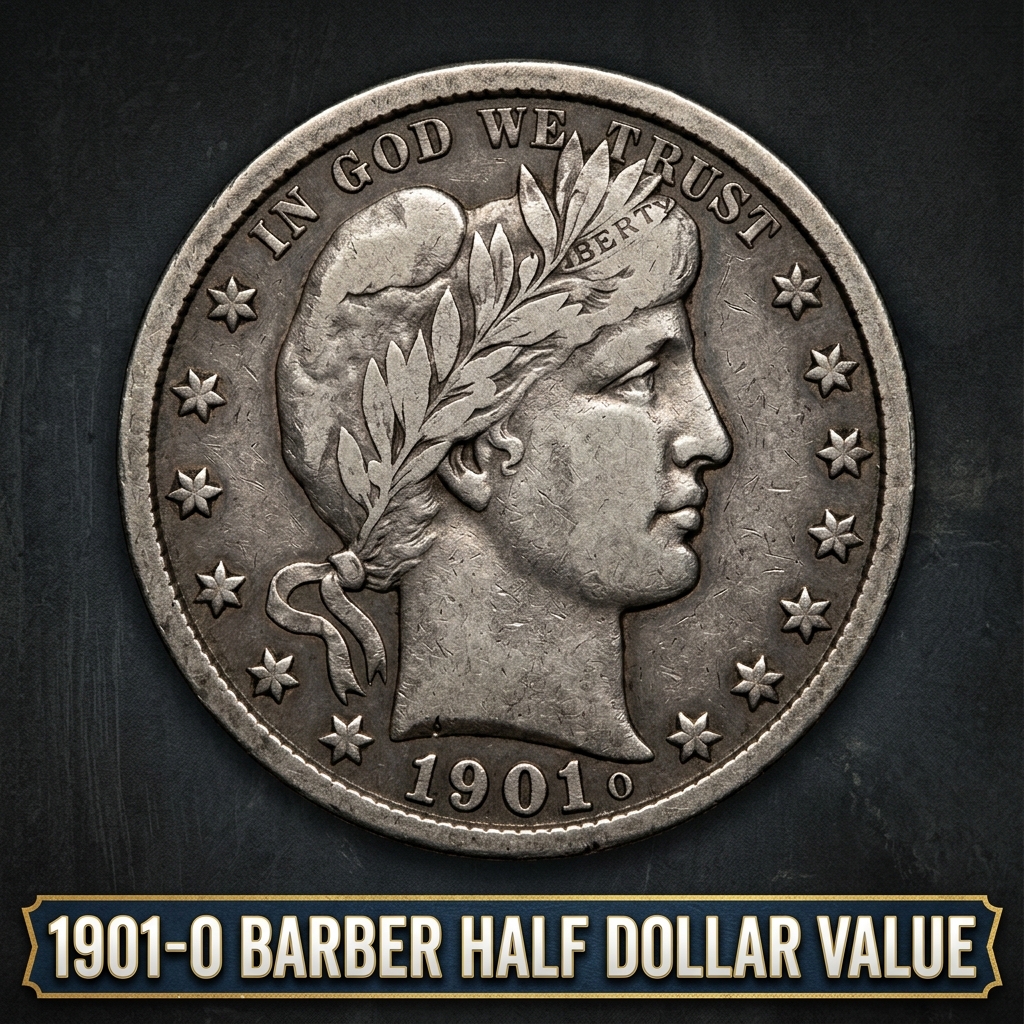
The 1901-O Barber Half Dollar was struck at the New Orleans Mint, indicated by the small “O” mintmark found on the reverse side of the coin, just below the eagle. It’s part of the Barber coinage series, named after Charles E. Barber, the U.S. Mint’s Chief Engraver who designed the coin in 1892. These coins were made from 90% silver and 10% copper, giving them both precious metal value and historical significance.
The “O” mintmark coins from this era tend to show heavier circulation wear than their Philadelphia counterparts, simply because so many were used in everyday commerce across the Southern states. If you’re trying to identify your coin and confirm whether it’s the real deal, using the best coin identifier app on your phone can give you a fast and reliable starting point before you take it to a dealer.
New Orleans Mint coins from this period are widely collected, and the 1901-O is considered a mid-range date in the Barber Half Dollar series — not the rarest, but definitely not common in decent condition either.
—
1901-O Barber Half Dollar Value by Grade
Coin value depends almost entirely on condition, or “grade.” A coin that looks like it’s been dragged across asphalt is worth a fraction of one that’s nearly uncirculated. Here’s a straightforward value table to help you estimate where your coin falls:
| Grade | Description | Estimated Value |
|---|---|---|
| AG-3 (About Good) | Heavily worn, outline visible | $15 – $20 |
| G-4 (Good) | Major details visible, flat legends | $20 – $30 |
| VG-8 (Very Good) | Some detail in hair and eagle | $35 – $55 |
| F-12 (Fine) | Moderate wear, clear lettering | $65 – $90 |
| VF-20 (Very Fine) | Light wear on high points | $120 – $160 |
| EF-40 (Extremely Fine) | Slight wear, sharp details | $250 – $325 |
| AU-50 (About Uncirculated) | Trace wear, strong luster | $400 – $550 |
| MS-60 and above (Mint State) | No wear, uncirculated | $800 – $1,500+ |
Keep in mind these are approximate market values. Actual prices can fluctuate based on silver spot prices and current collector demand.
—
How to Check the Condition of Your Coin
Grading a coin at home takes a little practice, but there are a few things you can look for right away. On the obverse (front), study Liberty’s hair above her ear — this is the first area to show wear. If the fine hair strands have blended together into a flat, smooth surface, the coin is likely in Good to Fine condition.
On the reverse, check the eagle’s breast feathers and wing tips. A coin in Very Fine grade will still show distinct feather separation, while a heavily worn example will show almost none.
Never clean your coins. Cleaning reduces value dramatically, even when done with good intentions. Collectors and dealers can spot a cleaned coin immediately, and a cleaned 1901-O Barber Half Dollar could lose 50% or more of its value compared to a naturally toned example in the same grade.
For a quick and surprisingly accurate assessment from your couch, CoinHix lets you scan your coin with your smartphone camera and get an instant grade estimate along with current market values. It’s a great first step before you invest in a professional grading service.
—
Mintage Numbers and Rarity of the 1901-O
The New Orleans Mint struck 1,124,000 Barber Half Dollars in 1901. That might sound like a lot, but consider that most of these coins were used heavily in daily commerce for decades. The survival rate in collectible grades is relatively low, particularly above VF-20.
Compare this to the Philadelphia Mint’s 1901 production of 4,268,813 coins — the “O” mint issue is significantly scarcer. If you’re curious about how the 1901 silver dollar series values compare across different mint issues, you’ll notice that New Orleans coins often carry a premium in collector circles.
Certified examples in MS-63 or higher are genuinely rare and can command strong prices at major auction houses. Even mid-grade circulated examples are worth holding onto, especially as silver prices continue to attract new collectors to the hobby.
—
Where to Sell a 1901-O Barber Half Dollar
Once you know what you have, selling is the next step. Your main options include local coin dealers, online auction platforms like eBay, or coin shows. For anything you believe might grade VF or better, consider submitting to a third-party grading service like PCGS or NGC before selling. A graded and slabbed coin typically sells for more than a raw one because buyers trust the grade.
CoinHix also provides a value estimate and can connect you with current market pricing to help you set realistic expectations before you walk into a coin shop. Knowledge is your best negotiating tool — knowing your coin’s approximate grade and value means you won’t be underpaid.
If you’re selling a heavily worn example, a local dealer or flea market coin buyer is perfectly fine. But for anything in VF condition or above, take your time and explore multiple selling options to maximize your return.
—
FAQ
Q: Is the 1901-O Barber Half Dollar made of silver?
A: Yes. Like all Barber Half Dollars, the 1901-O is composed of 90% silver and 10% copper. It contains approximately 0.3617 troy ounces of pure silver, giving it a base metal value tied to the current silver spot price regardless of its collector grade.
Q: How do I find the mintmark on my Barber Half Dollar?
A: Flip the coin to the reverse side and look just below the eagle, above the “HALF DOLLAR” text. The 1901-O will show a small “O” in that location. If there’s no mintmark, the coin was made at the Philadelphia Mint.
Q: Can I use an app to identify and value my 1901-O Barber Half Dollar?
A: Absolutely. CoinHix is a popular choice for everyday coin finders. Just take a clear photo of both sides of the coin and the app will identify it, suggest a grade range, and show you current market values — all in under a minute.