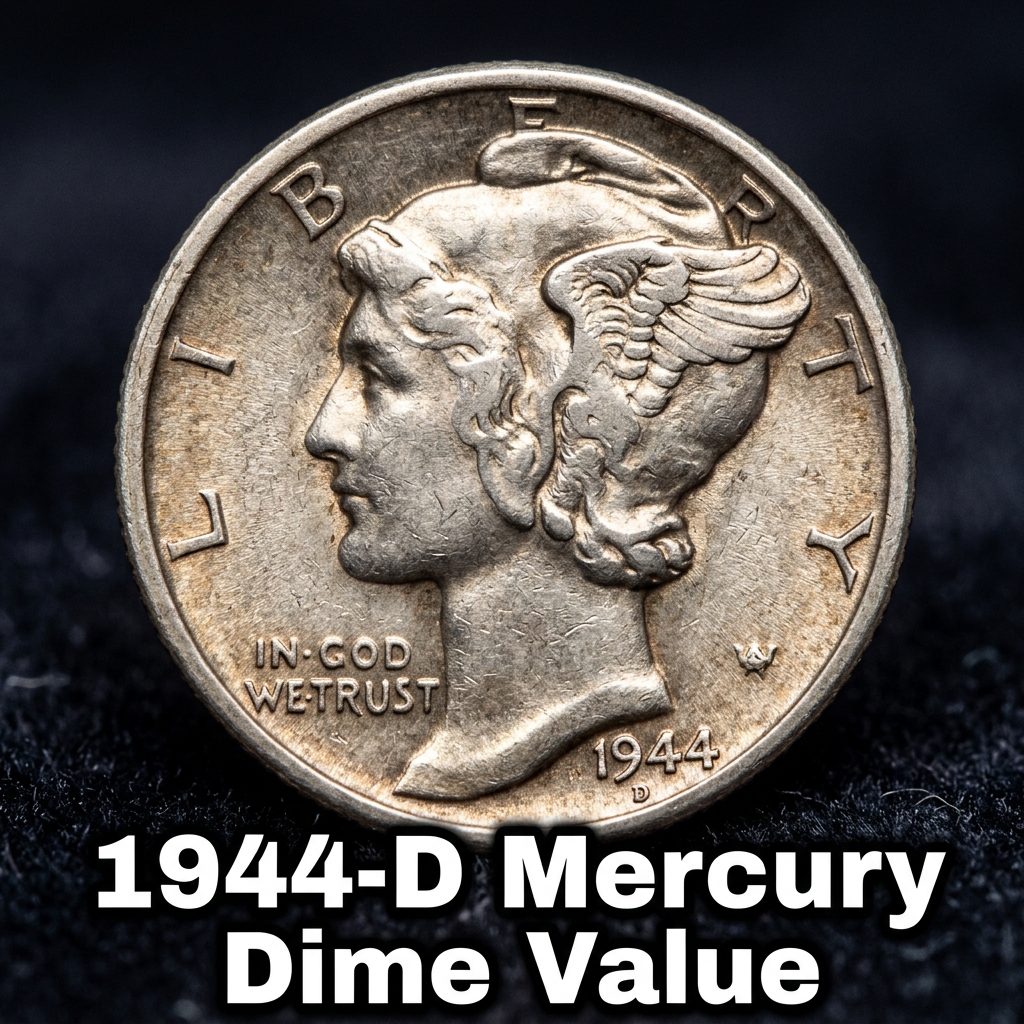
The 1944-D Mercury Dime is worth anywhere from $3 to $5 in well-worn condition, but in high mint state grades it can easily climb to $30, $50, or even several hundred dollars for the finest examples. If you just found one of these in a drawer, a jar of old coins, or an estate collection, you’re in the right place to find out exactly what it’s worth.
What Makes the 1944-D Mercury Dime Special
The 1944-D Mercury Dime was struck at the Denver Mint during World War II, and it’s one of the more plentiful issues in the Mercury Dime series. The “D” mintmark — found on the reverse, to the left of the “E” in “ONE DIME” — tells you it came from Denver. That year, the Denver Mint produced over 62 million of these dimes, which is why circulated examples are common and affordable. However, that doesn’t mean your coin isn’t worth good money. Condition is everything in the coin world. A heavily worn example might only bring a few dollars, while one that looks like it just left the mint can be worth many times more. If you’re not sure how to grade your coin or identify it properly, using the best coin identifier app is a fast and easy way to get started before you visit a dealer or submit to a grading service.
The Mercury Dime design, created by sculptor Adolph A. Weinman, is widely considered one of the most beautiful in American coinage history. The obverse shows Liberty wearing a winged cap — often mistaken for the Roman god Mercury, which is how the coin got its nickname — while the reverse features a fasces and olive branch. Collectors love this series for its artistry and the challenge of finding well-struck examples with fully split bands on the reverse torch.
1944-D Mercury Dime Value by Grade
The value of your 1944-D Mercury Dime depends heavily on its grade, which is a measure of how much wear or contact marks the coin shows. Here’s a straightforward look at what the market typically shows for this date and mintmark:
| Grade | Description | Estimated Value |
|---|---|---|
| Good (G-4) | Heavy wear, design visible | $3 – $4 |
| Fine (F-12) | Moderate wear, details clear | $4 – $5 |
| Extremely Fine (EF-40) | Light wear on high points | $6 – $10 |
| About Uncirculated (AU-55) | Slight wear, most luster remains | $12 – $18 |
| Mint State (MS-63) | No wear, some contact marks | $20 – $35 |
| Mint State (MS-65) | Gem quality, strong luster | $40 – $80 |
| MS-65 FB (Full Bands) | Fully split torch bands | $100 – $300+ |
For a deeper look at certified auction results and current market pricing, check out the 1944 Mercury Dime price data and MS grade breakdowns on CoinHix. It’s one of the most reliable resources for real-time coin pricing online.
The Full Bands Designation and Why It Matters
One of the most important things to understand about Mercury Dime values is the Full Bands (FB) designation. On the reverse of the coin, the fasces features horizontal bands wrapped around it. When a coin was struck with enough pressure from a well-prepared die, those bands appear fully split and clearly separated. Coins that earn the FB designation from PCGS or NGC are significantly more valuable than their non-FB counterparts, sometimes by a factor of three to ten times or more.
For the 1944-D, Full Bands examples are not as rare as some other dates in the series, but they still represent a meaningful premium. If your coin looks like it has never been in circulation and shows crisp details on the reverse, it’s worth getting it examined by a professional grading service. The difference between an MS-65 and an MS-65 FB could mean hundreds of dollars in your pocket.
CoinHix makes it easy to track these premium designations and see where your coin fits in the current market. Their database includes graded examples across every Mercury Dime date and mintmark, so you always have a realistic picture of what buyers are actually paying.
Silver Content and Melt Value
Even a worn 1944-D Mercury Dime has intrinsic value beyond its numismatic premium. Like all dimes minted before 1965, it’s made of 90% silver. Each coin contains about 0.07234 troy ounces of pure silver. At current silver prices — which fluctuate daily — that puts the melt value somewhere in the range of $1.50 to $2.50 depending on the market. This is known as the “floor” value of the coin, meaning it’s unlikely to sell for less than its silver content is worth.
That said, numismatic value almost always exceeds melt value for the 1944-D. You can find a full breakdown of the 1944 Dime value including silver melt and grade-by-grade pricing if you want to compare multiple data sources before making a selling or buying decision.
For anyone who wants a quick estimate on the go, CoinHix has a built-in silver calculator that adjusts automatically with live spot prices, so you’re never guessing what your silver coins are worth on a given day.
How to Get the Best Price for Your 1944-D Mercury Dime
If you’re thinking about selling, there are several options worth considering. Local coin shops are the fastest route but may offer below-market prices since dealers need to build in their profit margin. Online marketplaces like eBay allow you to reach more buyers, but fees can eat into your return. For higher-grade coins, submitting to PCGS or NGC for third-party grading is almost always worth the investment, since a certified grade dramatically increases buyer confidence and often doubles or triples what you can ask.
Before you do anything, spend a few minutes photographing your coin in good lighting and running it through a coin identification tool. The CoinHix app is a great option for this — it helps you identify the exact date, mintmark, and grade range of your coin before you take it anywhere, so you walk into any negotiation fully informed.
FAQ
Q: How do I find the mintmark on a 1944-D Mercury Dime?
A: Flip the coin over to the reverse side. Look near the bottom, just to the left of the letters “ONE DIME.” The small “D” you see there stands for the Denver Mint. If there’s no letter, it was made in Philadelphia. An “S” means San Francisco.
Q: Is the 1944-D Mercury Dime rare?
A: No, it’s one of the more common Mercury Dimes in terms of mintage, with over 62 million produced. Circulated examples are easy to find and affordable. However, high-grade examples — especially those with Full Bands — are genuinely scarce and command strong premiums from collectors.
Q: Can I clean my Mercury Dime to make it look better?
A: Please don’t. Cleaning a coin — even gently — almost always reduces its value significantly in the eyes of collectors and graders. A cleaned coin will show unnatural luster and may be flagged as “details” grade by PCGS or NGC, which can cut the value in half or more. Leave it as-is and let a professional evaluate it in its natural state.