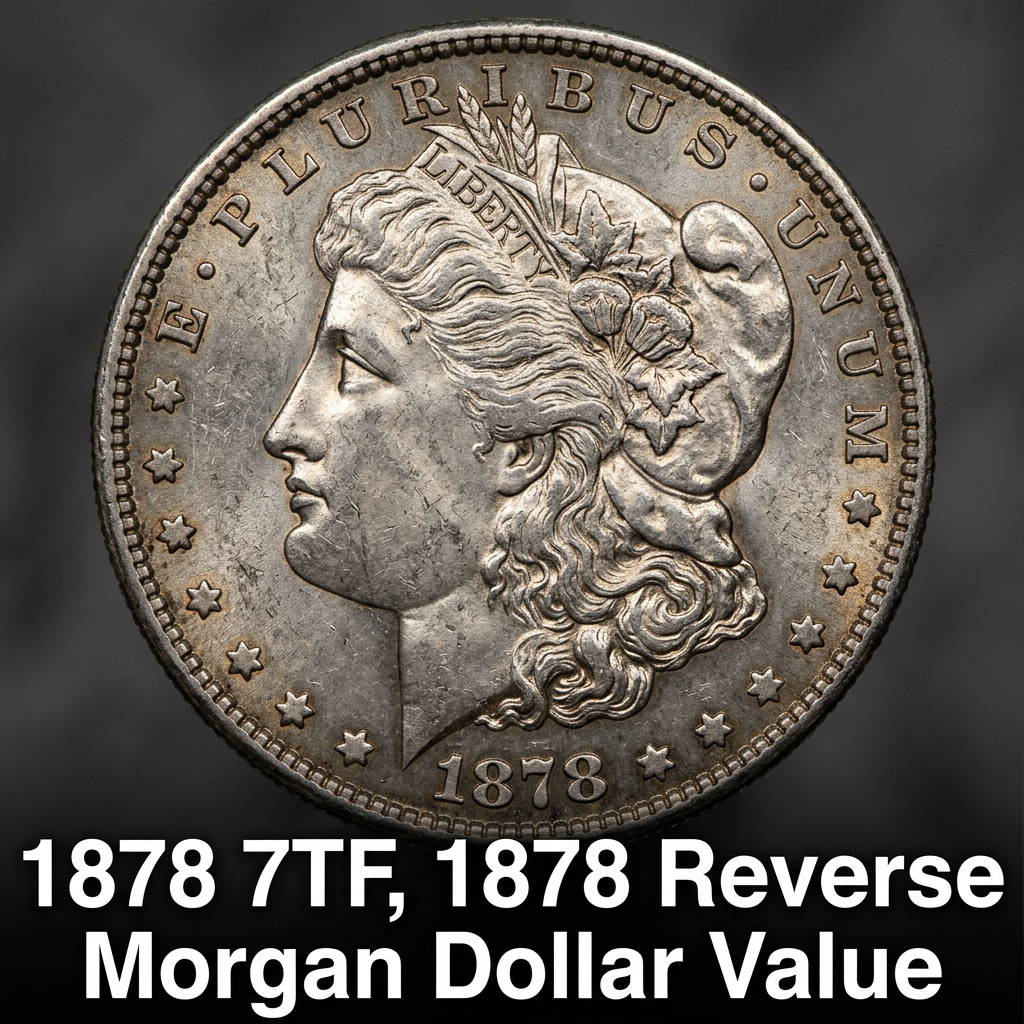
The 1878 7 Tail Feathers Morgan Dollar is worth anywhere from $35 in heavily circulated condition to well over $1,500 or more in pristine mint state grades — making it one of the most talked-about first-year issues in American coinage history. If you stumbled across one of these silver dollars in an old collection or inherited coin stash, you may be sitting on something genuinely valuable.
What Makes the 1878 7TF Morgan Dollar Special
The 1878 Morgan Dollar holds a unique place in U.S. coin history — it was the very first year this iconic silver dollar was ever minted. But not all 1878 Morgans are the same. This particular variety, known as the 7 Tail Feathers (7TF), refers to the number of feathers on the eagle’s tail on the reverse side of the coin. Earlier production runs used 8 tail feathers, but the design was quickly revised to 7, making the 7TF version a distinct collectible in its own right.
If you want to identify which variety you have, look closely at the eagle on the back of the coin and count the tail feathers. The 1878 7TF is also sometimes called the “Reverse of 1878” because its reverse design was used only in that first year of production. To make this easier, try using the best coin identifier app available — it can help you visually confirm the variety before you start researching prices.
The Philadelphia Mint produced millions of these coins, so they’re not the rarest Morgan dollars out there. But their historical significance and collector demand keep values strong across all grade levels.
1878 7TF Morgan Dollar Value by Grade
The condition of your coin plays the biggest role in determining its value. Here’s a general breakdown of what the 1878 7 Tail Feathers Morgan Dollar tends to sell for based on grade:
| Grade | Condition | Estimated Value |
|---|---|---|
| Good (G-4) | Heavy wear, design visible | $35 – $45 |
| Very Fine (VF-30) | Moderate wear, some detail | $50 – $75 |
| Extremely Fine (EF-45) | Light wear, sharp details | $80 – $120 |
| Mint State (MS-63) | Uncirculated, minor marks | $250 – $450 |
| Mint State (MS-65) | Gem uncirculated, minimal marks | $1,200 – $1,800+ |
For a deeper look at real-time auction results and certified coin prices, you can browse the latest 1878 Morgan Dollar price data across mint state grades to see exactly what buyers are paying right now.
The Reverse of 1878 Design and Why It Matters to Collectors
The “Reverse of 1878” designation isn’t just a technical label — it directly affects the coin’s value and collectibility. The 7TF reverse features a flat breast eagle with parallel top arrow feathers, which gives it a slightly different look compared to later Morgan dollar reverses. Collectors who are building complete Morgan dollar sets by variety are specifically hunting for this design, which keeps demand steady.
There are also die varieties within the 7TF category. Some coins show a “7/8 TF” overdate, where you can see traces of the original 8 tail feathers underneath the 7. These transitional varieties are rarer and command premium prices. If you suspect you have one, professional grading through PCGS or NGC is worth the investment.
Using CoinHix to research your coin before approaching a dealer is always a smart move — it gives you real market data so you walk in informed and confident.
How to Get the Best Price for Your 1878 7TF Morgan Dollar
Knowing your coin’s value is the first step — getting paid fairly is the next. Here are a few tips for everyday collectors:
Don’t clean your coin. Even a light polish can drop a coin’s grade significantly, costing you hundreds of dollars in value. Collectors and dealers want coins in their original, unaltered state.
Get it graded. If your coin appears to be in Extremely Fine condition or better, submitting it to a third-party grading service like PCGS or NGC is often worthwhile. A certified grade removes any doubt for buyers and often results in higher sale prices.
Compare prices before selling. Check recent auction results on platforms like eBay, Heritage Auctions, or CoinHix to see what comparable coins actually sold for — not just asking prices. You can also review detailed 1878 silver dollar value information to understand how variety, grade, and market conditions all come together.
If you’re not ready to sell, simply storing your coin properly in an airtight holder away from humidity and direct light will preserve its condition for years to come.
Quick Identification Tips for the 1878 7TF Morgan Dollar
Still not sure exactly what you have? Here’s a fast checklist:
– Look at the date — it should read 1878
– Flip to the reverse and count the eagle’s tail feathers — if you see 7, you have a 7TF
– Check for a mint mark below the eagle — no mint mark means it was made in Philadelphia
– Look for any faint extra feathers that could indicate an 8TF or 7/8TF variety
– Compare the coin’s surfaces to grading photos online to estimate condition
CoinHix makes this process easier by letting you search by variety and see side-by-side condition comparisons with actual sold prices, which is incredibly helpful if you’re new to coin collecting.
Frequently Asked Questions
Q: What is the difference between the 1878 7TF and 8TF Morgan Dollar?
A: The main difference is the number of tail feathers on the eagle shown on the reverse of the coin. The 8 Tail Feathers variety was struck first in 1878, but the U.S. Mint quickly revised the design to 7 tail feathers. Both are collectible, but they have different values depending on grade and demand.
Q: Is the 1878 7TF Morgan Dollar made of real silver?
A: Yes. The 1878 Morgan Dollar contains 90% silver and 10% copper, with a total weight of 26.73 grams. At current silver prices, the melt value alone is typically around $20 to $25, though most coins in collectible condition are worth significantly more than their silver content.
Q: Where can I sell my 1878 7 Tail Feathers Morgan Dollar?
A: You have several options, including online auction platforms like eBay or Heritage Auctions, local coin shops, coin shows, or direct sales to collectors. For the best results, research current market values using tools like CoinHix before committing to a price, and consider getting a professional grade if the coin appears to be in high-quality condition.