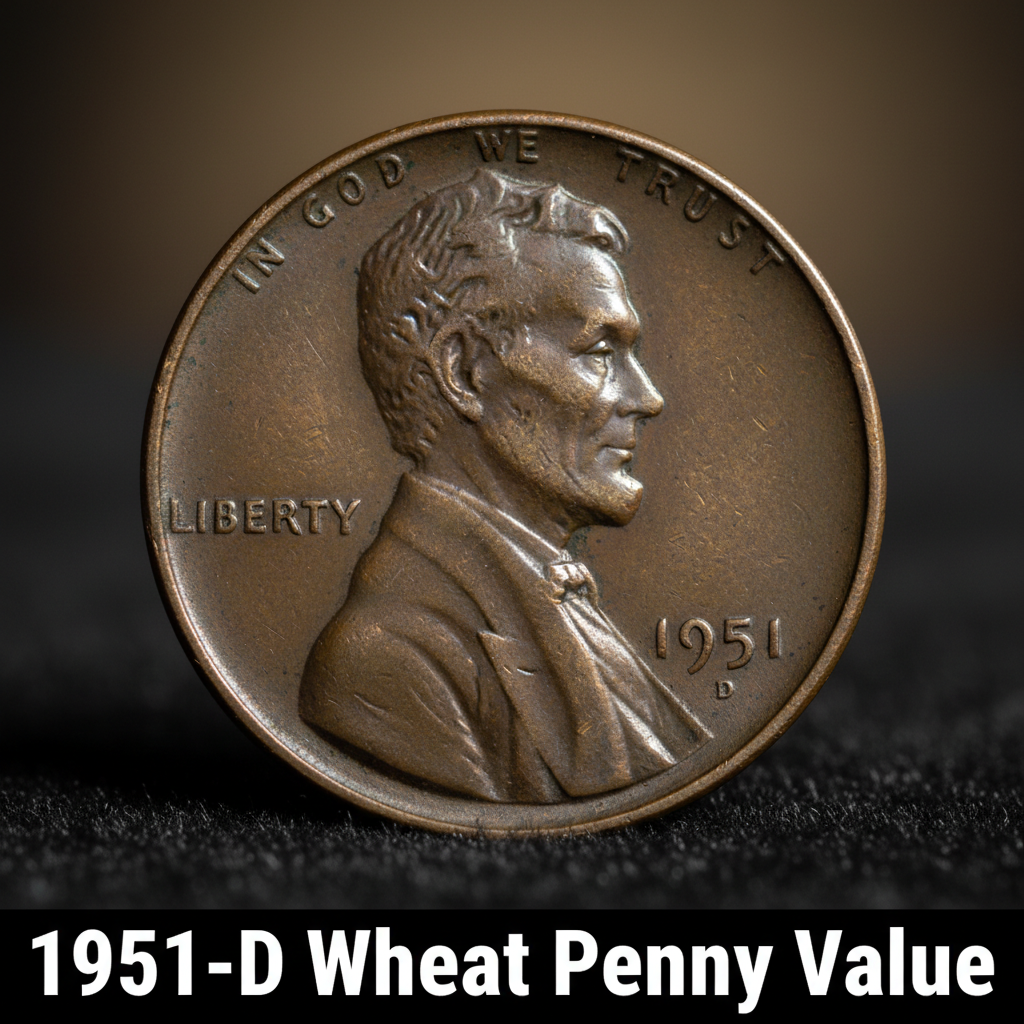
The 1951-D Wheat Penny is worth anywhere from $0.10 in heavily worn condition to over $15 or more in uncirculated grades, with top-quality examples fetching even higher prices at auction. If you found one in a jar of old coins or tucked inside a family keepsake, you’re in the right place to find out exactly what it’s worth.
What Is the 1951-D Wheat Penny and Why Does It Matter
The 1951-D Wheat Penny is a Lincoln cent struck at the Denver Mint in 1951, identifiable by the small “D” mintmark located just below the date on the obverse side. These coins were produced as part of the classic Wheat Penny series, which ran from 1909 to 1958. During this era, Lincoln’s portrait graced the front, while two stalks of wheat flanked the words “ONE CENT” on the reverse — giving the coin its beloved nickname.
More than 625 million of these coins were minted in Denver that year, making the 1951-D a relatively common date in the Wheat Penny series. That said, condition plays a huge role in determining value. A coin that spent decades in someone’s pocket looks very different from one that was carefully stored from the day it was minted.
If you’re trying to figure out exactly what you have, using the best coin identifier app can help you confirm the date, mintmark, and grade quickly, right from your phone. Tools like this make it easy for everyday collectors to get a fast read on their coins without needing expert knowledge.
1951-D Wheat Penny Value by Grade
The value of your 1951-D Wheat Penny depends almost entirely on its grade, which is essentially a measure of how well-preserved it is. Coins in heavily circulated condition — showing lots of wear, flat details, and maybe some nicks — are worth a few cents to perhaps a quarter. Move up to a coin with clear details and minimal wear, and the value climbs noticeably.
Here’s a general breakdown of 1951-D Wheat Penny values by grade:
| Grade | Description | Estimated Value |
|---|---|---|
| Good (G-4) | Heavy wear, flat design | $0.10 – $0.25 |
| Fine (F-12) | Moderate wear, readable details | $0.25 – $0.50 |
| Extremely Fine (EF-40) | Light wear, sharp features | $1.00 – $2.50 |
| Uncirculated (MS-63) | No wear, some bag marks | $4.00 – $8.00 |
| Gem Uncirculated (MS-65) | Sharp luster, minimal marks | $12.00 – $20.00+ |
For a deeper look at how this coin performs across full mint state grades, you can review detailed 1951-D Wheat Penny price data in mint red condition to see where your coin might fall on the spectrum.
What Makes Some 1951-D Pennies Worth More
Even among common-date coins like the 1951-D, certain specimens stand out and command premium prices. The biggest factor is color. Copper cents are graded not just by wear but also by the color of their surfaces. A coin described as “Red” (RD) means it still has 95% or more of its original copper luster — bright and vivid as the day it was made. “Red-Brown” (RB) coins have lost some of their shine, and “Brown” (BN) coins have fully toned.
Red-designated examples in high uncirculated grades are significantly more valuable than their brown counterparts. A beautifully preserved MS-65 Red 1951-D cent can sell for $20 to $30 or more, while a brown version of the same grade might bring only a fraction of that.
Error coins also boost value. While major errors on 1951-D cents are not common, doubled die varieties, off-center strikes, or repunched mintmarks do exist and are always worth more than a typical example. If you suspect you have something unusual, CoinHix is a great resource for cross-referencing known error varieties and comparing your coin to auction records.
How to Check Your 1951-D Wheat Penny Value at Home
You don’t need to be a professional numismatist to get a good sense of your coin’s value. Start by examining it under good lighting. Look at Lincoln’s cheekbones, his ear, and the wheat stalks on the reverse — these are the first areas to show wear. The more detail you can see, the higher the grade and the more your coin is likely worth.
Next, take note of the color. Is it a warm copper-red, a mix of red and brown, or has it turned fully brown or grayish? This will affect value, especially in uncirculated examples.
For a comprehensive reference, this guide to 1951 penny values by date and mint walks through all three mint varieties — Philadelphia, Denver, and San Francisco — so you can compare your coin and get a well-rounded picture of its worth.
Apps like CoinHix can also help you snap a photo and get an instant grade estimate, which is handy if you’re sorting through a large collection or just want a second opinion before heading to a dealer.
Is the 1951-D Wheat Penny Worth Keeping
For most people who find a circulated 1951-D cent, the monetary value is modest — often under a dollar. But there’s real sentimental and historical value in these old coins. They’re tangible pieces of mid-century American life, minted at a time when the Korean War was being fought and Truman was in the White House.
If your coin is in uncirculated condition or shows any unusual characteristics, it could genuinely be worth having assessed by a professional grading service like PCGS or NGC. The cost of grading might be worth it for a top-quality coin.
And whether you’re a seasoned collector or just curious about that old penny in the junk drawer, CoinHix offers an easy, reliable way to track coin values, explore auction history, and build your knowledge over time.
FAQ
Q: How do I know if my 1951-D Wheat Penny is valuable?
A: The best way is to assess its condition. Look for sharp detail, original copper color, and the absence of heavy wear. Coins graded MS-63 or higher — especially in Red designation — are the most valuable. Using a coin identifier app or referencing a price guide can help you get a reliable estimate quickly.
Q: What does the “D” mintmark mean on a 1951 Wheat Penny?
A: The “D” stands for Denver, meaning the coin was struck at the Denver Mint. You’ll find this small letter just below the date on the front of the coin. The 1951 series also includes coins from Philadelphia (no mintmark) and San Francisco (S mintmark), each with slightly different values.
Q: Can a 1951-D Wheat Penny be worth hundreds of dollars?
A: In most cases, no — the 1951-D is a high-mintage coin and common in circulated grades. However, a perfectly preserved example graded MS-67 Red by a professional grading service has sold for well over $100 at auction. These top-pop specimens are extremely rare and represent the finest known examples of the date.