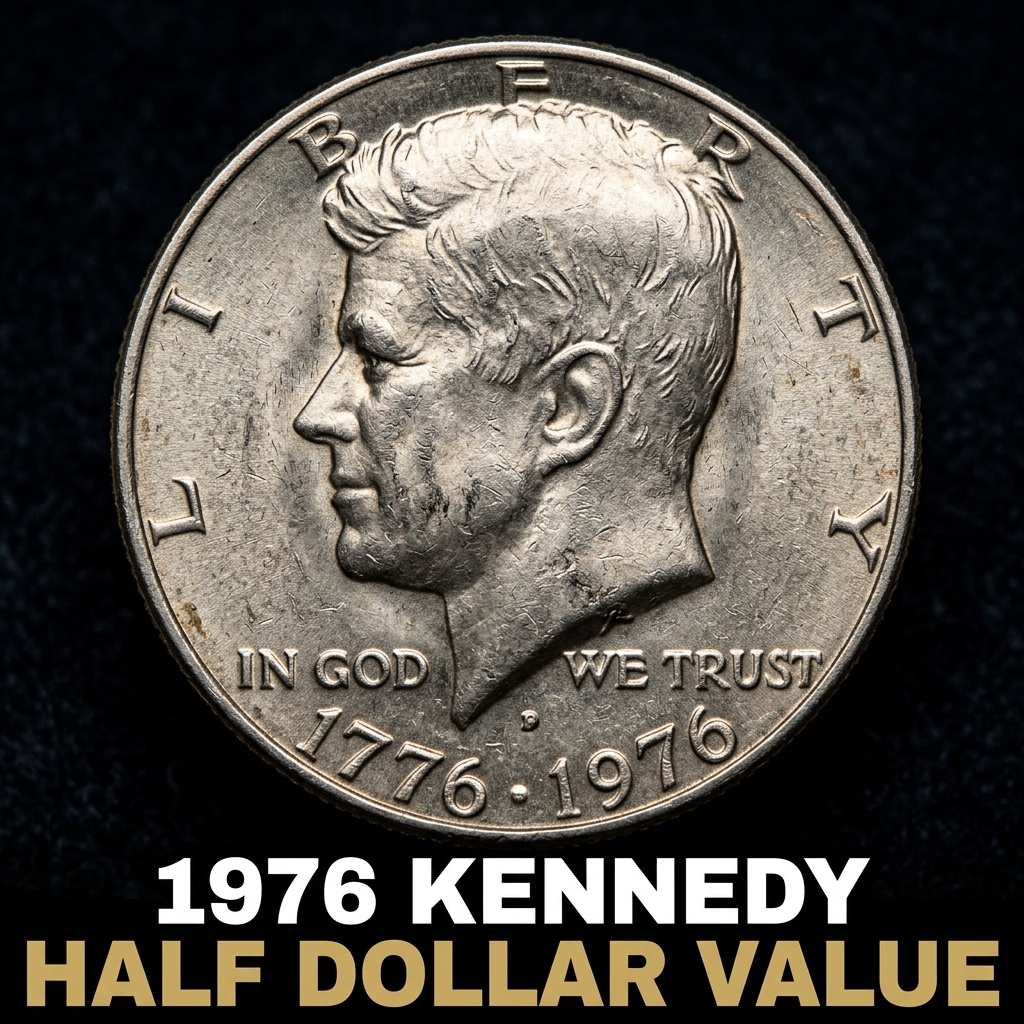
The 1976 Kennedy Half Dollar is worth anywhere from 50 cents in circulated condition to over $15 or more in uncirculated mint state, with special silver proof versions fetching anywhere from $10 to $30+. If you’ve got one sitting in a drawer or found it in an old coin jar, read on — you might be pleasantly surprised.
What Makes the 1976 Kennedy Half Dollar Special
The 1976 Kennedy Half Dollar isn’t just another coin — it’s a piece of American history. It was struck as part of the United States Bicentennial celebration, marking 200 years since the nation’s founding. That’s why you’ll notice the coin has a dual date: “1776–1976” on the obverse instead of just 1976. The reverse also features a unique design — Independence Hall in Philadelphia — replacing the standard eagle design used in other years.
This special design was only used for two years: 1975 and 1976. All coins minted during this period carry the “1776–1976” date. The coin was designed by Seth Huntington, who won a national design competition for the Bicentennial reverse. Because of this historical significance, collectors have always had a soft spot for these coins. If you’re trying to figure out what yours might be worth, using the best coin identifier app on your phone is a great starting point before you do anything else with the coin.
1976 Kennedy Half Dollar Value by Type and Grade
Not all 1976 Kennedy Half Dollars are created equal. The value depends heavily on the mint mark, the composition (clad vs. silver), and the condition of the coin. Here’s a quick breakdown:
| Coin Type | Mint Mark | Circulated Value | Uncirculated Value |
|---|---|---|---|
| Clad (Business Strike) | No mint mark (P) | $0.50 – $1 | $2 – $8 |
| Clad (Business Strike) | D (Denver) | $0.50 – $1 | $2 – $8 |
| Clad Proof | S (San Francisco) | N/A | $4 – $10 |
| Silver Clad (40%) | S (San Francisco) | $5 – $8 | $10 – $20 |
| Silver Proof (40%) | S (San Francisco) | N/A | $12 – $30+ |
For current market data, you can check the latest 1976 Kennedy Half Dollar MS grade pricing on CoinHix — it’s updated regularly and gives you a realistic picture of what dealers and collectors are actually paying right now.
How Condition Affects the 1976 Kennedy Half Dollar Price
Condition is everything in the coin collecting world. A 1976 Kennedy Half Dollar that spent years in someone’s pocket change isn’t worth nearly as much as one that was carefully stored from the day it was minted. Coin graders use a 70-point scale, with MS-60 through MS-70 being the “mint state” range — essentially uncirculated coins.
Most 1976 Kennedy Half Dollars you’ll come across in everyday life are in “Good” to “Fine” condition, meaning they’ve been circulated and show wear on the high points of the design. These are typically worth face value to about $1. However, if you find one that has virtually no wear, strong luster, and sharp details, it could grade MS-63 or higher and be worth $5 to $15 — sometimes more for exceptionally high-grade examples.
The silver versions (struck at the San Francisco Mint) were sold directly to collectors and were never released into general circulation, which means they’re almost always in better condition and therefore more valuable. If you’re unsure about your coin’s grade, CoinHix has a visual grading guide built right into its database that can help you estimate where your coin falls.
Silver vs. Clad — How to Tell the Difference
One of the most common questions people ask is whether their 1976 Kennedy Half Dollar contains silver. Here’s the simple answer: most of them do not. The standard business-strike coins produced for circulation at Philadelphia and Denver are made of a copper-nickel clad composition — no silver at all.
The silver versions were special 40% silver collector editions sold through the U.S. Mint as part of Bicentennial collector sets. They all carry the “S” mint mark from San Francisco. To check if yours is silver, look at the edge of the coin. A copper-nickel clad coin will show a copper-colored stripe along the edge. A silver coin will have a consistent silver-gray color all the way around. You can also weigh it — a clad half dollar weighs about 11.34 grams, while a 40% silver version weighs closer to 11.50 grams.
For a full breakdown of silver and non-silver values, this detailed guide on 1776-1976 Bicentennial Half Dollar values covers both versions thoroughly and is well worth a read.
Are Any 1976 Kennedy Half Dollars Worth Big Money?
For most people, the 1976 Kennedy Half Dollar is a cool piece of history but not a retirement fund. However, there are exceptions. High-grade examples that have been professionally certified by PCGS or NGC can command serious premiums. A coin graded MS-67 or MS-68 by a top grading service has sold at auction for $100 to several hundred dollars, because coins in that condition are genuinely rare.
There are also some minor variety coins — die varieties with doubled lettering or other small errors — that can add value for the right collector. The best way to find out if you have something special is to use CoinHix, which tracks auction records and price trends so you can quickly compare your coin against actual sales data. Don’t assume your coin is ordinary until you’ve done a little research.
FAQ
Q: Is a 1976 Kennedy Half Dollar made of silver?
A: Most are not. The standard circulation coins from Philadelphia and Denver are copper-nickel clad. Only the special collector editions with an “S” mint mark contain 40% silver, and those were sold in sets directly from the U.S. Mint — they were never meant for everyday use.
Q: How do I know if my 1976 Kennedy Half Dollar is valuable?
A: Start by checking the mint mark (P, D, or S), then look at the condition. If the coin is uncirculated and has strong luster, it could be worth $5 to $30 depending on the version. For an accurate value, try CoinHix — it pulls real auction data so you’re getting current market prices, not outdated estimates.
Q: Where can I sell a 1976 Kennedy Half Dollar?
A: You can sell to a local coin dealer, list it on eBay, or take it to a coin show. For higher-value coins in excellent condition, getting it graded by PCGS or NGC first can significantly increase buyer confidence and final sale price. Always compare recent sold listings before accepting any offer.