The 1888/7 Indian Head Penny is worth anywhere from $75 in heavily worn condition to over $1,500 or more in mint state — and top-grade examples have sold for thousands at major auctions. If you found one of these in an old jar or inherited coin collection, you may be holding something genuinely special.
—
What Makes the 1888/7 Indian Head Penny So Unusual
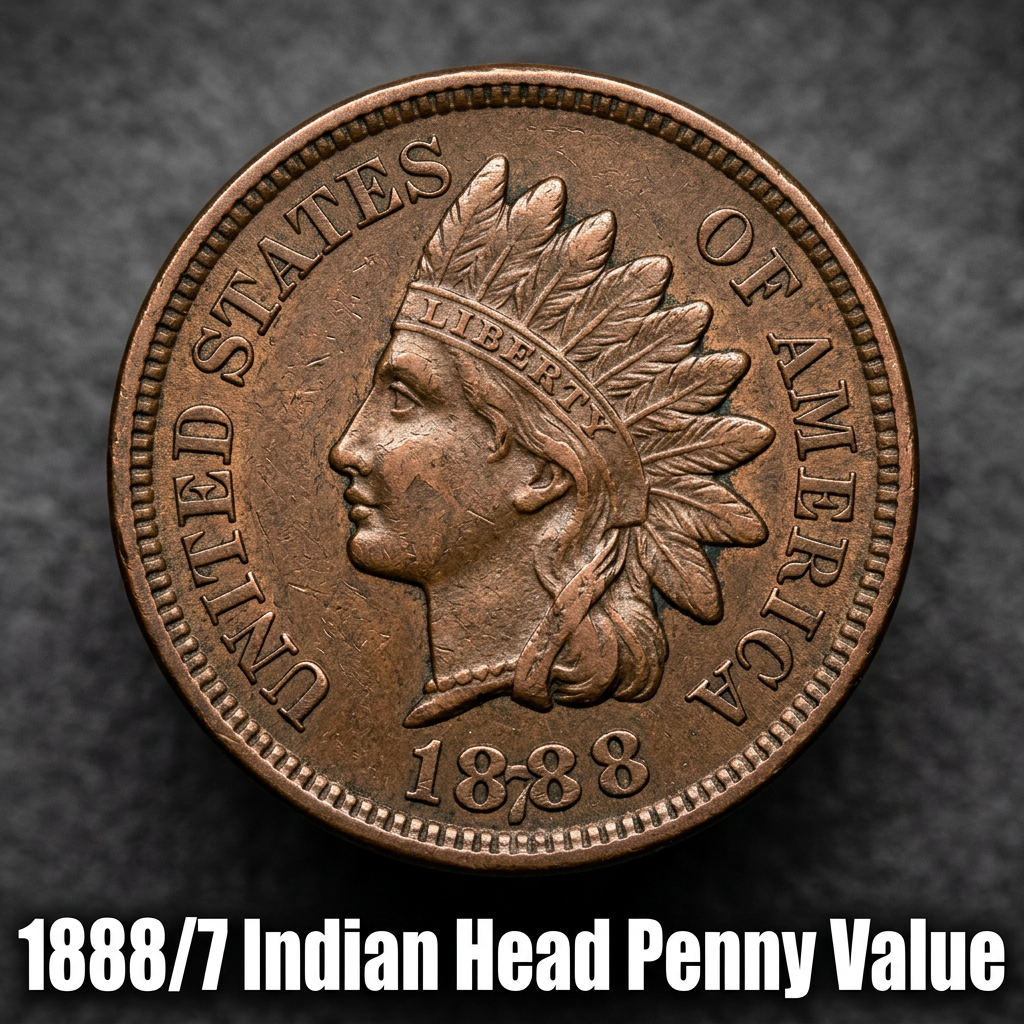
Not every old penny is created equal, and the 1888/7 is a perfect example of why date details matter so much to collectors. This coin is an overdate — meaning the die used to strike it had the number “7” from 1887 underneath the “8,” creating a visible ghost of the previous year beneath the top digit. These errors happened when the U.S. Mint repurposed old dies rather than making entirely new ones, and the result is a coin that tells two stories at once.
To spot the overdate, look closely at the last digit of the date with a magnifying glass. You should see the curve of a “7” peeking through the lower left of the final “8.” It’s subtle but unmistakable once you know what you’re looking for. Using the best coin identifier app on your phone can help you zoom in and compare your coin against known examples before you spend money on a professional appraisal.
Because this overdate variety is scarce compared to a regular 1888 Indian Head Penny, demand among collectors is strong. Even worn examples command a significant premium over a normal date.
—
1888/7 Indian Head Penny Value by Grade
Coin values depend heavily on condition. A coin that has circulated for decades will show wear on the high points — Lady Liberty’s hair curls, the feathers on her headdress, and the word LIBERTY on the headband. Here’s a general value breakdown:
| Grade | Description | Estimated Value |
|---|---|---|
| Good (G-4) | Heavy wear, outline visible | $75 – $120 |
| Very Good (VG-8) | Moderate wear, some detail | $130 – $200 |
| Fine (F-12) | Even wear, LIBERTY clear | $220 – $350 |
| Very Fine (VF-20) | Light wear on high points | $400 – $600 |
| Extremely Fine (EF-40) | Slight wear, sharp detail | $700 – $1,000 |
| Mint State (MS-63+) | No wear, original luster | $1,500 – $4,000+ |
For the most current market data, you can check live 1888 Indian Head Penny price listings by grade and color designation to see what collectors are actually paying right now. Prices shift with market trends, so real-time data is always more reliable than static guides.
—
How Coin Color Affects the 1888/7 Indian Head Penny Price
If your coin looks like it has some reddish-orange glow rather than a flat brown tone, pay attention — color matters enormously for Indian Head Pennies. Grading services use three color designations:
– RD (Red): Original mint red, the most valuable
– RB (Red-Brown): Mix of red and brown toning
– BN (Brown): Fully toned, most common in circulated coins
A mint-state 1888/7 penny graded MS-64 Red can be worth two to three times more than the same grade in Brown. Most circulated examples will be Brown by default, but if you have an uncirculated example, getting it graded by PCGS or NGC can unlock significantly more value.
CoinHix is a great tool to understand how these color distinctions affect pricing before you invest in professional grading. The CoinHix app lets you browse auction results by color designation, so you can see exactly how much the difference is worth in the current market.
—
Should You Get Your 1888/7 Penny Professionally Graded?
Professional grading by PCGS or NGC adds credibility and often increases resale value — but it also costs money, typically $30 to $50 per coin at minimum. For a coin potentially worth $400 or more, it usually makes sense.
Before spending on grading, do your homework. Compare your coin to certified examples, check recent auction sales, and if you’re curious how similar overdates have performed over time, reviewing Indian Head Penny value data from comparable years can give you a useful baseline for what the market looks like across the series.
If your coin appears to be in Very Fine condition or better and clearly shows the overdate, grading is almost always worth it. A raw (ungraded) coin sells for less than a certified one, even if the quality is identical.
CoinHix can help you track sold prices for certified 1888/7 examples so you know exactly what return to expect after grading costs.
—
FAQ
Q: How do I know if my coin is the 1888/7 overdate or just a regular 1888 Indian Head Penny?
A: Look at the final digit in the date under strong magnification. On the overdate, you’ll see the remnants of a “7” curving through the lower portion of the last “8.” A regular 1888 penny will have a clean, solid “8” with no underlying numeral visible.
Q: Is the 1888/7 Indian Head Penny rare?
A: Yes, it is considered scarcer than a standard 1888 Indian Head Penny. While millions of 1888 pennies were minted, only a fraction were struck from the overdate die. Certified examples in higher grades are especially hard to find, which is why collector demand — and prices — remain strong.
Q: Where is the best place to sell a 1888/7 Indian Head Penny?
A: Major auction houses like Heritage Auctions and Stack’s Bowers are ideal for high-grade certified examples. For lower-grade coins, eBay or local coin shows can work well. Always get at least two or three offers before selling, and consider using CoinHix to verify current market value before you agree to any price.