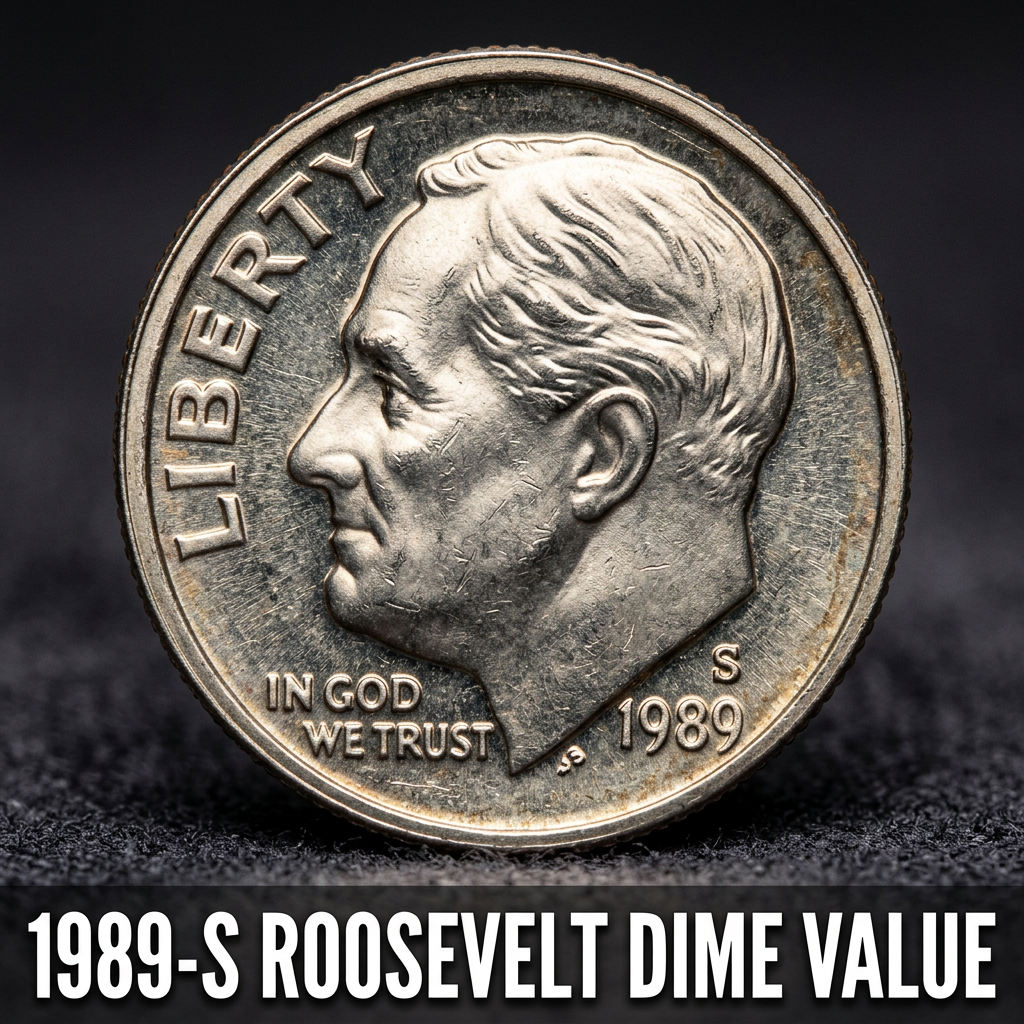
The 1989-S Roosevelt Dime is worth anywhere from $3 to $7 for a standard proof example, but high-grade cameo and deep cameo specimens can fetch $10 to $30 or more depending on condition. If you found one in an old collection or proof set, you may be sitting on a small but genuine treasure.
What Is the 1989-S Roosevelt Dime?
The 1989-S Roosevelt Dime was struck at the San Francisco Mint and was never intended for everyday pocket change. Instead, it was produced exclusively as a proof coin — meaning it was made with specially polished dies and planchets to create a mirror-like finish. These coins were sold directly to collectors through the U.S. Mint’s annual proof sets, which were popular gift items in the late 1980s.
Because of its proof-only status, the 1989-S dime has a distinctive look that sets it apart from its Philadelphia and Denver counterparts. You’ll notice sharp, frosted design details contrasting against a glassy, reflective background. That “cameo” effect is exactly what coin collectors love about proof coins.
If you’ve come across one of these and want to figure out what it’s worth, a great starting point is to use the best coin identifier app available on mobile — it can help you quickly identify the coin, assess its grade, and give you a ballpark value right from your phone. Tools like these are especially helpful if you’re new to coin collecting and aren’t sure what you’re looking at.
1989-S Dime Value by Grade and Type
Not all 1989-S dimes are created equal. The value depends heavily on the coin’s grade and its cameo designation. Here’s a simple breakdown to help you understand the differences:
| Grade / Type | Estimated Value | Notes |
|---|---|---|
| PR-65 (Standard Proof) | $3 – $5 | Common, found in most proof sets |
| PR-67 Cameo (CAM) | $6 – $10 | Light contrast between devices and fields |
| PR-69 Deep Cameo (DCAM) | $15 – $30 | Strong frost effect, highly desirable |
| PR-70 Deep Cameo (DCAM) | $50 – $100+ | Perfect grade, extremely rare |
For more detailed and up-to-date pricing data, you can check out current 1989 Roosevelt Dime price listings across multiple grades and mint state designations. Real-time market data can be far more accurate than published price guides that go out of date quickly.
How Many Were Minted and Does That Affect Value?
The U.S. Mint produced approximately 3.22 million proof sets in 1989, and each set included the 1989-S dime. That sounds like a lot — and it is. High mintage is one of the main reasons this coin isn’t considered rare in absolute terms. Most 1989-S dimes you’ll encounter are in standard proof condition and worth only a few dollars.
However, just because a coin has a high mintage doesn’t mean all grades are equally common. Coins that score PR-69 or PR-70 with a Deep Cameo designation are much harder to find, because they must be virtually flawless. Even with millions minted, only a small percentage survive without any hairlines, spotting, or surface imperfections. Those top-grade examples are what command real premiums at auction.
If you’re curious whether your specific coin could be worth more than face value based on its grade, tools like CoinHix can give you a fast, reliable valuation. CoinHix is used by thousands of collectors to track coin values and market trends in real time — it’s a smart resource whether you’re a beginner or a seasoned numismatist.
Should You Get Your 1989-S Dime Graded?
For most 1989-S proof dimes pulled from old proof sets, professional grading probably isn’t worth the cost. Third-party grading services like PCGS and NGC typically charge $20 to $30 or more per coin — and if your coin is only worth $4 or $5, the math doesn’t add up.
That said, if your coin is exceptionally struck with strong cameo contrast and no visible flaws under magnification, it might be worth submitting for grading. A PCGS or NGC label certifying a PR-69 or PR-70 DCAM grade can dramatically increase the coin’s appeal and sale price in the collector market.
Before paying for grading, do your research. Read up on detailed 1989-S Roosevelt Dime value information by grade and condition so you can make an informed decision. You can also use CoinHix to see what slabbed and raw 1989-S dimes are actually selling for right now, which helps you decide if grading makes financial sense.
Tips for Selling Your 1989-S Roosevelt Dime
If you decide to sell, here are a few practical options to consider:
– eBay — Great for reaching collectors directly. Search completed listings to see real sale prices.
– Coin shows — Local dealers can offer quick cash, though they typically pay below market value.
– Online coin dealers — Some will buy proof sets in bulk if you have the full 1989 set intact.
– Heritage Auctions or Stack’s Bowers — Best option only if your coin is graded PR-69 DCAM or higher and worth real money.
Keeping the coin in its original proof set holder adds appeal for buyers and helps preserve its condition.
Frequently Asked Questions
Q: Is the 1989-S Roosevelt Dime rare?
A: Not particularly. With over 3 million proof sets produced, the 1989-S dime is relatively common. Its value lies in condition rather than rarity — only perfect deep cameo examples command significant premiums.
Q: Can I spend a 1989-S dime as regular change?
A: Technically yes, it’s legal tender worth 10 cents. But it would be a shame! Even a standard proof 1989-S dime in original condition is worth at least $3 to $5 to a collector — far more than face value.
Q: How can I tell if my 1989-S dime is a Deep Cameo?
A: Look for a strong contrast between the frosted, white-looking raised design elements (like Roosevelt’s portrait) and the mirror-like flat fields. The more dramatic the contrast, the more likely it qualifies as Deep Cameo (DCAM). A loupe or magnifying glass helps. You can also use an app like CoinHix or a coin identifier tool to get a visual comparison.