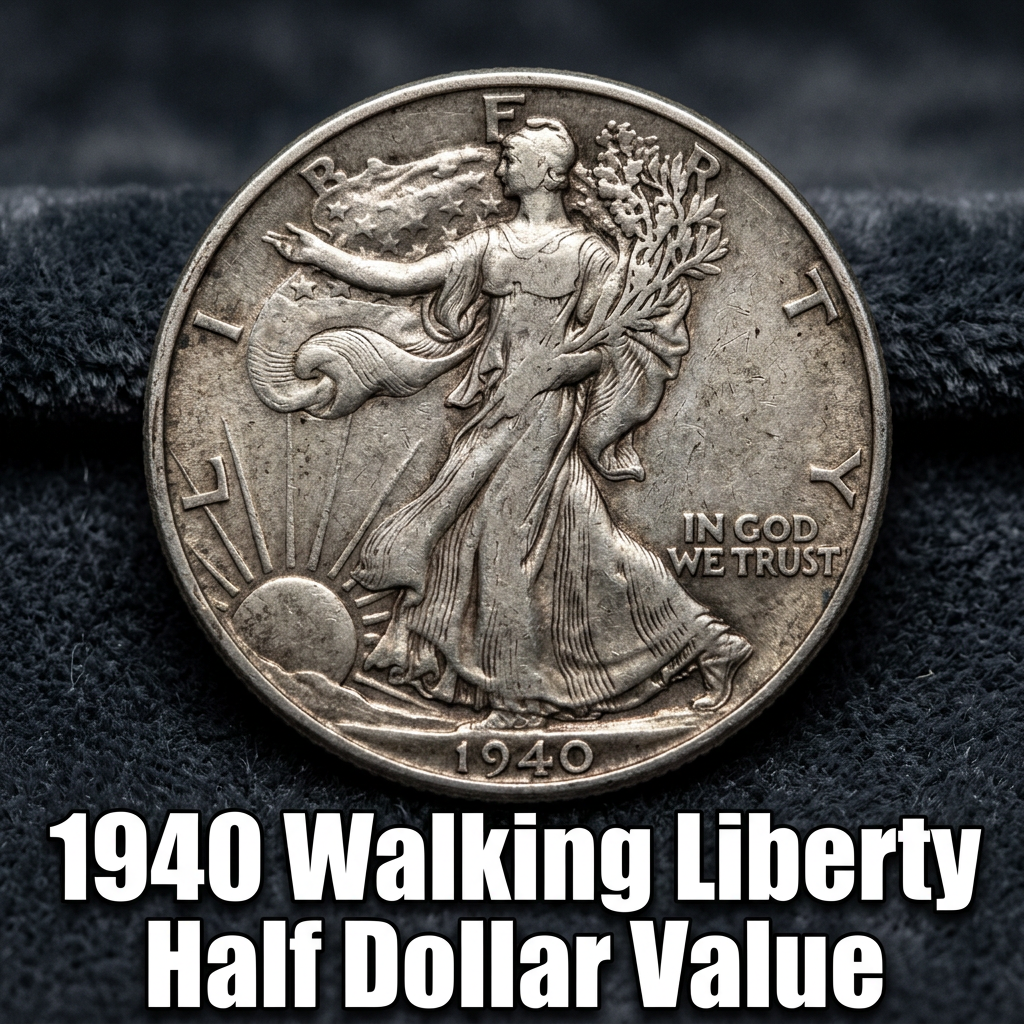
The 1940 Walking Liberty Half Dollar is worth anywhere from $12 in heavily worn condition to over $800 or more in pristine mint state, making it one of the most beautiful and collectible silver coins from the mid-20th century. Whether you found one in an old jar or inherited a collection, you’re holding something genuinely valuable.
If you’re not sure which mint struck your coin or what condition it’s really in, using the best coin identifier app can help you get a fast, accurate read before you sell or trade.
What Makes the 1940 Walking Liberty Half Dollar Special
The Walking Liberty Half Dollar series ran from 1916 to 1947, and the 1940 issue is considered one of the stronger dates within that run. Designed by Adolph A. Weinman, this coin features Lady Liberty draped in an American flag striding confidently toward the sun — widely considered one of the most artistic designs ever put on a U.S. coin. The reverse shows a proud eagle perched on a mountain rock.
In 1940, three mint facilities produced Walking Liberty Half Dollars: Philadelphia (no mintmark), Denver (D), and San Francisco (S). The Philadelphia mint struck the most coins that year, with over 9.1 million produced. Denver struck around 4.5 million, and San Francisco contributed about 4.5 million as well. Because none of these mintages are particularly scarce, circulated examples are easy to find — but high-grade mint state examples are genuinely tough to locate and command serious premiums among collectors.
1940 Walking Liberty Half Dollar Value by Grade and Mint
The value of your 1940 Walking Liberty Half Dollar depends heavily on its condition (called “grade”) and which mint produced it. Even among circulated coins, there’s a big difference between a heavily worn example and one that still shows sharp details. Here’s a general breakdown:
| Coin | Good (G-4) | Fine (F-12) | Extremely Fine (EF-40) | MS-63 | MS-65 |
|---|---|---|---|---|---|
| 1940 (Philadelphia) | $12 | $14 | $20 | $65 | $400+ |
| 1940-D (Denver) | $12 | $15 | $25 | $90 | $600+ |
| 1940-S (San Francisco) | $12 | $15 | $22 | $75 | $500+ |
For the most current auction results and certified coin prices, you can check out the 1940 Walking Liberty Half Dollar mint state price data to see exactly what these coins are selling for right now.
Silver Content and Melt Value
Even if your coin is worn down and not especially collectible from a numismatic standpoint, it still contains real silver. The 1940 Walking Liberty Half Dollar is composed of 90% silver and 10% copper, with a total silver content of 0.3617 troy ounces. At current silver prices hovering around $30 per troy ounce, that gives each coin a base melt value of roughly $10–$11.
This means even the most beaten-up example is worth something above face value, and that floor only rises if silver prices climb. Collectors and dealers often refer to this as “junk silver” — coins valued for their metal content rather than rarity. But don’t let that term fool you. A 1940 Walking Liberty Half Dollar in good or better condition is worth well more than just its silver weight, thanks to collector demand for this beautiful series.
How to Check Your Coin’s Condition at Home
You don’t need to be an expert to get a rough sense of what you have. Start by looking at the high points of the design — Lady Liberty’s hand, the folds in her gown, and the eagle’s breast feathers on the reverse. If those areas are smooth and worn flat, your coin is likely in Good to Fine condition. If you can still see crisp details and even some luster, you might have a very fine or better example.
For a more confident assessment, CoinHix offers a smart, user-friendly platform that lets you look up coin values and compare your coin’s details against graded examples. It’s one of the fastest ways to go from “I think this is old” to “I know exactly what I have.”
You can also find detailed 1940 Half Dollar value information by grade and variety to help you narrow down where your specific coin falls on the spectrum before visiting a dealer.
Where to Sell Your 1940 Walking Liberty Half Dollar
Once you know what you have, you have several solid options. Local coin dealers will offer a quick sale but typically pay 60–80% of retail value. Online platforms like eBay or Heritage Auctions give you access to a wider buyer pool, often fetching closer to market value — especially for higher-grade coins. If you want to maximize your return on a top-condition example, getting it professionally graded by PCGS or NGC first is worth the investment.
Before you do anything, download CoinHix and look up your coin. It gives you real market data so you walk into any negotiation informed and confident, not guessing.
FAQ
Q: How do I know which mint produced my 1940 Walking Liberty Half Dollar?
A: Look on the reverse side of the coin, just below the pine branch to the left of the eagle. A small “D” means Denver, “S” means San Francisco, and no mintmark means it was struck in Philadelphia.
Q: Is a 1940 Walking Liberty Half Dollar worth getting professionally graded?
A: It depends on the condition. If your coin appears to be in MS-63 or higher (no wear, strong luster), professional grading from PCGS or NGC can significantly increase its resale value and buyer confidence. For circulated examples, the grading fee usually isn’t worth it.
Q: Can I still spend a 1940 Walking Liberty Half Dollar as money?
A: Technically yes — it’s still legal tender worth 50 cents. But given that even worn examples are worth $12 or more for their silver content alone, spending one would be a costly mistake. Hold onto it or sell it through a coin dealer or online marketplace instead.