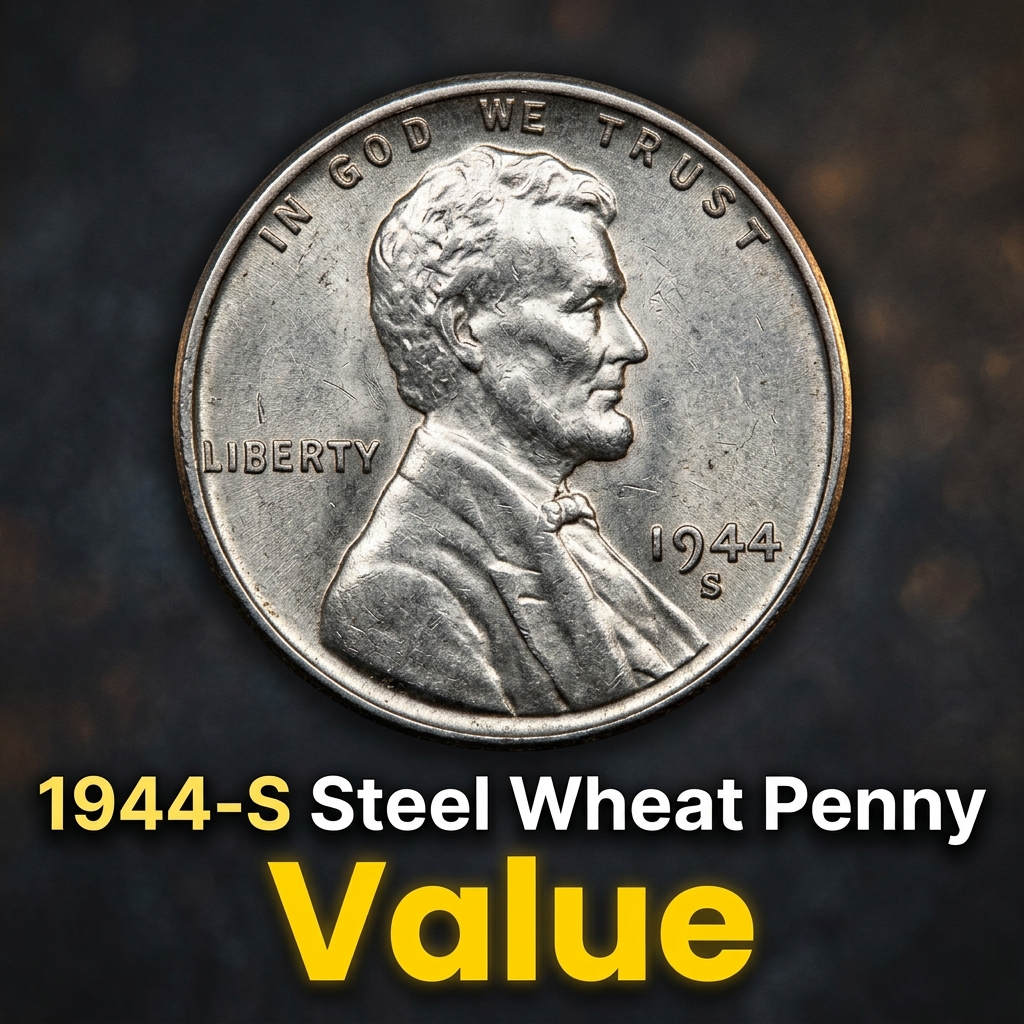
The 1944-S Steel Wheat Penny is worth anywhere from $25,000 in heavily worn condition to over $500,000 for a high-grade certified example — making it one of the most valuable error coins in all of American numismatics. If you’ve stumbled across a silvery-looking 1944 penny, you may be holding something extraordinary.
What Makes the 1944-S Steel Penny So Rare and Valuable
The story behind this coin is fascinating. During World War II, the U.S. Mint switched from copper to zinc-coated steel for pennies in 1943 to conserve copper for the war effort. By 1944, the Mint returned to using brass (copper) planchets. However, a small number of leftover 1943 steel planchets accidentally made their way into the production process at the San Francisco Mint — and a handful of 1944 pennies were struck on these steel blanks by mistake.
That’s what makes the 1944-S Steel Wheat Penny so special. It’s a pure accident of history, and only a tiny number are known to exist. Because of this, collectors and investors treat these coins like gold — or rather, like platinum. If you think you’ve found one, the very first thing you should do is use the best coin identifier app to get a quick initial read on what you’re looking at before taking any further steps.
How to Tell If Your 1944 Penny Is Actually Steel
Here’s the easiest test: grab a magnet. A real 1944-S Steel Wheat Penny will stick to a magnet because it’s made from zinc-coated steel, just like the regular 1943 pennies. A normal 1944 penny is made of copper-alloy and will not be magnetic at all.
Beyond the magnet test, look at the color. Steel pennies tend to have a silvery-gray appearance rather than the warm orange-brown of copper. Of course, surface toning and environmental damage can change how a coin looks over time, so color alone isn’t definitive.
You’ll also want to check the mint mark. The “S” below the date on the reverse means it was struck in San Francisco. A 1944-S steel error is confirmed to exist, though it is extraordinarily rare. There is also a known 1944 Philadelphia (no mint mark) steel cent and a 1944-D, but all three varieties are considered extreme rarities.
Once you’ve done the magnet test and confirmed it looks right, don’t clean the coin — ever. Even light cleaning can destroy thousands of dollars in numismatic value instantly.
1944-S Steel Wheat Penny Value by Grade
The condition of this coin plays a massive role in what it’s worth. Here’s a general breakdown based on certified sales and auction records:
| Grade | Condition | Estimated Value |
|---|---|---|
| G-4 (Good) | Heavily worn, details visible | $25,000 – $40,000 |
| VF-20 (Very Fine) | Moderate wear, clear details | $75,000 – $150,000 |
| EF-40 (Extremely Fine) | Light wear on high points | $150,000 – $300,000 |
| MS-63 (Mint State) | Uncirculated, some marks | $300,000 – $500,000+ |
For the most current auction results and up-to-date pricing data on this coin, you can check real-time 1944 Wheat Penny price data by grade to see what certified examples are actually selling for in today’s market.
How to Get Your 1944-S Steel Penny Authenticated
Because this coin is worth so much money, counterfeits and altered dates do exist. Some dishonest sellers take a 1943 steel cent and alter the date to read 1944, or they plate a 1944 copper cent to make it look like steel. This is exactly why professional authentication is non-negotiable.
Submit your coin to either PCGS (Professional Coin Grading Service) or NGC (Numismatic Guaranty Company). These are the two most respected third-party grading services in the hobby. They will authenticate the coin, confirm it’s genuinely steel, assign a grade, and seal it in a tamper-evident holder. This certification dramatically increases buyer confidence and maximizes your selling price.
Before you go that route, you can use CoinHix to do a quick scan and preliminary research. CoinHix is a powerful coin identification and valuation tool that gives everyday collectors a professional-level starting point without needing a degree in numismatics.
For a deeper breakdown of what this error coin is worth across all known grades and varieties, this detailed guide on 1944 Steel Penny value and collector pricing is an excellent resource to bookmark.
Should You Sell or Keep a 1944-S Steel Wheat Penny
This is entirely a personal decision, but from a purely financial perspective, owning a verified 1944-S Steel Wheat Penny is like owning a piece of American history that also happens to be worth more than most houses. If you’re not a hardcore collector, selling through a reputable auction house like Heritage Auctions or Stack’s Bowers is usually the smartest path to getting maximum value.
If you’re unsure whether your coin is genuine or just want to learn more before making any decisions, download CoinHix and start there. It’s free to use, easy to navigate, and trusted by thousands of coin hunters across the country. Whether you’re a first-time finder or a seasoned collector, having the right tools makes all the difference.
FAQ
Q: How many 1944-S Steel Wheat Pennies are known to exist?
A: Only a very small number have been confirmed — estimates suggest fewer than 30 examples are known across all mint marks combined (Philadelphia, Denver, and San Francisco). The 1944-S is among the rarest of the three.
Q: My 1944 penny sticks to a magnet. Is it definitely worth a lot of money?
A: It’s a strong sign that you may have a steel planchet error, but don’t get too excited just yet. Have it examined by a professional grader like PCGS or NGC before drawing conclusions. There are also altered coins in circulation designed to fool casual collectors. Use CoinHix for a quick initial check while you arrange for professional authentication.
Q: Where is the best place to sell a 1944-S Steel Wheat Penny if it’s real?
A: Major numismatic auction houses like Heritage Auctions, Stack’s Bowers, or GreatCollections are your best bets for reaching serious collectors willing to pay top dollar. Always have the coin certified first — an authenticated, slabbed coin will always command a significantly higher price than a raw, unverified example.