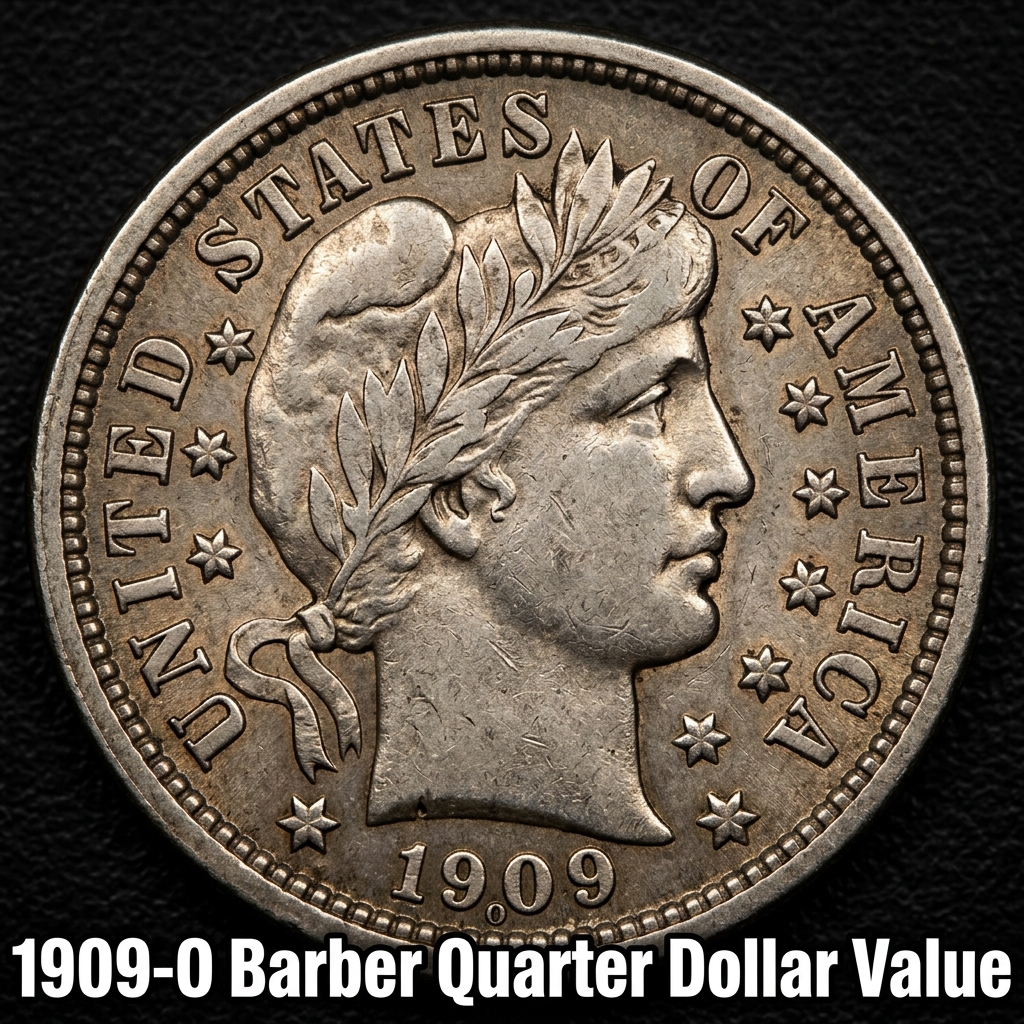
The 1909-O Barber Quarter Dollar is worth anywhere from $8 in heavily worn condition to well over $1,500 or more in high mint state grades. If you recently found one of these old silver coins tucked away in a drawer or inherited collection, you’re in luck — this New Orleans-minted quarter has genuine collector appeal and real monetary value.
If you’re not sure what you’re holding, using the best coin identifier app can help you quickly identify your coin before diving into research. Once you confirm what you have, keep reading to find out exactly what your 1909-O Barber Quarter might be worth today.
What Is the 1909-O Barber Quarter?
The 1909-O Barber Quarter Dollar was struck at the New Orleans Mint in 1909, one of the final years that facility produced coins before it closed permanently in 1911. Designed by Charles E. Barber, the coin features Lady Liberty wearing a Phrygian cap on the obverse, with a heraldic eagle on the reverse. These quarters are made of 90% silver, giving them an intrinsic metal value in addition to their numismatic worth.
The “O” mintmark appears on the reverse, just below the eagle. For 1909, the New Orleans Mint produced 712,000 Barber Quarters — a relatively modest mintage that adds to the coin’s desirability. Compared to the Philadelphia issue of the same year, the 1909-O is considered a scarcer coin and commands stronger premiums across most grades. Collectors chasing a complete Barber Quarter set specifically seek out this date and mintmark combination.
How Much Is the 1909-O Barber Quarter Worth?
Value depends heavily on condition. A coin that has been circulated for years and shows heavy wear might fetch around $8 to $15 simply for its silver content, while a lightly worn example in Fine or Very Fine condition jumps considerably in price. Here’s a general value guide:
| Grade | Estimated Value |
|---|---|
| Good (G-4) | $8 – $15 |
| Very Good (VG-8) | $20 – $40 |
| Fine (F-12) | $50 – $80 |
| Very Fine (VF-20) | $100 – $175 |
| Extremely Fine (EF-40) | $250 – $400 |
| About Uncirculated (AU-50) | $500 – $800 |
| Mint State (MS-60 and above) | $1,000 – $1,500+ |
These figures reflect recent retail market trends. Auction results can vary, and top-graded examples certified by PCGS or NGC routinely attract serious bidding from advanced collectors.
How to Grade Your 1909-O Barber Quarter at Home
Grading your own coin doesn’t require professional tools, but it does take a careful eye. Start by looking at the high points of the design — Liberty’s head, cheek, and the eagle’s breast feathers on the reverse. In Good condition, the lettering around the rim is still visible but the design is flat. In Fine condition, you should see some hair detail above Liberty’s ear. Very Fine examples show clear hair strands and visible feather definition on the eagle.
One quick test: if you can read the motto “IN GOD WE TRUST” fully and clearly, your coin is likely in Fine condition or better, which meaningfully increases value. Coins in About Uncirculated condition retain most of their original mint luster but show slight friction on the high points. If yours looks bright, sharp, and nearly perfect, it could be an MS-grade coin worth getting professionally evaluated. CoinHix is a great tool for getting a quick grade estimate right from your phone before deciding whether professional certification is worthwhile.
Silver Value and What Drives the Market Price
Since 1909-O Barber Quarters are struck in 90% silver, they always carry at least a base melt value tied to the silver spot price. Each coin contains approximately 0.1808 troy ounces of pure silver. With silver hovering around $28–$30 per ounce in recent markets, the melt value alone sits around $5 to $6 — which forms the absolute floor. However, numismatic value far exceeds melt value for any coin in decent condition.
Collector demand for complete Barber Quarter sets remains strong, and the 1909-O is one of the keys to finishing a collection. Series collectors will pay full retail or better for coins that fill gaps in their sets. If you’re curious how other silver coins from the same era compare, check out the 1909 Barber Dime value breakdown for similar pricing context. Understanding the broader Barber series helps you appreciate exactly where your quarter fits in terms of rarity and demand. CoinHix can also scan multiple coins in a collection and give you side-by-side value comparisons instantly.
Where to Sell Your 1909-O Barber Quarter
Once you know what you have, selling is straightforward. Online platforms like eBay, Heritage Auctions, and Great Collections attract the most buyers and often produce the strongest prices for better-grade examples. Local coin shops offer convenience and immediate payment, though you may get slightly less than retail. Coin shows are another excellent venue, especially if your coin is in high grade and you want competitive offers from multiple dealers.
For any coin in EF or better condition, consider submitting to a third-party grading service like PCGS or NGC first. A certified coin in a tamper-evident slab is worth more and sells faster. CoinHix can help you determine whether the estimated value justifies certification costs before you commit to the process.
—
Frequently Asked Questions
Q: How do I know if my quarter is the 1909-O and not another year?
A: Check the date on the front of the coin just below Lady Liberty’s portrait. Then flip it over and look for a small “O” mintmark below the eagle on the reverse. If both match, you have a 1909-O Barber Quarter.
Q: Is the 1909-O Barber Quarter rare?
A: It’s not the rarest coin in the Barber series, but with a mintage of only 712,000 pieces and most survivors heavily worn, finding one in Fine condition or better is genuinely uncommon. Collectors consider it a key semi-scarce date worth pursuing.
Q: Should I clean my 1909-O Barber Quarter before selling it?
A: Never clean it. Cleaning removes original surface patina and significantly reduces numismatic value. Even a coin that looks dull or dark should be left as-is — experienced collectors and dealers actually prefer original, uncleaned surfaces and will pay more for them.