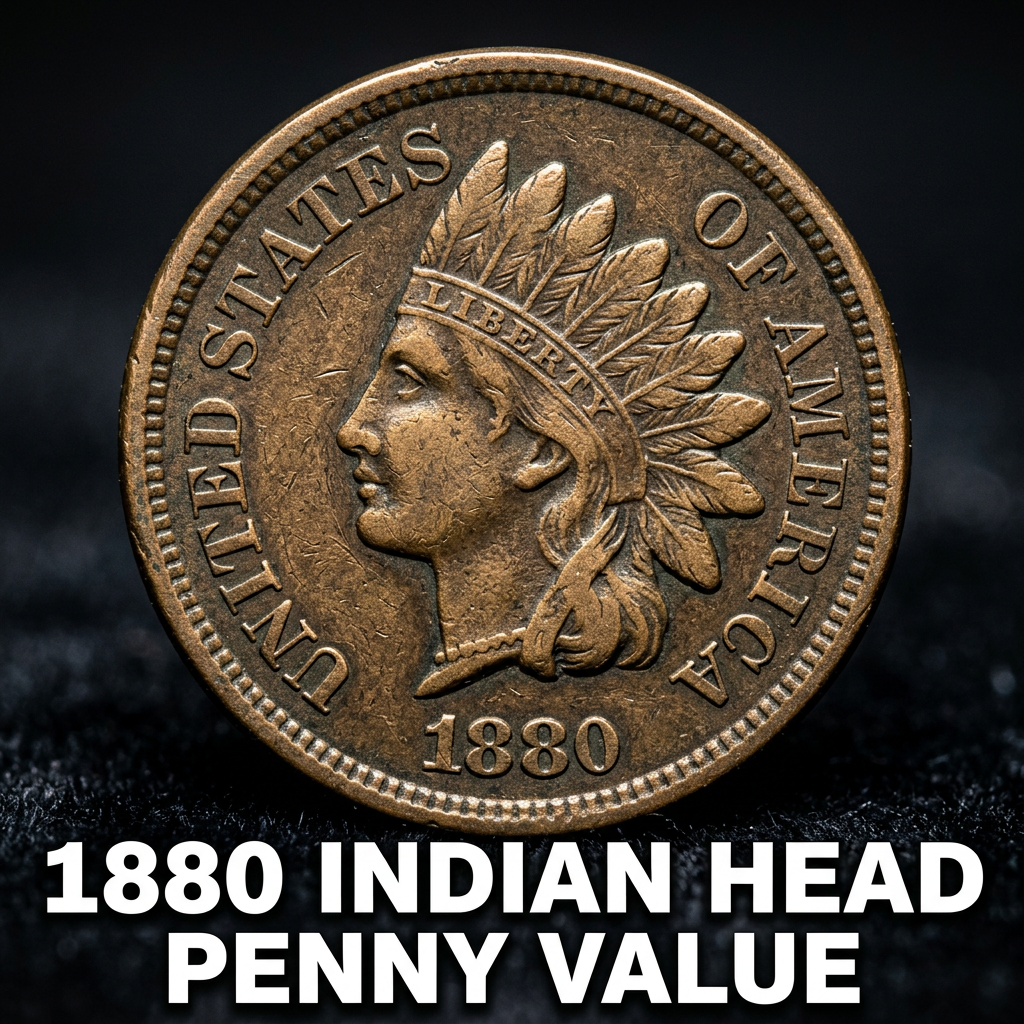
The 1880 Indian Head Penny is worth anywhere from $1.50 in heavily worn condition to over $100 or more in mint state — and top-grade examples have sold for hundreds at auction. If you just found one of these beautiful old cents in a jar, a drawer, or an inherited coin collection, you’re in the right place to find out exactly what it’s worth.
A Quick Look at the 1880 Indian Head Penny
The Indian Head Penny was designed by James Barton Longacre and minted from 1859 through 1909. The 1880 version was struck at the Philadelphia Mint, and no mint mark appears on the coin — Philadelphia coins of this era never carried one. That year, over 38 million pennies were produced, making the 1880 date relatively common compared to some of its scarcer counterparts. Still, well-preserved examples are genuinely hard to find, and that’s where real value starts to show up.
If you’re not sure whether what you have is an Indian Head Penny or something else entirely, using the best coin identifier app can help you confirm the coin’s identity in seconds using just your smartphone camera. That’s a great first step before you dig into valuation.
1880 Indian Head Penny Value by Grade
Condition is everything in coin collecting. A penny that looks worn smooth and dark is worth a fraction of one that still shows sharp details and original luster. Here’s a general breakdown of what collectors and dealers typically pay for the 1880 Indian Head Penny across different grades:
| Grade | Description | Estimated Value |
|---|---|---|
| Good (G-4) | Heavy wear, outline visible | $1.50 – $3 |
| Very Fine (VF-20) | Moderate wear, most details clear | $10 – $18 |
| Extremely Fine (EF-40) | Light wear on high points | $25 – $40 |
| Mint State (MS-63) | Uncirculated, minor marks | $75 – $120 |
| Mint State Red (MS-65 RD) | Full original red luster | $200 – $400+ |
For the most up-to-date pricing data, you can check 1880 Indian Head Penny MS-RD auction prices and current market values to see what certified red examples are actually selling for right now.
What Makes Some 1880 Pennies Worth More Than Others
Beyond basic wear, a few specific factors can push your 1880 Indian Head Penny’s value up significantly. Color designation plays a huge role — coins graded “Red” (RD) have retained most of their original copper color and command the highest premiums. “Red-Brown” (RB) coins fall in the middle, and “Brown” (BN) examples, while still collectible, are the most affordable.
Eye appeal matters too. Even within the same technical grade, a coin with sharp strike details, no distracting spots or corrosion, and a pleasing look will outsell one that appears dull or spotted. Third-party grading from services like PCGS or NGC adds credibility and helps buyers trust what they’re purchasing, which typically translates to higher realized prices.
Using CoinHix is one of the smartest ways to track current market trends without spending hours researching auction archives on your own. The app pulls real pricing data and presents it in a clear, easy-to-read format — ideal for someone who just wants a straight answer about their coin’s value.
How to Tell If Your 1880 Indian Head Penny Is the Real Deal
Authentication is an important step, especially if your coin appears to be in nicer-than-average condition. Fakes do exist, though they’re less common with Indian Head Pennies than with higher-value coins. Check the coin’s weight — a genuine example should weigh approximately 3.11 grams. The design should show Lady Liberty wearing a Native American headdress on the obverse, with “UNITED STATES OF AMERICA” and “ONE CENT” on the reverse surrounded by a wreath.
The date “1880” should be crisp and properly positioned. If anything looks off — blurry digits, strange metal texture, or a weight that doesn’t match — it’s worth getting a second opinion. You can also compare your coin to known good examples using resources like CoinHix, which provides detailed images alongside certified coin data.
If you’re curious how values shifted from one year to the next on this series, looking at detailed Indian Head Penny value information for other years in the series can give you helpful context for understanding price differences across dates.
Should You Clean or Sell Your 1880 Indian Head Penny?
Please don’t clean it. This is one of the most common mistakes people make with old coins, and it’s also one of the most damaging. Cleaning removes the natural patina that coin collectors actually value, and a cleaned coin can lose 50% or more of its potential worth. Even if it looks dirty or dark to you, that aged appearance is authentic and desirable to experienced buyers.
If you’re thinking about selling, your best options include local coin dealers, established auction platforms, and collector shows. For a quick and free estimate from your couch, CoinHix gives you instant access to real market data so you know if an offer you’ve received is fair before you commit to anything.
FAQ
Q: How much is a 1880 Indian Head Penny worth with heavy wear?
A: A well-worn 1880 Indian Head Penny in Good condition typically sells for around $1.50 to $3. It’s a common date, so low-grade examples don’t command large premiums.
Q: Is there a mint mark on the 1880 Indian Head Penny?
A: No. The 1880 Indian Head Penny was minted exclusively in Philadelphia, and Philadelphia did not use mint marks on its coins during this era. If you see a mint mark, have the coin examined — it may be altered or a different issue entirely.
Q: What does “Red” mean when grading an 1880 Indian Head Penny?
A: “Red” (RD) refers to coins that have retained at least 95% of their original copper luster and color. These coins were never circulated and have been carefully preserved. Red-designated examples are the most valuable within any given grade level and can be worth several times more than brown-toned equivalents.