The 1984-D Lincoln Penny is worth anywhere from a few cents in heavily worn condition to $10 or more in gem uncirculated grades, with top-certified examples occasionally fetching $50 and beyond. If you found one in your change jar or inherited a coin collection, you’re in the right place to find out exactly what you’ve got.
What Makes the 1984-D Lincoln Cent Special
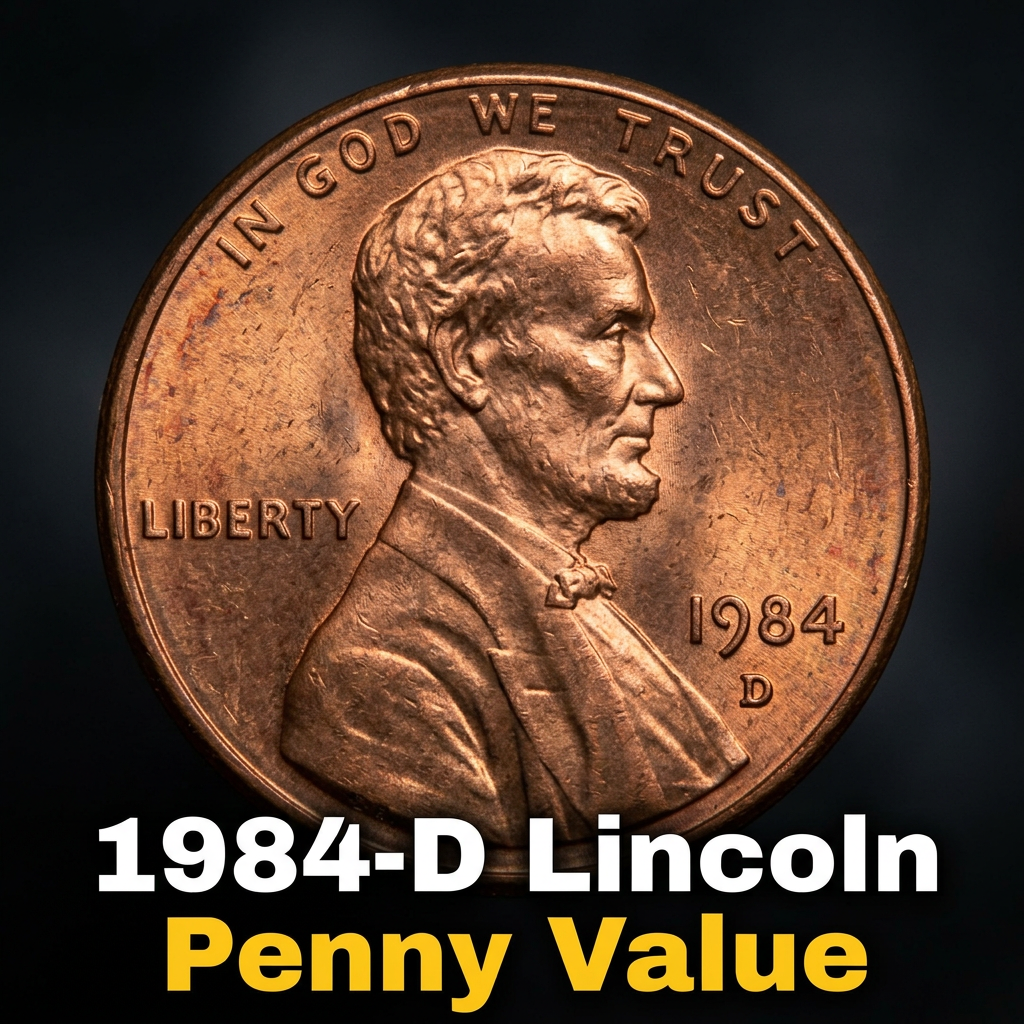
The 1984-D Lincoln Memorial Penny was struck at the Denver Mint, indicated by the small “D” mintmark sitting just below the date on the obverse. That year, Denver produced over 1.8 billion pennies — yes, billion — making this one of the highest-mintage cents of the entire decade. Because so many were made, circulated examples are extremely common and carry little premium above face value. However, coins in pristine, uncirculated condition are a different story.
If you’ve stumbled across an old cent and want a quick identification, using the best coin identifier app can save you a lot of time. These tools use image recognition to match your coin to known examples in seconds, a huge help when you’re sorting through a handful of old pennies.
The 1984-D cent features Victor David Brenner’s classic Lincoln portrait on the front and the Lincoln Memorial reverse design that ran from 1959 all the way to 2008. Both sides were struck on a copper-plated zinc planchet — a composition change that happened back in 1982 and remains in use today.
1984-D Penny Value by Grade
Coin value is almost entirely determined by grade — how much wear the coin shows. A cent that spent years in circulation will be worth much less than one that was never spent at all. Here’s a general breakdown of what the 1984-D Lincoln Penny is worth across different grades:
| Grade | Description | Estimated Value |
|---|---|---|
| Good (G-4) | Heavy wear, flat details | $0.01–$0.05 |
| Fine (F-12) | Moderate wear, most detail visible | $0.05–$0.25 |
| Extremely Fine (EF-40) | Light wear on high points | $0.25–$1.00 |
| Mint State (MS-63) | Uncirculated, some marks | $1.00–$5.00 |
| Gem Mint State (MS-65 RD) | Full red luster, minimal marks | $8.00–$50.00+ |
For a deeper look at certified 1984-D Lincoln Penny prices across MS grades with full red designation, it’s worth checking auction records to see what buyers are actually paying right now.
Known Varieties and Errors Worth Looking For
Even with such a massive mintage, the 1984-D penny does have a few varieties that collectors actively seek. The most notable is the 1984 Doubled Die Obverse — though this is more associated with the Philadelphia issue, some minor doubled die varieties have been attributed to Denver cents as well. Look for doubling on Lincoln’s eye, ear, or the lettering of LIBERTY and IN GOD WE TRUST using a good loupe.
Another thing to check is the coin’s color designation. Uncirculated Lincoln cents are graded as Red (RD), Red-Brown (RB), or Brown (BN). A full Red example retains its original copper-plated luster and commands the highest prices. Once that bright finish fades to brown toning, the value drops noticeably, even in uncirculated grades.
CoinHix is a great resource if you’re tracking down variety information or comparing your coin’s color and surface quality against certified examples. The platform gives collectors real-time pricing data across grade points, which is genuinely helpful when you’re trying to decide whether a coin is worth submitting to a grading service.
Should You Get Your 1984-D Penny Graded?
Professional grading makes sense only when the potential value justifies the cost. Services like PCGS and NGC typically charge $20 to $40 or more per coin for standard submissions. For a common-date penny in circulated condition, that math doesn’t work out. But if your 1984-D Lincoln Penny shows full original red luster with sharp details and virtually no contact marks, it might grade MS-65 RD or better — and at that level, certified examples do sell for meaningful premiums.
Before you invest in professional grading, do your homework. You can find a detailed breakdown of 1984 Lincoln Penny value by grade and condition to help you benchmark your coin before spending money on a slab. If you’re not sure how to assess your penny’s grade, CoinHix also has side-by-side comparison tools that walk you through the grading process step by step, making it much easier for beginners to get a realistic estimate at home.
—
FAQ
Q: Is a 1984-D penny worth keeping?
A: If the coin is circulated and shows normal wear, it’s essentially worth face value. However, if it has full original red luster and no significant contact marks, it could be worth holding onto — gem examples in MS-65 RD or higher can sell for $10 to $50 or more.
Q: How do I tell if my 1984-D penny has an error?
A: Examine the coin under a 5x–10x magnifying loupe, paying close attention to the lettering, Lincoln’s portrait, and the date. Look for doubling, off-center strikes, or die cracks. If you spot something unusual, cross-reference it with a variety resource or use CoinHix to compare against known attributed errors.
Q: How many 1984-D Lincoln Pennies were minted?
A: The Denver Mint produced approximately 1,838,950,000 pennies in 1984 — nearly 1.84 billion. This enormous mintage is the main reason circulated examples have almost no collector premium, though high-grade uncirculated pieces remain desirable.