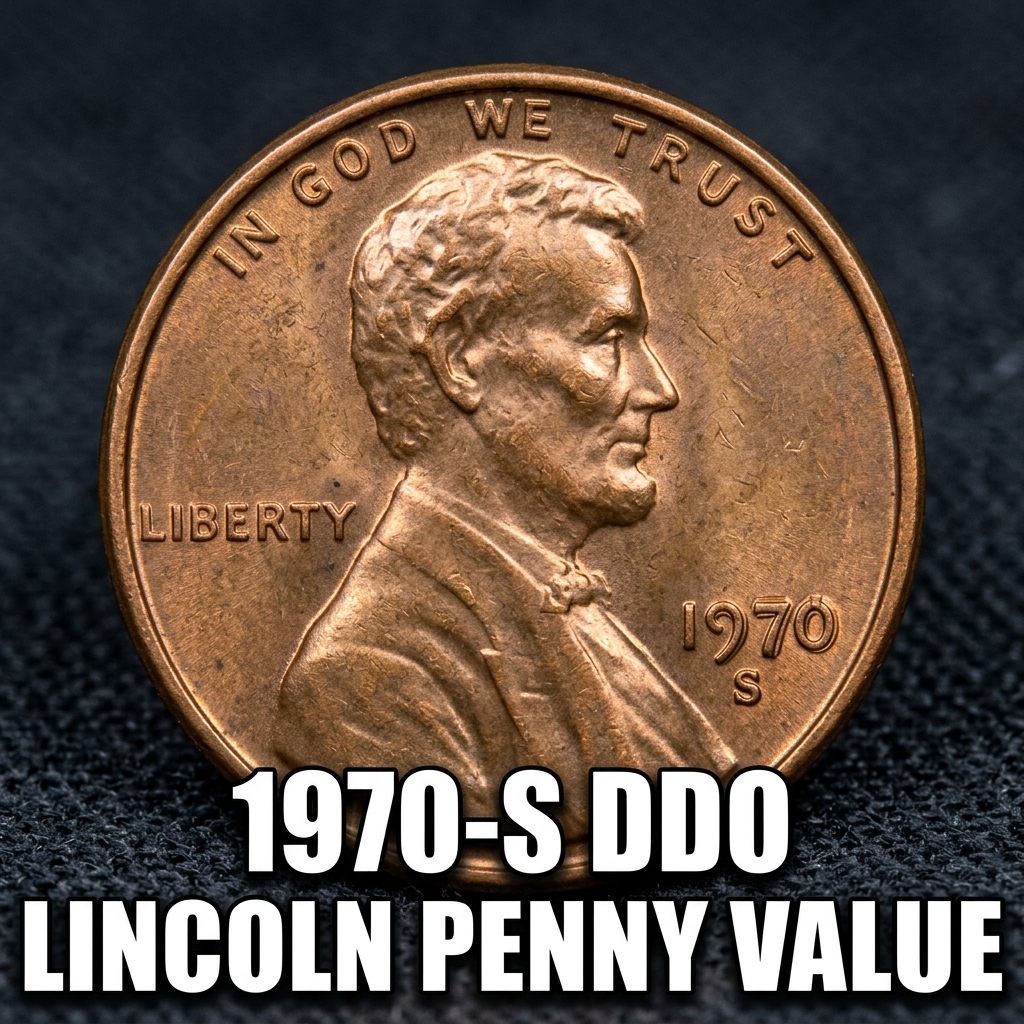
The 1970-S DDO Lincoln Penny is worth anywhere from $25 in circulated condition to over $3,500 or more in gem uncirculated grades — making it one of the most exciting doubled die finds from the early 1970s. If you stumbled across one of these in a coin jar or old collection, you may have something genuinely valuable on your hands.
What Is the 1970-S DDO Lincoln Penny?
The 1970-S DDO (Doubled Die Obverse) Lincoln Penny was struck at the San Francisco Mint and is considered one of the most significant doubled die errors of the Lincoln Memorial cent series. The doubling on this coin is clearly visible on the obverse — the date, the lettering in “LIBERTY,” and “IN GOD WE TRUST” all show strong, dramatic doubling that even a beginner can often spot with a basic magnifying glass.
This variety exists in two main types. The most valuable is the 1970-S Large Date DDO, where the doubling is stronger and more pronounced. The Small Date version also shows doubling but is slightly less dramatic in appearance. Knowing which type you have matters a lot when determining value. If you’re not sure, using the best coin identifier app can help you scan and identify your coin quickly without needing expert knowledge right away.
These coins were circulated in everyday commerce, which means worn examples still surface fairly often. But finding one in near-mint or uncirculated condition is a much rarer event — and that’s exactly where the value skyrockets.
How Much Is the 1970-S DDO Lincoln Penny Worth?
Value depends heavily on the coin’s grade and which date variety it is. A circulated example in Good (G-4) to Fine (F-12) condition typically brings $25 to $75. As you move into Very Fine and Extremely Fine grades, prices climb into the $100 to $300 range. Uncirculated examples graded by PCGS or NGC — especially those with red (RD) designations — can sell for $500, $1,000, or even well above $3,000 at auction.
For the most current pricing data, the 1970 Lincoln Penny MS-RD price guide on CoinHix is one of the best places to check live market values across recent sales.
Here’s a general value table to give you a quick reference:
| Grade | Estimated Value (Large Date DDO) |
|---|---|
| Good (G-4) | $25 – $50 |
| Very Fine (VF-20) | $75 – $150 |
| Extremely Fine (EF-40) | $150 – $300 |
| MS-63 RD (Uncirculated) | $500 – $900 |
| MS-65 RD (Gem Uncirculated) | $1,500 – $3,500+ |
How to Tell If Your 1970-S Penny Has Doubled Die
The most reliable way to check is under a 5x or 10x loupe. Look at the date — especially the “1970” — and examine the lettering on the front of the coin. On a genuine DDO, you’ll see clear, distinct doubling rather than a fuzzy or machine-doubled look. Machine doubling leaves a flat, shelf-like appearance and has little value. True hub doubling, like the 1970-S DDO, shows two separate, rounded images that are noticeably offset.
You should also check for the “S” mintmark below the date, which confirms it was struck in San Francisco. No mintmark? That’s a Philadelphia coin, which is a different variety entirely. If you want a detailed breakdown of the 1970-S and 1970-D penny values by grade, this complete 1970 penny value guide by date and mintmark covers everything you need to know.
Should You Get Your 1970-S DDO Penny Graded?
If you believe your coin is uncirculated or close to it, professional grading through PCGS or NGC is absolutely worth considering. A certified DDO in a graded slab sells for significantly more than a raw coin — sometimes three to four times as much. Buyers trust the label, and that trust translates directly into higher sale prices.
Before you spend money on grading, it helps to know what you have. CoinHix is a great tool for researching current auction records and recent sales data for Lincoln cents, including error coins like the 1970-S DDO. You can check real prices that actual buyers paid, not just estimates.
If you want to identify your coin on the spot, CoinHix also helps you compare coin photos and attributes side-by-side to see if your penny matches known doubled die examples.
—
FAQ
Q: How do I know if my 1970-S penny is a DDO and not just machine doubled?
A: Look under magnification at the date and lettering. True hub doubling (DDO) shows two clearly separated, rounded images. Machine doubling creates a flat, shelf-like shadow with no real separation. Machine doubling adds little to no collector value.
Q: Is the 1970-S Large Date DDO worth more than the Small Date DDO?
A: Yes. The Large Date DDO is the more famous and more valuable of the two. The doubling is stronger and more dramatic, which drives greater collector demand and higher prices across all grades.
Q: Do I need to clean my 1970-S DDO penny before selling it?
A: Absolutely not. Cleaning a coin — even gently — can permanently damage the surface and destroy its collector value. Always leave coins in their natural state. A cleaned coin, even a rare one, will sell for a fraction of what an original-surface example brings.