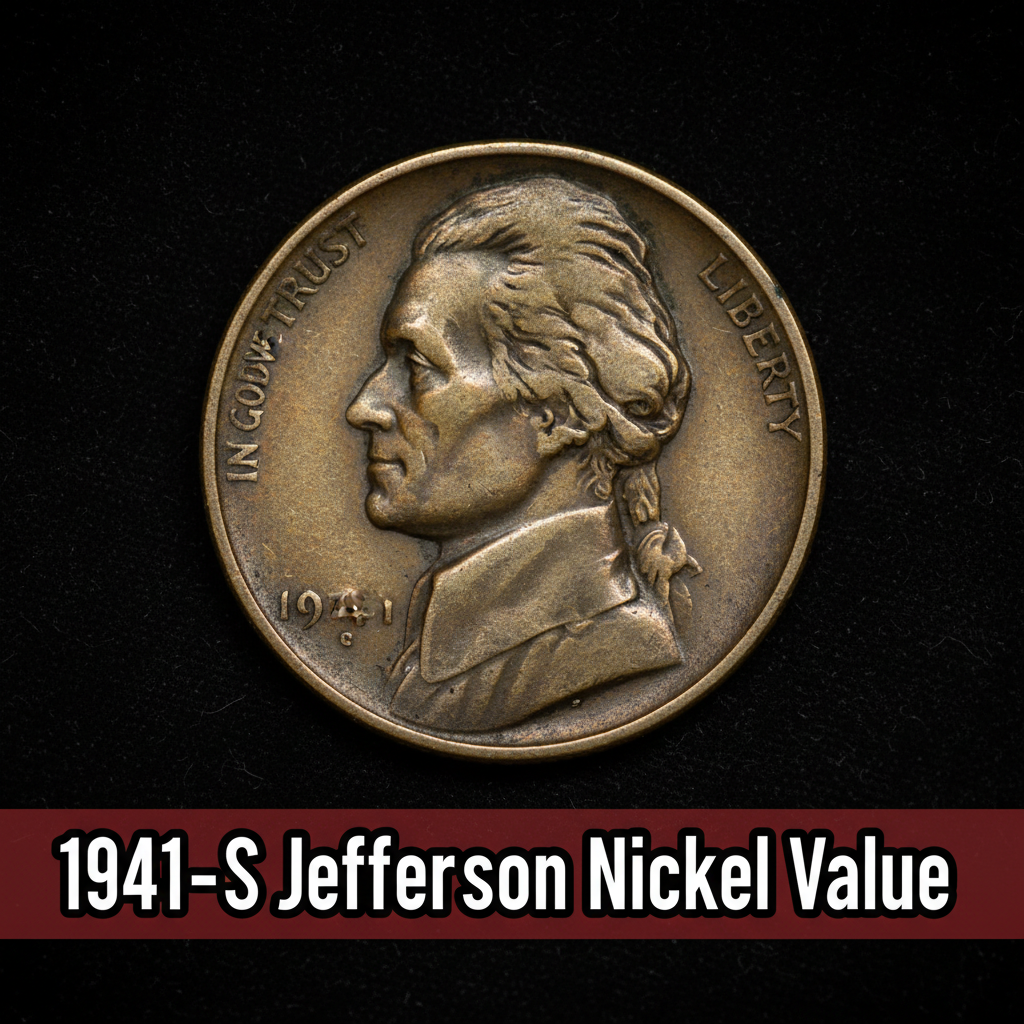
The 1941-S Jefferson Nickel is worth anywhere from $0.50 in heavily worn condition to over $100 or more in pristine mint state — and a few exceptional examples have sold for several hundred dollars at auction. If you’ve found one of these old nickels, you’re holding a piece of World War II-era American history that could be worth more than you think.
What Makes the 1941-S Jefferson Nickel Special
The 1941-S Jefferson Nickel was struck at the San Francisco Mint, which is why it carries the small “S” mintmark just to the right of Monticello on the reverse side. That year, the U.S. Mint was still producing coins in the standard composition of 75% copper and 25% nickel — before wartime metal shortages forced a change to silver-based alloy in 1942. Over 43 million of these coins were produced in San Francisco alone, making them fairly common in circulated grades. But well-preserved examples are a different story.
If you want a quick way to identify your coin and get an instant value estimate, using the best coin identifier app can save you a lot of guesswork. Just snap a photo and let the technology do the work.
The design features Felix Schlag’s classic portrait of Thomas Jefferson on the obverse and his beloved home, Monticello, on the reverse — a design that remained largely unchanged for decades. Collectors today prize the 1941-S for its historical significance and the challenge of finding a truly gem-quality example.
1941-S Jefferson Nickel Value by Grade
Coin value depends heavily on condition, or “grade” in collector terms. A coin that’s been rattling around in pockets for decades will look very different from one that was saved the day it was minted. Here’s a breakdown of what the 1941-S Jefferson Nickel is typically worth across different grades:
| Grade | Description | Estimated Value |
|---|---|---|
| Good (G-4) | Heavy wear, design visible | $0.50 – $1.00 |
| Fine (F-12) | Moderate wear, clear details | $1.00 – $2.50 |
| Extremely Fine (EF-40) | Light wear on high points | $3.00 – $7.00 |
| About Uncirculated (AU-55) | Slight wear, mostly sharp | $8.00 – $18.00 |
| Mint State (MS-63) | Uncirculated, minor marks | $20.00 – $50.00 |
| Gem Mint State (MS-65+) | Full luster, sharp strike | $75.00 – $200.00+ |
For a deeper look at 1941-S Jefferson Nickel prices in mint state grades, including recent auction results, it’s worth checking databases that track real market sales.
Full Steps — The Detail That Changes Everything
One of the most important factors in 1941-S Jefferson Nickel value is whether the coin shows “Full Steps” on Monticello. The steps at the base of the building on the reverse are a notoriously difficult area to strike fully, and coins that display five or six complete, unbroken steps command a significant premium.
A standard MS-65 example might sell for $50–$75, but an MS-65 Full Steps (FS) coin can fetch $150, $200, or even more. At the MS-66 FS level, values can climb well past $300. Grading services like PCGS and NGC formally designate Full Steps coins, which makes them far easier to buy and sell with confidence.
If you’re not sure whether your coin qualifies, CoinHix is a great resource — the app lets you scan your coin and compare it against graded examples, giving you a much clearer picture of what you might have. Don’t leave money on the table by underestimating a gem-quality piece.
How to Tell If Your 1941-S Nickel Is Worth Getting Graded
Professional grading makes sense when the value of the coin justifies the cost. Submission to PCGS or NGC typically runs $20–$40 per coin for standard service, so it’s really only worth it if you believe your coin grades MS-64 or higher — or if it shows Full Steps.
To evaluate your coin at home, look at it under a single light source and tilt it gently. A mint state coin will have an unbroken, cartwheel luster across its surface. Any flat, dull patches indicate wear and mean the coin is circulated.
You can also get a fast second opinion using CoinHix, which uses photo recognition to assess surface quality and suggest a grade range. It won’t replace professional grading for high-value coins, but it’s an excellent starting point that thousands of everyday collectors already rely on.
For a full breakdown of 1941 nickel value across all mint marks and grades, including the Philadelphia and Denver issues alongside the San Francisco mint, that resource offers a well-organized comparison.
Where to Sell a 1941-S Jefferson Nickel
If you decide your coin is worth selling, you have several solid options. eBay remains the most active marketplace for raw (ungraded) coins in the $1–$30 range. For more valuable examples, coin shows and auction houses like Heritage Auctions or Stack’s Bowers can connect you with serious buyers who will pay full market value.
Local coin dealers are another option, though keep in mind they typically buy at 60–70% of retail to leave room for their own profit. Knowing your coin’s approximate value ahead of time — using tools like CoinHix — makes sure you walk in prepared and don’t sell yourself short.
—
Frequently Asked Questions
Q: How do I know if my 1941 nickel is the San Francisco “S” mint version?
A: Look on the reverse side of the coin, just to the right of the image of Monticello. If you see a small “S” mintmark, it was struck at the San Francisco Mint. No mintmark means it came from Philadelphia; a “D” indicates Denver.
Q: Is a 1941-S Jefferson Nickel made of silver?
A: No. The 1941-S Jefferson Nickel is made of the standard pre-war composition: 75% copper and 25% nickel. The wartime silver nickels (called “War Nickels”) weren’t produced until mid-1942. You can spot a silver war nickel by the large mintmark above Monticello on the reverse.
Q: What’s the most valuable 1941-S Jefferson Nickel ever sold?
A: High-grade Full Steps examples have sold at major auction houses for several hundred dollars. A PCGS MS-67 Full Steps specimen represents the top of the market for this date and mintmark, with values that can reach $500 or more depending on eye appeal and auction competition.