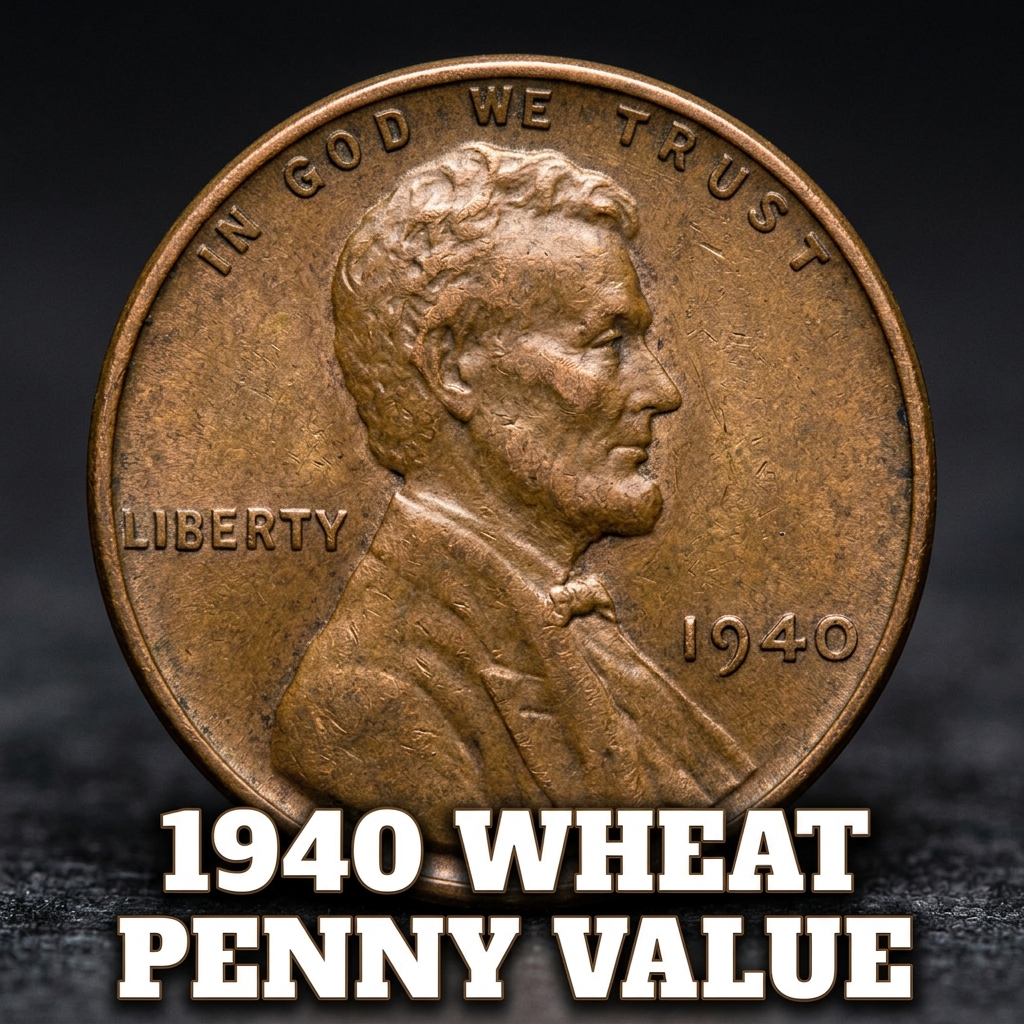
The 1940 Wheat Penny with no mint mark is worth anywhere from $0.10 in heavily worn condition to over $8 or more in uncirculated grades, with top-quality examples grading MS-67 Red occasionally selling for hundreds of dollars at auction. If you found one in a jar of old coins, you’re in the right place.
What Makes the 1940 Wheat Penny Special
The 1940 Lincoln Wheat Penny without a mint mark was struck at the Philadelphia Mint, which did not use a mint mark during this era. That year, Philadelphia produced over 586 million of these cents — a massive number even by modern standards. Because so many were made, most circulated examples are quite common and affordable. However, that doesn’t mean they’re worthless. Coin collectors prize high-grade, well-preserved examples, and even everyday folks are surprised to learn that condition makes a huge difference in value.
If you’re not sure what you have, it helps to use the best coin identifier app to quickly scan your coin and get an instant read on its grade and identity. This can save you a lot of guesswork, especially if you’re new to coin collecting.
The 1940 no mint mark penny is a Lincoln cent, part of the Wheat Penny series that ran from 1909 to 1958. It features Abraham Lincoln on the obverse and two wheat stalks flanking the words “ONE CENT” on the reverse. These coins were made of 95% copper, giving surviving examples a beautiful reddish-brown tone when well preserved.
1940 Wheat Penny Value by Grade
Coin values are almost entirely driven by condition, also called “grade” in the numismatic world. A penny that spent decades in a pocket or piggy bank will show heavy wear and fetch only a few cents. A coin that was set aside right after minting and never circulated can be worth many times more.
Here’s a general breakdown of 1940 Wheat Penny price data across different grades to help you understand what your coin might be worth:
| Grade | Description | Estimated Value |
|---|---|---|
| Good (G-4) | Heavy wear, outline clear | $0.10 – $0.25 |
| Fine (F-12) | Moderate wear, details visible | $0.25 – $0.50 |
| Extremely Fine (EF-40) | Light wear on high points | $1 – $3 |
| Uncirculated (MS-63) | No wear, some marks | $4 – $8 |
| Gem Uncirculated (MS-65+) | Sharp strike, full red luster | $15 – $50+ |
| MS-67 Red | Near perfect, collector grade | $200 – $500+ |
How to Tell the Condition of Your 1940 No Mint Mark Penny
You don’t need to be an expert to get a rough idea of your coin’s grade. Start by looking at the high points — Lincoln’s cheekbone, his hair above the ear, and the wheat stalks on the reverse. If these areas are smooth and flat, the coin has heavy wear. If you can still see fine lines and texture in those spots, you might have an EF or better.
Color matters too. A 1940 Wheat Penny with full original red color (called “RD” by graders) is worth significantly more than one that has turned brown. Most uncirculated coins that have been stored for decades will be brown or red-brown, which is still collectible but priced lower than full-red examples.
For a deeper look at the complete 1940 penny value guide including mint mark varieties and error coins, it’s worth reviewing all the data before you decide to sell or hold.
You can also download CoinHix to get a fast, reliable value estimate. CoinHix is one of the easiest tools available for checking what your old coins are worth without having to visit a dealer.
Error Coins and Varieties That Could Be Worth More
While the standard 1940 Philadelphia Wheat Penny is common, errors and die varieties can push value much higher. Some things to look for include:
– Doubled die obverse — Lincoln’s lettering or features appear doubled under magnification
– Off-center strikes — the design is noticeably shifted off center
– Repunched mint marks — not applicable to the no mint mark version, but worth knowing for comparison
– Lamination errors — the metal surface appears peeled or flaked
These error coins can be worth anywhere from $10 to well over $100 depending on the error type and condition. If you think you have something unusual, it’s smart to get it checked. CoinHix makes it easy to photograph and identify potential errors right from your phone.
FAQ
Q: Is a 1940 Wheat Penny with no mint mark rare?
A: No, it’s not considered rare. The Philadelphia Mint struck more than 586 million of them in 1940, making it one of the more common Wheat Pennies. That said, high-grade examples with full red color are much harder to find and can still command strong prices from collectors.
Q: Where is the mint mark on a 1940 Wheat Penny?
A: If your penny was made in Philadelphia, there is no mint mark — that’s normal. Denver-made coins have a “D” and San Francisco coins have an “S,” both located on the obverse below the date. No mint mark simply means it came from Philadelphia.
Q: Should I clean my 1940 Wheat Penny before selling it?
A: Absolutely not. Cleaning a coin — even gently — removes the original surface and destroys collector value. A cleaned coin is almost always worth less than an uncleaned one in the same grade. Leave it as-is and let a buyer or grading service assess it in its natural state.