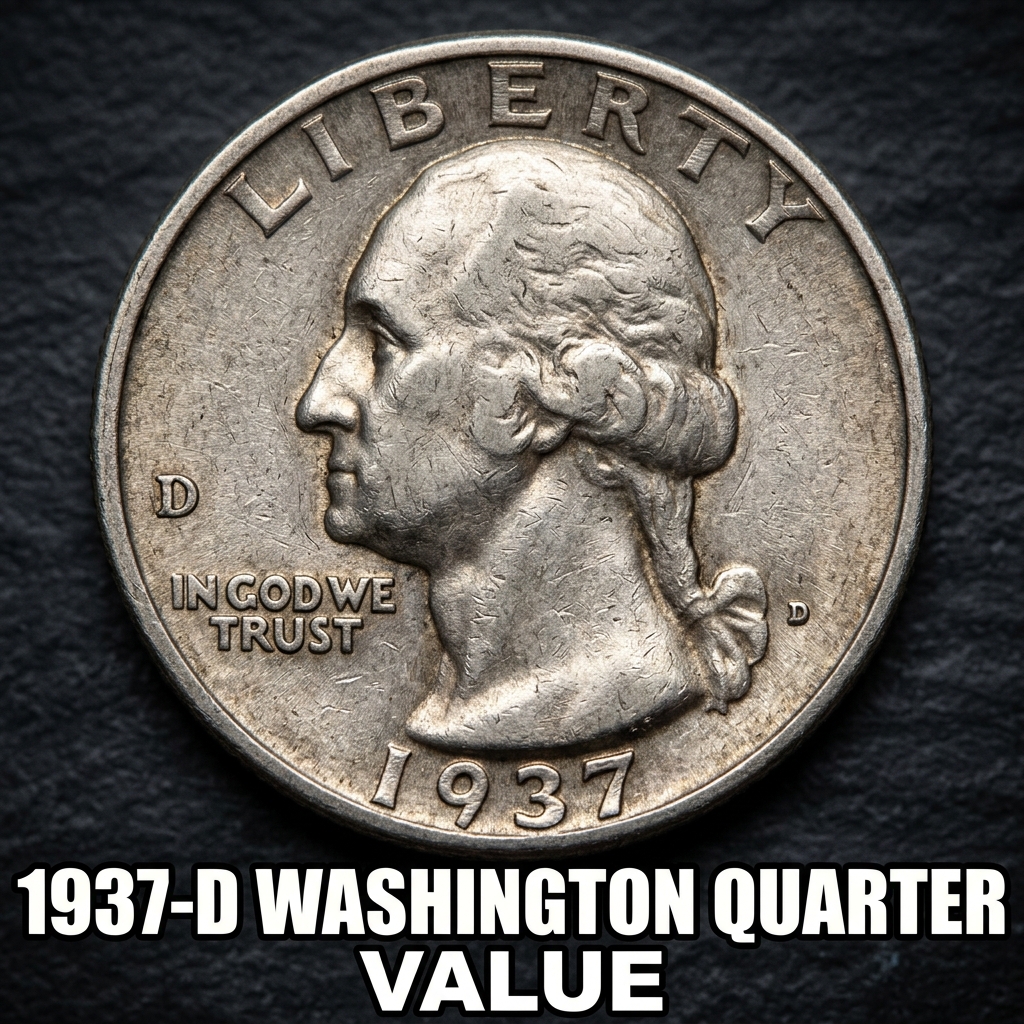
The 1937-D Washington Quarter is worth anywhere from $6 in heavily worn condition to well over $200 in uncirculated grades — and high-end mint state examples can command $500 or more at auction. If you’ve got one sitting in a coin jar or old collection, you may be holding more than pocket change.
What Makes the 1937-D Washington Quarter Special
The 1937-D Washington Quarter was struck at the Denver Mint and carries the small “D” mintmark on the reverse, just below the eagle. That year, Denver produced around 7,189,600 quarters — a mintage that isn’t considered rare by absolute standards, but is noticeably lower than the Philadelphia issue of the same year. Lower mintage combined with strong collector demand across all grades makes this a coin worth paying attention to.
The Washington Quarter series itself began in 1932, and early issues from the 1930s consistently attract interest from collectors. The 1937-D falls right in the heart of that desirable early run. Whether you’re a seasoned numismatist or just someone who found an old coin in grandma’s dresser drawer, knowing what you have is the first step. Using the best coin identifier app can help you quickly identify the mintmark, date, and condition of your coin before you start looking up values.
1937-D Washington Quarter Value by Grade
Coin values are almost entirely driven by condition, and the 1937-D is no exception. A coin graded Good (G-4) shows heavy wear across the high points — Washington’s cheek, hair above the ear, and the eagle’s breast feathers are nearly flat. At that level, values are modest. Move up to Fine or Very Fine, and the coin starts showing real collector appeal.
Here’s a general value table to give you a clear picture:
| Grade | Description | Estimated Value |
|---|---|---|
| G-4 (Good) | Heavy wear, flat details | $6 – $8 |
| VG-8 (Very Good) | Moderate wear, major features clear | $8 – $12 |
| F-12 (Fine) | Even wear, all lettering visible | $12 – $18 |
| VF-20 (Very Fine) | Light wear on high points | $18 – $30 |
| EF-40 (Extremely Fine) | Slight wear, sharp details | $35 – $55 |
| MS-63 (Uncirculated) | No wear, some bag marks | $90 – $150 |
| MS-65 (Gem Uncirculated) | Sharp strike, minimal marks | $200 – $500+ |
For the most current auction results and certified coin pricing, you can check out detailed 1937-D Washington Quarter price data by mint state grade to see exactly where your coin fits in today’s market.
How to Grade Your 1937-D Quarter at Home
You don’t need a magnifying loupe worth $200 to get a rough sense of your coin’s condition. Start by holding the coin under a single light source — natural daylight or a desk lamp works fine. Tilt the coin slowly and watch how the light moves across Washington’s portrait. If the cheek and hair lines above the ear show smooth, flat spots, you’re likely looking at a Good to Fine grade coin.
If the hair detail above the ear is still sharp and the eagle’s breast feathers on the reverse show clear separation, you may have a Very Fine or better example. Coins that look virtually untouched — bright, lustrous, with no flat spots anywhere — are uncirculated, and that’s where real value lives for the 1937-D. CoinHix is a fantastic tool for this step. The app uses photo recognition to help estimate grades based on visible wear, so even a beginner can get a reasonable assessment without paying for a professional grading service right away.
Silver Content and Melt Value
One thing many people overlook is that every Washington Quarter minted before 1965 is made of 90% silver. The 1937-D is no different. Each coin contains 0.1808 troy ounces of pure silver. With silver prices fluctuating around $27–$30 per troy ounce in recent years, the melt value of a single 1937-D quarter sits at roughly $4.90 to $5.40.
That means even the most beat-up, heavily circulated 1937-D quarter has real intrinsic silver value — you won’t be selling it for face value to a vending machine. The collector premium on top of that silver base is what makes the coin worth researching before you sell. You can find a full breakdown of 1937 Washington Quarter values including silver melt and collector pricing to make sure you’re getting a fair deal.
Where to Sell Your 1937-D Washington Quarter
Once you know your coin’s grade and approximate value, you have several solid options for selling. Online auction platforms like eBay remain one of the most accessible marketplaces — search completed sales for “1937-D Washington Quarter” to see what buyers have actually paid recently, not just what sellers are asking.
Local coin dealers are another reliable option, especially for mid-grade circulated examples. Dealers will typically offer 60–70% of retail value, which is fair when you consider they need to resell at a profit. For higher-grade pieces — anything MS-63 or above — consider getting the coin certified by PCGS or NGC first. A certified coin sells faster and typically brings stronger prices.
CoinHix makes this whole process easier by letting you scan your coin, get an instant grade estimate, and compare recent sale prices across multiple platforms — all in one place. It’s especially useful if you’ve found a small collection and need to sort through many coins quickly without visiting a dealer for each one.
—
FAQ
Q: How do I know if my quarter is a 1937-D or a regular 1937?
A: Flip the coin to the reverse side and look just below the eagle, above the “QUARTER DOLLAR” text. A small “D” mintmark indicates it was struck in Denver. No mintmark means it came from Philadelphia. The 1937-D is slightly more valuable in most grades than the Philadelphia issue.
Q: Is the 1937-D Washington Quarter rare?
A: It’s not considered rare in the traditional sense, but it is a lower-mintage early-series coin with strong collector demand. In circulated grades it’s moderately common; in gem uncirculated grades (MS-65 and above) it becomes genuinely scarce and commands significant premiums.
Q: Should I clean my 1937-D quarter before selling it?
A: Absolutely not. Cleaning a coin — even gently with a cloth — removes the original surface luster and leaves microscopic scratches that experienced collectors and dealers will spot immediately. A cleaned coin is always worth less than an original, uncleaned example in the same grade. Leave it as-is and let the buyer or grading service assess it in its natural state.