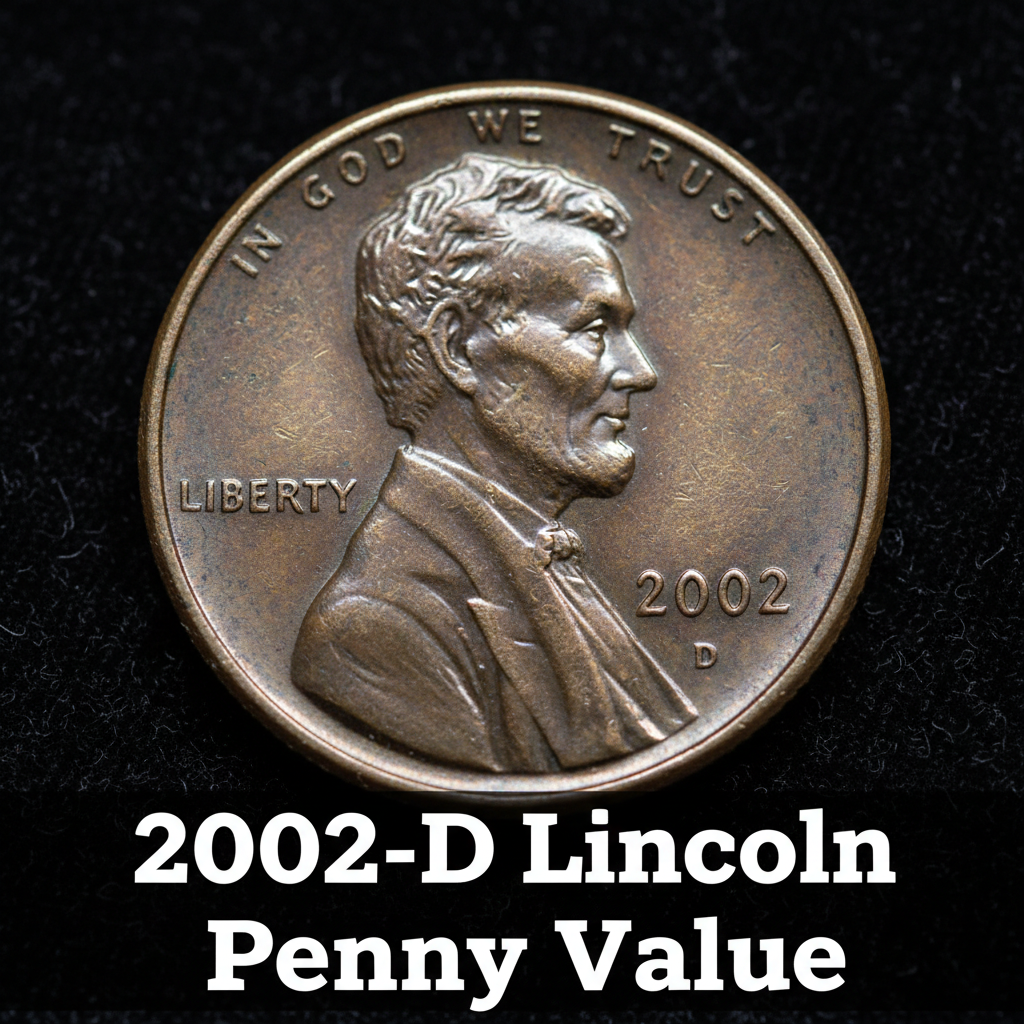
The 2002-D Lincoln Penny is worth anywhere from 1 cent in heavily circulated condition to around $5 or more in pristine uncirculated grades — and a few exceptional specimens have sold even higher at auction. If you found one in your change jar or inherited a coin collection, you’re in the right place to find out exactly what it’s worth.
What Is the 2002-D Lincoln Penny
The 2002-D Lincoln Penny was struck at the Denver Mint, indicated by the small “D” mint mark you’ll find on the obverse just below the date. This coin is part of the long-running Lincoln Memorial cent series, which featured the Lincoln Memorial on the reverse from 1959 all the way through 2008. In 2002, the Denver Mint produced over 4.8 billion of these pennies — yes, billion — which is why they’re so common in everyday circulation.
Despite that high mintage, condition is everything when it comes to value. A worn 2002-D penny pulled from a piggy bank is essentially worth face value. But a coin that was never circulated, with its original red luster intact, can be worth a few dollars to collectors. If you’re trying to figure out the grade of your coin, using the best coin identifier app can help you get a fast and reliable assessment right from your smartphone without needing to visit a dealer.
2002-D Lincoln Penny Value by Condition
The value of your 2002-D Lincoln Penny depends almost entirely on its grade. Coin grading runs from Poor (P-1) on the low end to Mint State 70 (MS-70) at the top. Here’s a simple breakdown of what you can expect:
| Grade | Condition Description | Estimated Value |
|---|---|---|
| Circulated (G–VF) | Worn, details still visible | $0.01 – $0.05 |
| Extremely Fine (EF-45) | Light wear, sharp details | $0.10 – $0.25 |
| Uncirculated (MS-63) | No wear, minor marks | $0.50 – $1.50 |
| Choice Uncirculated (MS-65) | Bright luster, few blemishes | $2.00 – $5.00 |
| Gem Uncirculated (MS-67+) | Near perfect, full red color | $10.00 – $50.00+ |
For real-time auction results and certified coin sales data, you can check out the 2002-D Lincoln Penny price data in MS-RD grades to see what collectors are actually paying right now.
What Makes Some 2002-D Pennies Worth More
So why would one 2002-D penny sell for $50 while another goes for a penny? A few key factors drive that gap. First, color designation matters a lot for copper-plated zinc cents like this one. Coins graded “RD” (Red) retain the original bright copper finish and are the most desirable. “RB” (Red-Brown) coins have slight toning, and “BN” (Brown) coins have lost most of their original luster.
Second, surface quality plays a huge role. Even a technically uncirculated coin can have bag marks, scratches from contact with other coins during the minting and shipping process, or weak strike quality — all of which lower its grade and value.
Third, error coins can be worth significantly more. Known errors on Lincoln cents from this era include doubled die varieties and off-center strikes. If your coin looks a little “off” or letters appear doubled, it’s worth getting it examined. CoinHix is a great resource for checking whether your coin might be a valuable variety — their database includes hundreds of known Lincoln cent errors.
How to Check the Current 2002-D Lincoln Penny Value
Coin values shift with the collector market, so it’s smart to check current prices before selling or buying. One easy way is to look up recent sales on major platforms like eBay, then filter for “sold” listings to see what buyers actually paid — not just asking prices.
For a more detailed breakdown, the full 2002 Lincoln Penny value guide covers every mint mark and grade in detail, which is handy if you have several pennies from that year to compare.
You can also use CoinHix to track certified coin values over time. It’s particularly useful if you’re building a collection or thinking about selling a roll of uncirculated 2002-D cents, since it shows historical price trends, not just today’s snapshot.
Is the 2002-D Lincoln Penny Worth Keeping
For most people, the 2002-D Lincoln Penny found in loose change is worth its face value and nothing more. But if you have a roll or bag of uncirculated cents from that year — especially ones with that brilliant original red color — they could be worth holding onto. Coin collectors actively seek high-grade examples, and MS-65 RD or better specimens are always in demand.
If you’re just getting started with coin collecting or want to quickly assess what coins in your collection might be valuable, download CoinHix and start scanning. It’s one of the fastest ways to go from “I found an old penny” to “here’s what it’s actually worth.”
Frequently Asked Questions
Q: How do I know if my 2002-D penny is uncirculated?
A: An uncirculated 2002-D penny will show no signs of wear on Lincoln’s cheek, hair, or the high points of the design. It should also have a bright, somewhat shiny surface. If it looks dull or flat from handling, it’s circulated and worth face value.
Q: Are 2002-D pennies made of copper?
A: Not solid copper. Since 1982, U.S. pennies have been made from a zinc core with a thin copper plating. The 2002-D penny is 97.5% zinc and 2.5% copper by weight. That’s why high-grade examples with full “Red” color — meaning the copper plating hasn’t toned — are more desirable to collectors.
Q: What is the most valuable 2002-D Lincoln Penny ever sold?
A: High-grade certified examples in MS-67 RD or MS-68 RD have sold for anywhere from $20 to several hundred dollars depending on the registry population and buyer demand. The rarer the grade population, the higher the premium. Always check a trusted coin price database for the most current sale records.