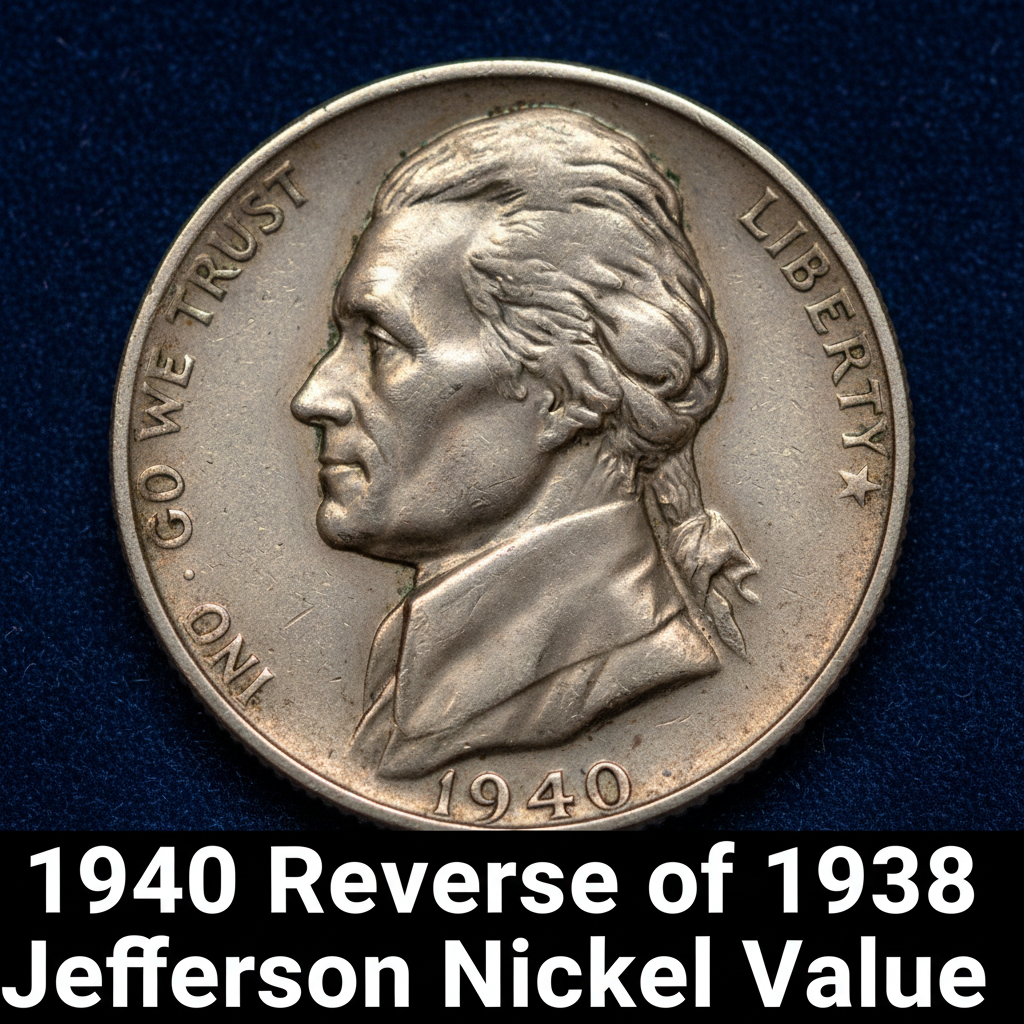
The 1940 Reverse of 1938 Jefferson Nickel is worth anywhere from $0.10 in heavily worn condition to over $100 or more in high-grade mint state, making it a surprisingly collectible variety that many people overlook when sorting through old coins.
What Makes the 1940 Reverse of 1938 Jefferson Nickel Special
If you’ve come across a 1940 Jefferson Nickel and noticed something slightly different about the back of the coin, you might be holding a genuine variety that collectors actively seek. The 1940 Reverse of 1938 is a transitional variety — it uses an older reverse die from 1938 on a coin dated 1940. The key visual difference lies in Monticello’s steps and the overall detail on the building’s facade. These early reverse dies tend to show stronger, crisper details compared to the later-used reverse types.
For everyday collectors and people who just found this coin in grandma’s drawer, identifying a reverse variety can feel overwhelming. That’s where using the best coin identifier app can save you a lot of guesswork. A good app lets you scan the coin and immediately compare it against known varieties, so you’re not spending hours flipping through old price guides.
The 1940 Reverse of 1938 was produced at the Philadelphia Mint with no mintmark. While millions of Jefferson Nickels were struck that year, this specific reverse variety is less common, and that scarcity is exactly what drives collector interest and value.
How Much Is the 1940 Reverse of 1938 Jefferson Nickel Worth
The value of this coin depends heavily on its condition, also known as grade. A coin that’s been rattling around in a jar for decades will look very different from one that was tucked away in a collection shortly after it was minted. Here’s a general breakdown of what you can expect:
| Grade / Condition | Estimated Value |
|---|---|
| Good (G-4) | $0.10 – $0.25 |
| Fine (F-12) | $0.50 – $1.50 |
| Extremely Fine (EF-40) | $3 – $8 |
| About Uncirculated (AU-55) | $10 – $20 |
| Mint State (MS-63) | $30 – $60 |
| Mint State (MS-65 and above) | $75 – $125+ |
For more detailed and up-to-date pricing, you can check the 1940 Jefferson Nickel mint state price data on CoinHix to see how the market is currently moving for this variety.
How to Grade Your 1940 Reverse of 1938 Jefferson Nickel at Home
You don’t need to be a professional numismatist to get a rough idea of your coin’s grade. Start by looking at the high points of the design — Jefferson’s cheekbone and hair above his ear on the obverse, and the steps of Monticello on the reverse. If those areas show heavy wear and flattening, the coin grades in the lower range. If you can see distinct separation between the steps and sharp hair detail, you’re looking at a higher-grade coin.
Lighting matters more than most people realize. Hold your coin under a single light source and tilt it slowly — this technique, called “raking light,” helps reveal surface marks and luster that aren’t visible under flat lighting. Original luster appears as a cartwheel-style shimmer when you rotate the coin.
CoinHix is a great resource for home graders. The app provides photo comparisons and grade references that help you match your coin against certified examples, so you can walk into a coin shop or auction with a realistic expectation of what your piece is worth.
Where to Sell and What to Expect
Once you’ve got a general idea of your coin’s grade and value, you’ll want to decide whether to sell it or hold onto it. For circulated coins worth a few dollars, a local coin dealer is your most practical option. For higher-grade examples — anything MS-63 and above — online platforms like eBay or Heritage Auctions tend to attract more competition and better final prices.
If you want a professional opinion before selling, submitting your coin to PCGS or NGC for grading is worth considering for coins you believe are MS-64 or higher. The certification fee is typically $20–$30, and a slabbed coin usually sells for noticeably more than a raw one.
You can also browse a complete breakdown of 1940 Jefferson Nickel values by grade and mintmark to compare how your coin stacks up against the full 1940 nickel series before making any decisions.
For a quick scan-and-identify experience, CoinHix offers one of the most accessible tools available — especially if you’re dealing with a handful of old coins and need to triage which ones are worth pursuing further.
FAQ
Q: How do I know if my 1940 nickel has the Reverse of 1938?
A: The easiest way is to compare the Monticello reverse detail with reference images. The 1938 reverse typically shows a more defined building facade and step detail. Using CoinHix or another coin identification app can help you compare your coin side-by-side with verified examples quickly.
Q: Is the 1940 Reverse of 1938 Jefferson Nickel rare?
A: It’s a recognized variety but not an extreme rarity. It’s less common than the standard 1940 nickel, which is why collectors pay a modest premium for it — especially in higher grades. Finding one in circulated condition isn’t unusual, but a problem-free mint state example takes more effort to locate.
Q: Should I clean my 1940 Reverse of 1938 Jefferson Nickel before selling it?
A: No — never clean a collectible coin. Cleaning removes the natural patina and surface luster that collectors and grading services look for. Even light polishing can reduce a coin’s value by 50% or more. Leave it exactly as you found it and let a professional assess its natural state.