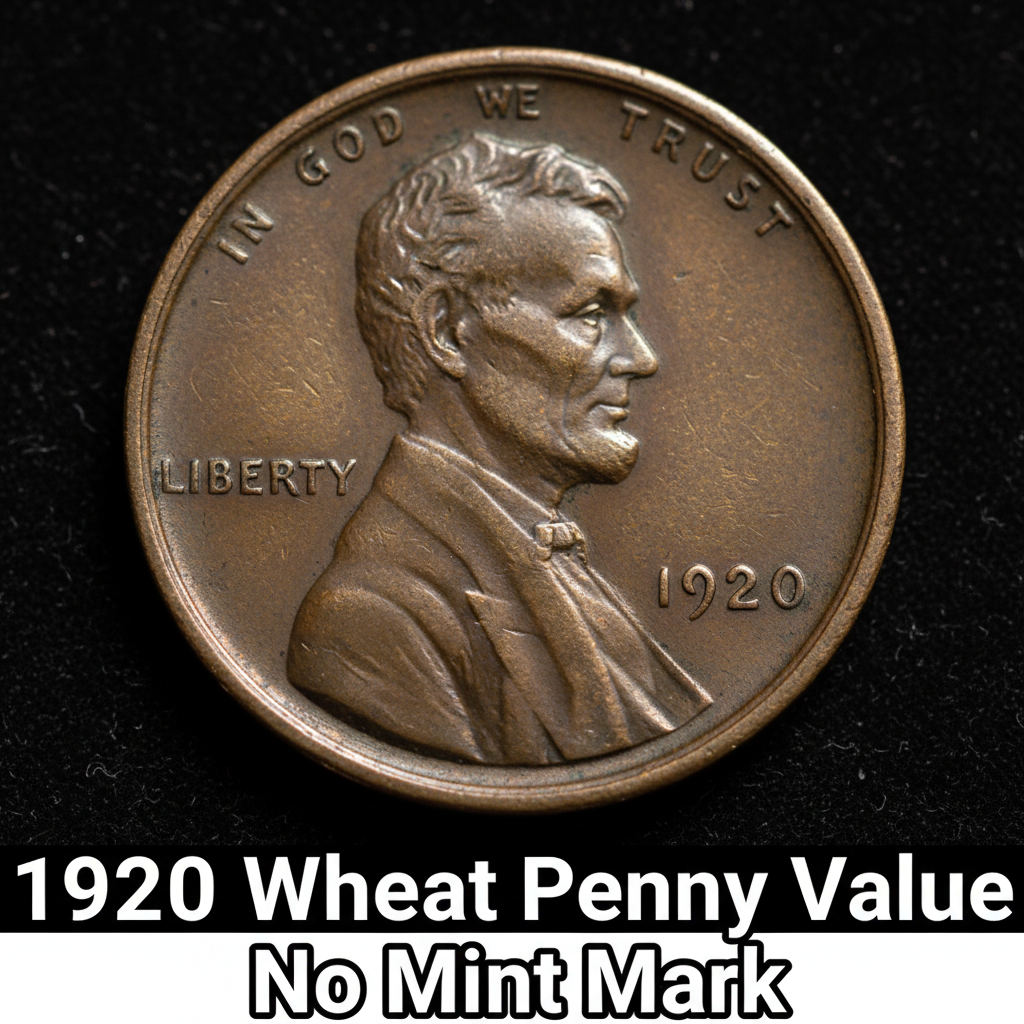
The 1920 Wheat Penny with no mint mark is worth anywhere from $0.25 in heavily worn condition to over $85 or more in high-grade mint state — and if you’ve got one in pristine condition, it could be worth even more. Whether you found one in an old jar or inherited a collection, you’re in the right place to learn exactly what you have.
What Is the 1920 Wheat Penny No Mint Mark?
The 1920 Lincoln Wheat Penny with no mint mark was struck at the Philadelphia Mint, which traditionally did not add a mint mark to its coins. These cents were made from 95% copper and feature Victor David Brenner’s iconic design — Lincoln’s portrait on the obverse and two wheat stalks framing “ONE CENT” on the reverse. In 1920, the Philadelphia Mint produced over 310 million of these pennies, making them relatively common in circulated grades. That said, well-preserved examples are harder to find than you might expect after more than 100 years. If you’re not sure whether you have a Philadelphia, Denver, or San Francisco coin, using the best coin identifier app can help you quickly identify the mint mark — or confirm there isn’t one. Knowing where your coin was made is the first step to understanding its value.
1920 Wheat Penny Value by Grade
The condition of your coin — called its “grade” — makes a huge difference in what it’s worth. A coin that’s been rattling around in someone’s pocket for decades is going to be worth a lot less than one that was set aside right after it was minted. Here’s a general breakdown of 1920 Wheat Penny price data across different grades:
| Grade | Description | Estimated Value |
|---|---|---|
| Good (G-4) | Heavy wear, major details visible | $0.25 – $0.50 |
| Fine (F-12) | Moderate wear, all lettering clear | $1 – $2 |
| Extremely Fine (EF-40) | Light wear on high points | $5 – $10 |
| About Uncirculated (AU-55) | Slight wear, nearly full luster | $15 – $25 |
| Mint State (MS-63) | Uncirculated, minor blemishes | $30 – $50 |
| Mint State (MS-65+) | Gem uncirculated, full red luster | $85 – $200+ |
Color designation also matters for uncirculated coins. A coin graded MS-65 Red (RD) is worth significantly more than the same grade in Brown (BN), because the original mint red color has been preserved.
How to Tell If Your 1920 Penny Is Worth More
Most 1920 Wheat Pennies no mint mark that show up in everyday finds are circulated — meaning they’ve been used as actual money at some point. But a few things can push value higher. First, look at the coin’s luster. Does it still have a reddish-orange glow, or has it turned dark brown? Original red coins are more desirable to collectors. Second, check for errors. While major errors on 1920 Philadelphia Wheat Pennies are uncommon, doubled die varieties and off-center strikes do exist and can command a premium. Third, examine the details under good lighting — Lincoln’s hair, the wheat stalks, and the lettering should be crisp on better-grade examples. If you want a trusted second opinion on what your specific coin might be worth, the CoinHix app gives you real-time pricing data and grade comparisons that can help you figure out where your coin falls on the spectrum.
Where and How to Sell Your 1920 Wheat Penny
Once you know what you have, you might be thinking about selling. For coins in Good to Fine condition, the realistic selling price is fairly modest — maybe a dollar or two on eBay or at a local coin shop. But for coins in Extremely Fine or better, it’s worth taking more time. Online platforms like eBay or Heritage Auctions attract serious collectors willing to pay fair prices for quality material. Local coin dealers are another option, though they typically offer wholesale prices since they need to resell at a profit. For a quick and informed estimate before you walk into any shop or list anything online, check out the detailed 1920 penny value guide and price breakdown to know your coin’s market value ahead of time. Knowledge is your best negotiating tool.
Using Technology to Value Old Coins Like This One
Not everyone has a coin dealer nearby or the budget to send a coin to a grading service like PCGS or NGC. That’s where modern tools make a real difference. CoinHix is a powerful app that lets you look up coin values by date, mint mark, and grade — all from your phone. Whether you’re at a garage sale, going through a relative’s old collection, or just curious about a coin you found, CoinHix makes it easy to get reliable pricing information fast. Paired with a good coin identifier app, you can go from “I found an old penny” to “I know exactly what this is worth” in just a few minutes — no expert required.
Frequently Asked Questions
Q: How much is a 1920 Wheat Penny with no mint mark worth today?
A: In typical circulated condition, a 1920 Wheat Penny no mint mark is worth between $0.25 and $10 depending on wear. In uncirculated mint state grades, values range from $30 to over $200 for gem examples with full red luster.
Q: Is the 1920 penny rare?
A: Not in general. Over 310 million were minted at Philadelphia in 1920, making circulated examples quite common. However, high-grade uncirculated specimens — especially those graded MS-65 Red or better — are genuinely scarce and collectible.
Q: Should I clean my 1920 Wheat Penny to make it look better?
A: No — please don’t. Cleaning a coin almost always reduces its value significantly. Collectors and dealers prefer original surfaces, even if they look dark or worn. A cleaned coin will typically sell for much less than an untouched one in the same grade.