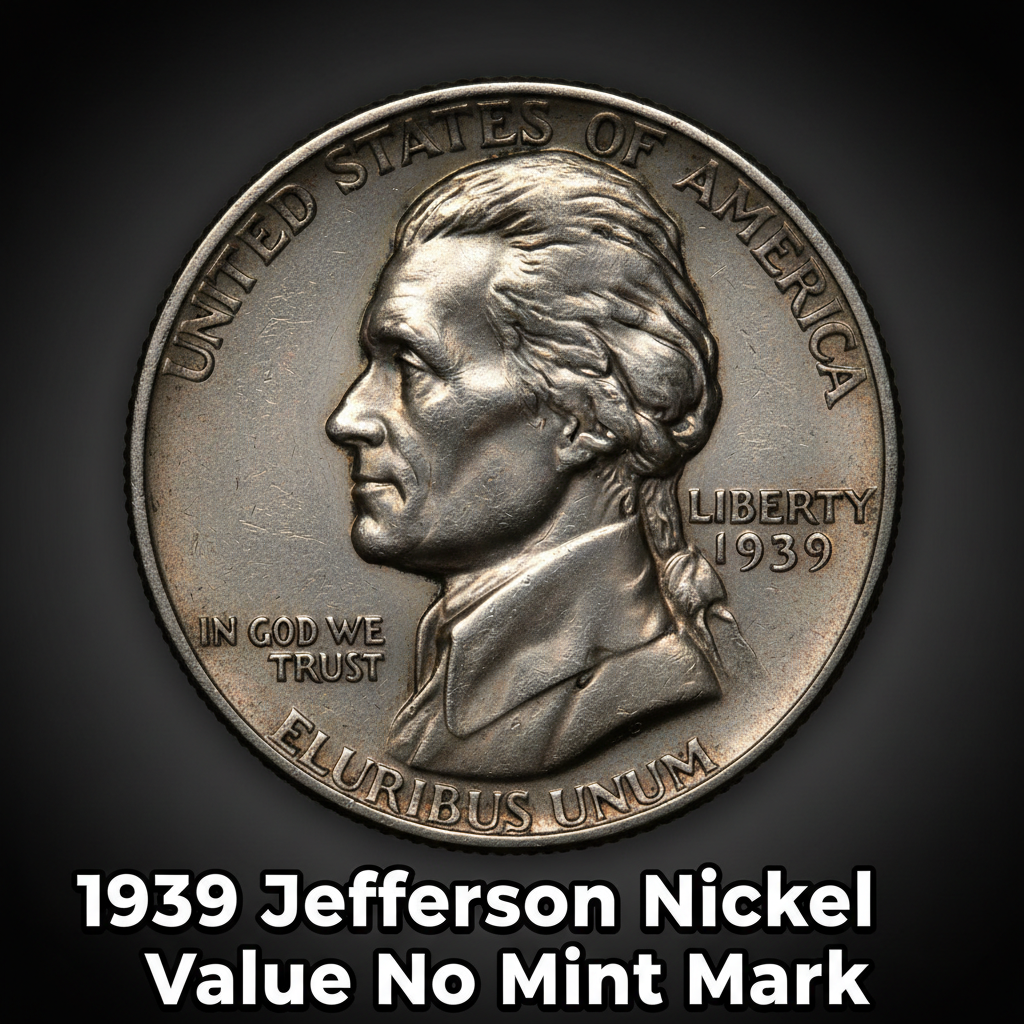
The 1939 Jefferson Nickel with no mint mark is worth anywhere from $0.25 in heavily worn condition to over $100 or more in pristine uncirculated grades. Most circulated examples fall in the $0.50 to $5 range, but nice mint-state coins can surprise you.
If you recently dug out an old nickel from a coin jar or inherited a collection, this guide will walk you through exactly what your 1939 Jefferson Nickel is worth — and what factors make some examples far more valuable than others. Using the best coin identifier app is a great first step to quickly confirm what you have before diving into research.
What Is the 1939 Jefferson Nickel No Mint Mark?
The 1939 Jefferson Nickel was struck at the Philadelphia Mint, which traditionally placed no mint mark on its coins. This was only the second year of production for the Jefferson Nickel series, which launched in 1938 replacing the beloved Buffalo Nickel. The coin features a portrait of President Thomas Jefferson on the obverse, designed by Felix Schlag, and Monticello — Jefferson’s famous Virginia home — on the reverse.
Philadelphia produced an impressive 120,615,000 nickels in 1939, making it one of the higher-mintage years of the early series. Because so many were made, the 1939-P (no mint mark) is not considered rare in circulated grades. However, that doesn’t mean it’s worthless. Well-preserved examples in mint state, especially those with sharp luster and full steps on Monticello’s steps, can fetch strong premiums from serious collectors. The “Full Steps” designation — where five or six steps on Monticello’s staircase are fully defined — is a major value booster.
1939 Jefferson Nickel Value by Grade
Condition is everything when it comes to coin values. Here’s a general breakdown of what you can expect based on the grade of your coin:
| Grade | Description | Estimated Value |
|---|---|---|
| Good (G-4) | Heavy wear, design visible | $0.25 – $0.50 |
| Fine (F-12) | Moderate wear, clear details | $0.50 – $1.00 |
| Extremely Fine (EF-40) | Light wear on high points | $2 – $5 |
| Mint State (MS-63) | Uncirculated, minor marks | $15 – $30 |
| Mint State (MS-65) | Gem uncirculated | $40 – $100+ |
| MS-65 Full Steps | Gem with full Monticello steps | $150 – $500+ |
For the most up-to-date auction results and market pricing, check out this detailed breakdown of 1939 Jefferson Nickel mint state prices and recent sale records. Markets shift, and having current data matters when you’re buying or selling.
What Makes a 1939 Jefferson Nickel More Valuable
Several factors push the value of a 1939 no-mint-mark nickel beyond its base price. As mentioned, the Full Steps designation is the most significant premium trigger. Coins where Monticello’s staircase shows sharp, uninterrupted steps are much harder to find than you’d think, because the design was notoriously difficult to strike fully even on freshly minted coins.
Luster also plays a huge role. An MS-65 coin with brilliant, original mint luster looks stunning and commands top dollar. Cleaned coins — even those that appear shiny — typically lose much of their value because collectors can detect the damage under magnification.
Strike quality, eye appeal, and the absence of contact marks or bag marks all contribute to the final grade. If your coin looks unusually sharp and brilliant, it’s worth having it professionally graded by PCGS or NGC before selling. A certified grade can dramatically increase buyer confidence and sale price.
CoinHix is a fantastic tool for tracking current market values across all Jefferson Nickel dates and grades in one place.
How to Check If Your 1939 Nickel Is Worth More
Start by examining your coin under good lighting and a magnifying glass. Check the reverse carefully and count the steps on Monticello. If you can see five or six clearly defined, unbroken steps, you might have something special on your hands. Next, look for luster — that cartwheel effect you see when you tilt an uncirculated coin under light.
You can also scan your coin using CoinHix, which helps identify key date varieties and grades in seconds. It’s a convenient way to get a quick estimate before taking your coin to a dealer. For a comprehensive look at current pricing data, this guide on 1939 nickel value across all grades and mint marks is an excellent resource to bookmark.
Don’t clean your coins. This is the number one mistake new collectors make. Even a gentle rinse can strip the original surface and cut the coin’s value by 50% or more.
Is the 1939 Jefferson Nickel Worth Keeping?
For most people, a worn 1939 Jefferson Nickel is a fun piece of American history worth just a few cents above face value. But if you’re sitting on an uncirculated example — especially one with sharp steps — you could have a coin worth $100 to $500 or more. The best thing you can do is assess the condition carefully, use tools like CoinHix to research current prices, and consider professional grading if the coin looks exceptional.
Even average examples are worth holding onto as part of a Jefferson Nickel date set. They’re affordable, historically meaningful, and a great starting point for newer collectors.
—
FAQ
Q: How do I know if my 1939 nickel has no mint mark?
A: Look on the reverse of the coin, to the right of Monticello. If there’s no letter, it was minted in Philadelphia and carries no mint mark. A “D” means Denver, and an “S” means San Francisco.
Q: What is a 1939 Jefferson Nickel Full Steps coin?
A: A Full Steps coin is one where five or six horizontal steps on Monticello’s entrance are sharply and completely struck with no breaks. These coins are rare even in high mint state grades and can be worth many times more than a standard uncirculated example.
Q: Should I get my 1939 nickel professionally graded?
A: If your coin appears uncirculated with strong luster and visible full steps, professional grading by PCGS or NGC is likely worth the cost. For circulated coins in lower grades, the grading fee typically exceeds the coin’s market value, so it’s generally not necessary.