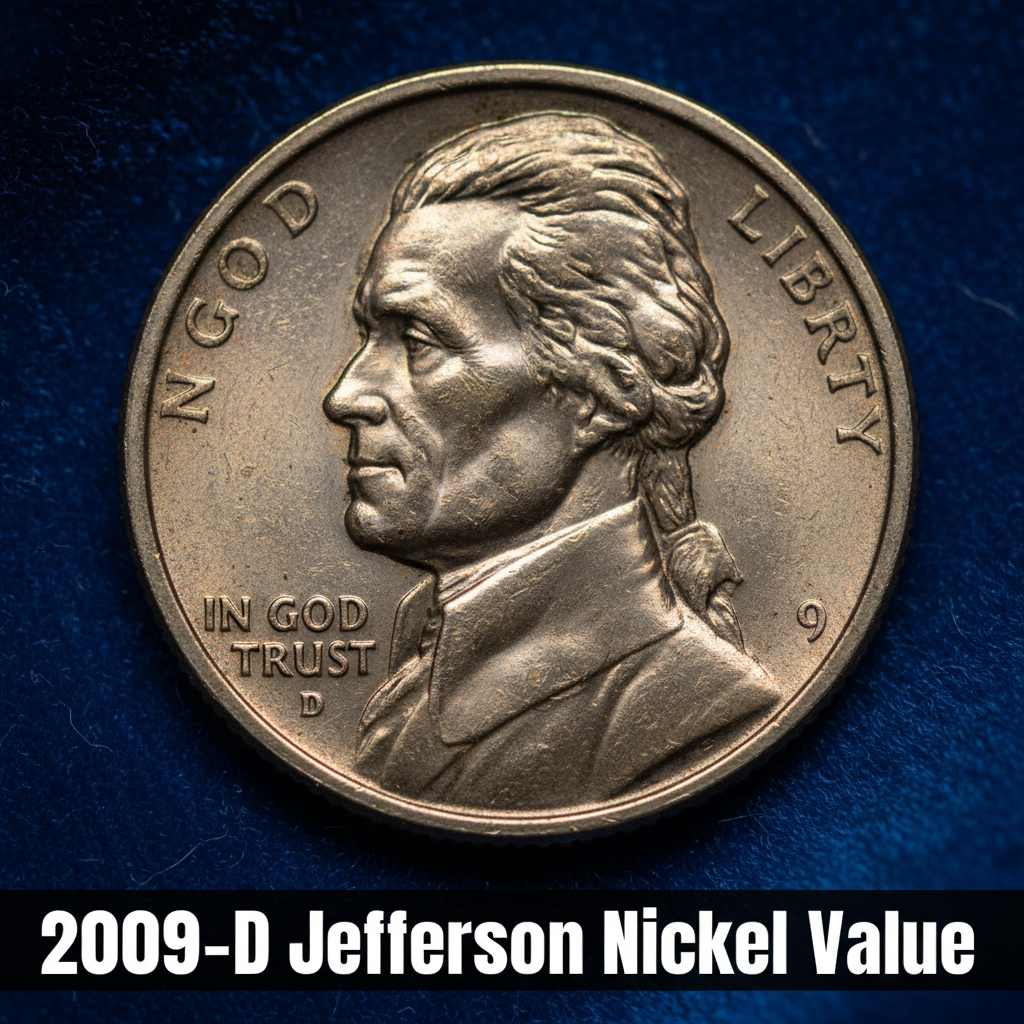
The 2009-D Jefferson Nickel is worth anywhere from 5 cents in heavily circulated condition to around $5 or more in pristine, uncirculated grades — and certain Full Steps examples can fetch even higher prices at auction. If you found one of these coins in your change jar or a old collection, you’re in the right place to find out exactly what it’s worth.
Whether you’re a casual collector or just someone who stumbled across an interesting coin, using the best coin identifier app can help you quickly identify and value coins like this one without needing a dealer or expert right away.
What Is the 2009-D Jefferson Nickel?
The 2009-D Jefferson Nickel was struck at the Denver Mint, as indicated by the small “D” mint mark on the coin’s obverse. In 2009, the U.S. Mint produced Jefferson Nickels following the same familiar design that has been around since 1938, featuring Thomas Jefferson on the front and Monticello on the reverse. These coins were made for general circulation, so hundreds of millions were produced — which is part of why most examples aren’t worth a huge premium over face value.
That said, condition is everything in coin collecting. A 2009-D nickel that has been sitting in a drawer since it was minted, never used in everyday transactions, is worth considerably more than one that’s been jingling around in someone’s pocket for fifteen years. Mint State examples, especially those graded MS-65 or higher by a professional grading service like PCGS or NGC, can sell for anywhere from $2 to $10 or more, depending on the specific grade and eye appeal.
2009-D Jefferson Nickel Value by Grade
To give you a clear picture of what your coin might be worth, here’s a straightforward value chart based on typical market prices:
| Grade / Condition | Estimated Value |
|---|---|
| Good / Circulated | Face value (~$0.05) |
| Fine / Very Fine | $0.10 – $0.50 |
| Extremely Fine (EF-40) | $0.50 – $1.00 |
| Mint State MS-63 | $1.00 – $3.00 |
| Mint State MS-65 | $3.00 – $6.00 |
| MS-65 Full Steps (FS) | $10.00 – $25.00+ |
For the most up-to-date market data, you can check recent auction results and certified price records for 2009 Jefferson Nickel Full Steps examples to see how the market is trending right now.
What Are Full Steps and Why Do They Matter?
You may have noticed “Full Steps” mentioned in the value table above. This is one of the most important factors when it comes to Jefferson Nickel values, and it’s something even casual collectors should understand.
The reverse of the Jefferson Nickel shows Monticello, Thomas Jefferson’s famous Virginia estate. At the base of Monticello are a series of steps. On well-struck coins, those steps appear sharply defined with clear separation between each one. A coin that shows five or six complete, uninterrupted steps is designated “Full Steps” or FS by grading services.
Why does this matter so much? Because most 2009-D nickels — even those that were never circulated — were struck with a slightly weak impression on the steps area. Finding one with Full Steps designation is genuinely uncommon, which drives up the collector demand significantly. An MS-65 FS example is worth many times more than a regular MS-65 coin without the Full Steps designation.
If you think your 2009-D nickel might have Full Steps, it’s worth getting a closer look. CoinHix is a great tool for researching certified coin values and understanding what makes certain grades and varieties more valuable.
How to Tell What Your 2009-D Nickel Is Worth
So you’ve got a 2009-D Jefferson Nickel in your hand — now what? Here are a few practical steps to figure out its value:
First, check the condition. Look for wear on Jefferson’s cheekbone, hair details, and the high points of Monticello on the reverse. If these areas show smooth, flat surfaces from circulation, your coin is circulated and likely worth face value to maybe 50 cents.
Second, check the strike quality on Monticello’s steps. Even under a basic magnifying glass, you may be able to see whether the steps are clearly defined or merged together.
Third, if your coin looks like it came straight from a roll or original Mint packaging and still has its original luster, it might grade Mint State. Consider getting it professionally graded if the coin appears sharp and blast white.
You can also explore a detailed breakdown of 2009 nickel values across all grades and mint marks to compare your coin against known price benchmarks.
For everyday identification and quick valuation, CoinHix makes it easy to look up any Jefferson Nickel by date, mint mark, and grade level — no coin expertise required.
Is the 2009-D Jefferson Nickel Worth Keeping?
Honestly, most circulated 2009-D Jefferson Nickels aren’t going to make you rich. But that doesn’t mean they aren’t worth holding onto. For beginning collectors, Jefferson Nickels are one of the most approachable series to collect, with affordable examples across almost every date and mint mark. If you’re just getting started, a complete Jefferson Nickel set including the 2009-D is a great project.
If your coin is uncirculated or appears to have strong step detail on Monticello, it could be worth having professionally evaluated. CoinHix can help you track certified coin prices and understand whether your piece might qualify for a premium grade.
Frequently Asked Questions
Q: How much is a 2009-D Jefferson Nickel worth in average circulated condition?
A: In typical circulated condition, a 2009-D Jefferson Nickel is worth face value — about 5 cents. Only coins in excellent uncirculated condition or those with Full Steps designation carry significant numismatic premiums.
Q: What does the “D” mint mark mean on a 2009 Jefferson Nickel?
A: The “D” stands for Denver, indicating the coin was struck at the Denver Mint. In 2009, both the Philadelphia (no mint mark or “P”) and Denver (“D”) Mints produced Jefferson Nickels for circulation.
Q: Are 2009-D Full Steps Jefferson Nickels rare?
A: They are considered scarce in the context of this date. While millions of 2009-D nickels were minted, very few received a strong enough strike to earn the Full Steps designation from grading services like PCGS or NGC, making certified FS examples noticeably harder to find and more valuable.