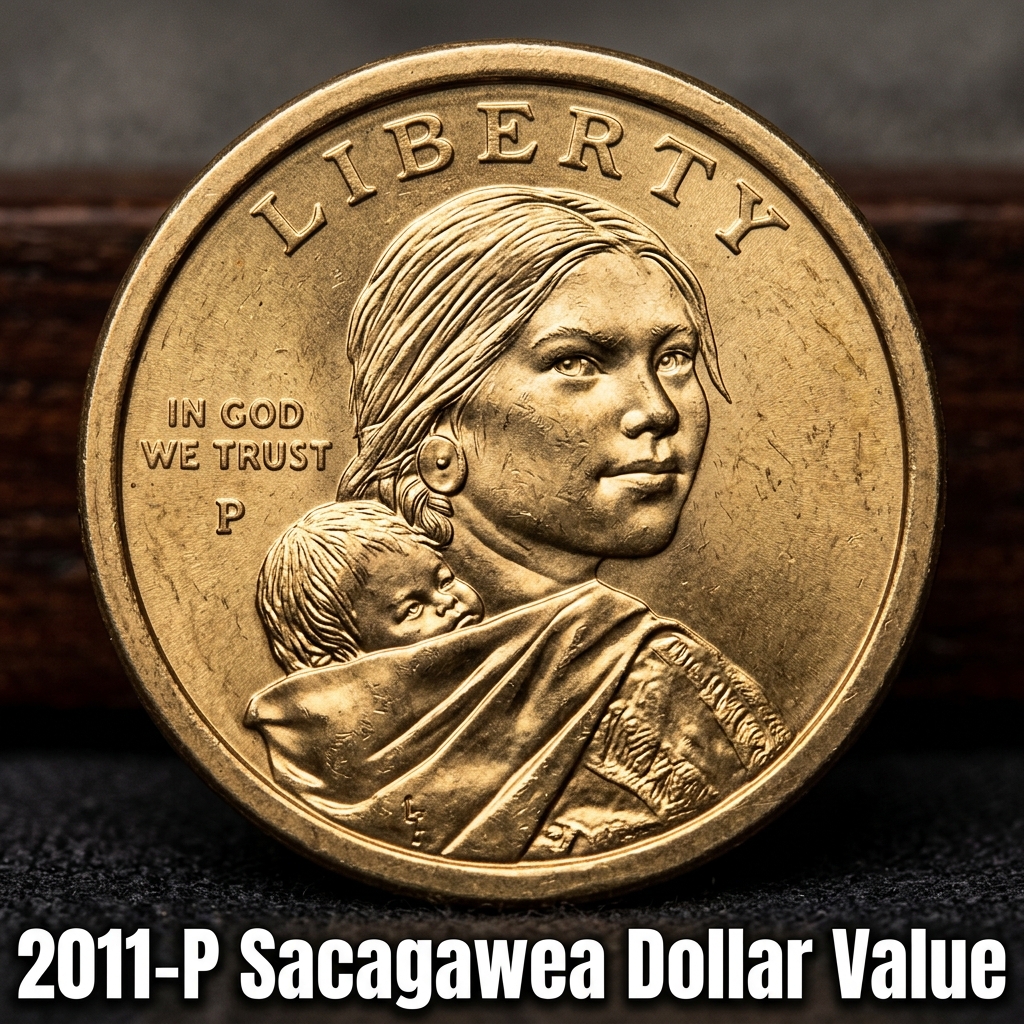
The 2011-P Sacagawea Dollar is worth anywhere from $1.25 in circulated condition to over $15 or more in gem uncirculated grades — and certain error coins can fetch significantly higher prices. If you found one tucked away in a drawer or inherited a coin collection, you might be sitting on a small treasure worth looking into.
If you’re not sure what you’ve got, using the best coin identifier app is a great first step before trying to sell or grade your coin. A good app can help you identify the series, mint mark, and condition in just a few seconds — saving you time and guesswork.
—
What Is the 2011-P Sacagawea Dollar?
The 2011-P Sacagawea Dollar is part of the Native American Dollar series, a program started in 2000 to honor Sacagawea, the Shoshone woman who helped guide the Lewis and Clark Expedition. The “P” in the coin’s name tells you it was struck at the Philadelphia Mint. Starting in 2009, the reverse (back) design began rotating annually to celebrate different Native American contributions to American history. The 2011 reverse features the Wampanoag Treaty of 1621, depicting a Native American hand and a pilgrim hand exchanging a peace pipe — a powerful image commemorating diplomacy and cooperation.
These dollars are golden-colored due to a manganese brass composition, though they contain no actual gold. They were minted primarily for collectors and were not widely released into general circulation. That makes finding a true mint-state example a bit more exciting than your average spare change discovery.
—
How Much Is a 2011-P Sacagawea Dollar Worth Today?
Most 2011-P Sacagawea Dollars you’ll encounter are worth a modest premium over face value. Circulated coins typically go for $1.25 to $2.00. However, coins that have never been used — especially those graded by professional services like PCGS or NGC — can be worth considerably more.
Here’s a quick value breakdown based on condition:
| Condition / Grade | Estimated Value |
|---|---|
| Circulated (Average) | $1.25 – $2.00 |
| Uncirculated (MS-63) | $3.00 – $6.00 |
| Gem Uncirculated (MS-65) | $8.00 – $15.00 |
| MS-67 (Top Grade) | $20.00 – $50.00+ |
| Error Coins (Varies) | $50.00 – $200.00+ |
For the most current auction records and certified coin prices, you can check out the 2011-P Sacagawea Dollar MS price data on CoinHix — it pulls real market data so you’re not guessing. The CoinHix app also makes it easy to track value changes over time.
—
Position A vs. Position B — Does It Matter?
Here’s something many casual collectors don’t realize: Sacagawea dollars minted from 2009 onward come in two orientations. “Position A” means the reverse is upright when the coin is rotated left. “Position B” means it’s upright when rotated right. Both exist for the 2011-P issue.
In most cases, the value difference between Position A and Position B is minimal for circulated examples. However, among high-grade certified coins, certain positions can command slight premiums depending on collector demand. If you plan to have your coin graded, it’s worth specifying the orientation when submitting.
This level of detail might seem overwhelming at first, but tools like CoinHix make sorting through these variations much easier — especially if you’re building a collection or selling multiple coins at once.
—
Mint Marks, Errors, and Special Varieties to Watch For
Beyond the standard strike, certain 2011-P Sacagawea Dollars have error varieties that collectors hunt for aggressively. Common errors in this series include:
– Doubled die obverse or reverse — where design elements appear slightly doubled
– Missing edge lettering — the coin’s edge should read “E PLURIBUS UNUM,” the year, and the mint mark; missing any of these can add serious value
– Struck on wrong planchet — extremely rare but highly valuable
If you suspect your coin has an error, get it authenticated. A coin with missing edge lettering, for example, has sold for hundreds of dollars at auction. You can see detailed 2011 Sacagawea Dollar value information including error varieties to understand what differentiates a standard coin from a valuable one.
Always examine your coins under good lighting and with a magnifier before assuming they’re ordinary.
—
FAQ
Q: Is the 2011-P Sacagawea Dollar made of real gold?
A: No. Despite its golden color, the 2011-P Sacagawea Dollar is made from a manganese brass alloy over a copper core. It contains no gold whatsoever. The golden appearance was intentional to give it a distinctive look.
Q: Where can I sell my 2011-P Sacagawea Dollar?
A: You can sell it through online platforms like eBay, at local coin shops, or through coin shows. For higher-grade coins, consider getting it professionally graded by PCGS or NGC first — a certified coin typically sells for more. Apps like CoinHix can also help you gauge fair market value before listing.
Q: How do I know if my coin is in mint state condition?
A: A mint state coin shows absolutely no signs of wear. Look at the high points of the design — Sacagawea’s cheekbone, the baby’s head, and the eagle feathers on the reverse. Any rubbing, dulling, or scratching means the coin is circulated. Bright, original luster with no contact marks is a good sign you have an uncirculated example worth getting appraised.